

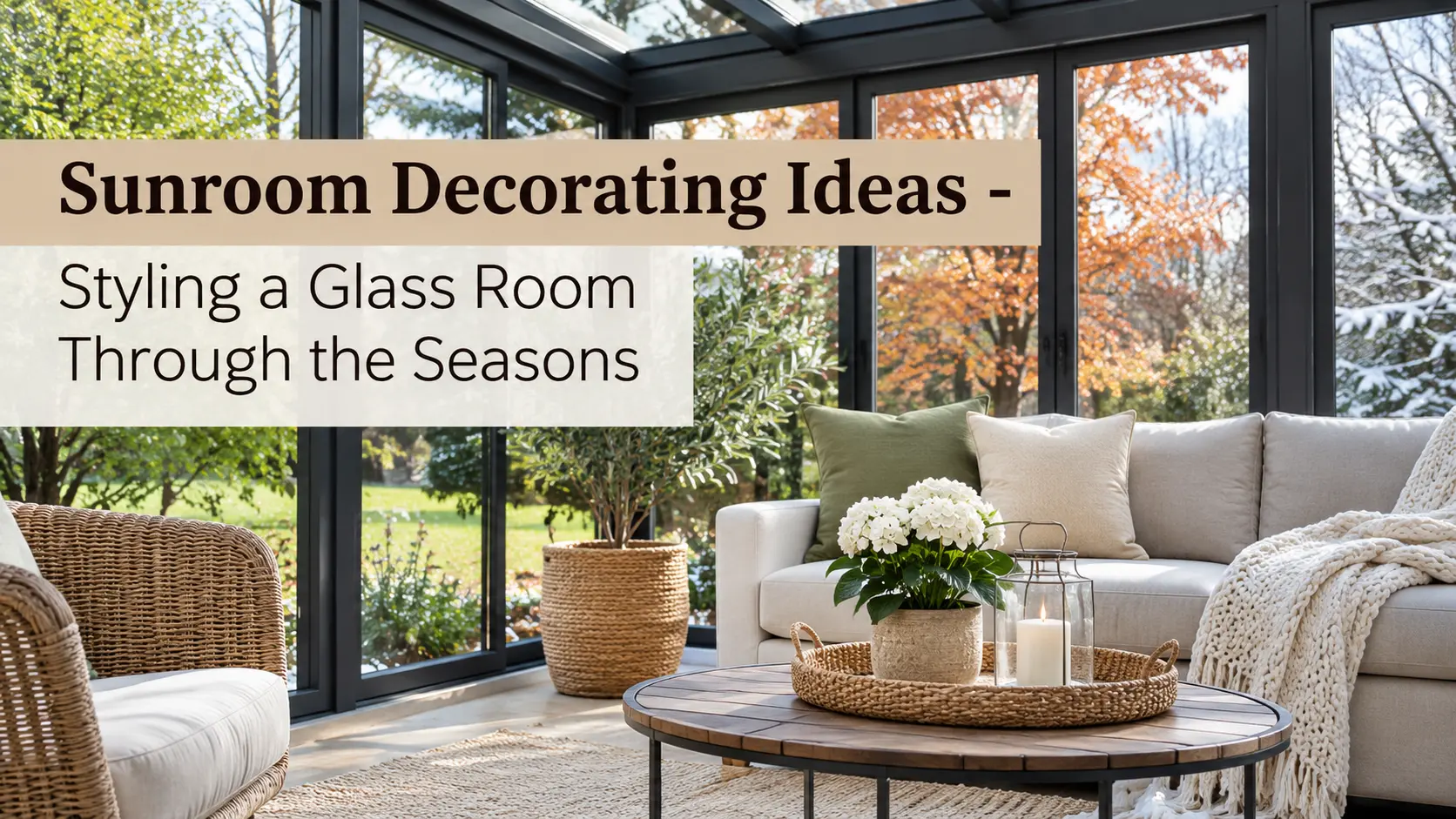
Sunroom Decorating Ideas – Styling a Glass Room Through the Seasons
The most effective sunroom decorating ideas start with a consistent foundation and change a few carefully selected details as the seasons shift. A neutral color palette, layered textures, adaptable accessories, and thoughtfully placed plants can make a glass room feel welcoming throughout the year without requiring a complete redesign every few months.
Unlike a conventional living room, a sunroom has a close visual relationship with the outdoors. Natural light changes throughout the day, garden colors shift between seasons, and large glass surfaces make interior arrangements more visible. Successful decorating works with these characteristics rather than competing with them.
For homeowners in New Jersey and New York, the goal is to create a space that feels fresh in spring, comfortable in summer, inviting in fall, and warm in winter while maintaining a unified design.
Build a Decorating Foundation That Works Year-Round
A sunroom should have a recognizable visual identity regardless of the season. Establishing that identity before adding seasonal decorations prevents the space from becoming a collection of unrelated colors and accessories.
Start with the elements that remain in place throughout the year:
- Base colors: Warm white, soft beige, stone gray, and muted taupe provide a flexible background for seasonal accents.
- Natural textures: Woven baskets, ceramic planters, linen-look fabrics, and wood finishes introduce warmth without overwhelming the glass architecture.
- Consistent finishes: Repeating a small selection of materials across decorative objects creates visual continuity.
- Defined focal points: A sculptural planter, textured wall artwork, or carefully arranged coffee table provides a stable center of attention.
Large windows already create a strong architectural feature. Decorative choices should complement those views rather than fill every available surface.
Use a Seasonal Color Strategy Instead of Replacing Everything
The simplest approach to seasonal sunroom styling is to keep the main colors consistent while introducing temporary accent shades. This allows the room to reflect the changing landscape without losing its overall character.
| Season | Accent Colors | Textures | Decorative Direction |
|---|---|---|---|
| Spring | Sage green, pale yellow, soft blush | Light cotton, smooth ceramics | Fresh greenery and understated floral details |
| Summer | Sand, muted blue, warm white | Breathable fabrics, woven textures | Open surfaces and relaxed natural accents |
| Fall | Terracotta, olive, rust | Textured cotton, wool blends | Earthy objects and layered accessories |
| Winter | Cream, charcoal, deep green | Soft knits, plush textiles | Warm lighting and restrained decorative arrangements |
These combinations are starting points rather than fixed rules. A contemporary sunroom with dark aluminum framing may suit warmer fabrics and lighter decorative accents, while a traditional home may benefit from softer contrasts and familiar natural materials.
Spring Sunroom Decorating Ideas for a Fresh Atmosphere
Spring decorating works best when the room feels lighter rather than fuller. As outdoor vegetation returns, the surrounding landscape naturally becomes part of the interior color scheme.
Replace heavy decorative throws with lighter fabrics in cream or pale green. Introduce a modest floral arrangement, a ceramic vase, or a small collection of botanical prints. Choose a limited number of accents so the room retains its open appearance.
Spring is also a useful time to review plant placement. Changing sunlight patterns may expose foliage to stronger direct light than it received during winter. Move sensitive plants gradually rather than placing them immediately beside the brightest glazing.
A particularly effective arrangement combines a leafy floor plant with smaller decorative objects at different heights. This creates visual interest without requiring additional furniture.
Summer Styling That Keeps the Room Visually Cool
Summer decorating should emphasize openness, lighter textures, and a calm color palette. Strong sunlight can make saturated colors and busy patterns feel more intense inside a glass enclosure.
White ceramics, pale blue accents, and natural woven textures create a relaxed summer atmosphere. Keep windows visually unobstructed where possible and avoid crowding the perimeter with decorative objects.
For a coastal-inspired appearance, use subtle references rather than themed decorations. Sand-colored textiles, a muted blue cushion, and a simple glass vessel can suggest the season without making the room feel temporary.
Pay particular attention to surfaces exposed to direct sunlight. Some fabrics, artwork, and decorative finishes can discolor with prolonged exposure. Select suitable materials and position sensitive items away from the strongest light.
Decorating can soften the visual experience of a sunny room, but it does not replace appropriate glazing, shading, or ventilation when indoor temperatures become uncomfortable.
Fall Decorating With Warm Colors and Natural Materials
Fall offers an opportunity to introduce warmth without making the sunroom feel enclosed. The changing colors outside can become the inspiration for a restrained indoor palette.
Terracotta pottery, olive-green cushions, woven baskets, and rust-colored accessories work well against neutral walls and dark metal framing. Rather than combining numerous seasonal ornaments, choose a few materials that create an autumn atmosphere through color and texture.
A shallow decorative bowl with natural elements can serve as a centerpiece. Textured throws placed over existing seating introduce another layer without changing the furniture arrangement.
In smaller glass rooms, concentrate autumn decorations around a single area. Keeping the remaining surfaces clear preserves the visual connection to the garden and prevents the room from feeling crowded.
Winter Sunroom Decor That Feels Warm and Inviting
Winter decorating depends more on perceived warmth than on elaborate seasonal displays. Soft textures, warmer light, and thoughtful color contrast help a glass room feel comfortable even when the outdoor landscape is bare.
Introduce knitted throws, textured cushion covers, and neutral rugs appropriate for the room’s conditions. Warm-toned lamps can make evening use more inviting when natural daylight fades.
Decorative lighting should be layered rather than concentrated in one bright fixture. A table lamp near a reading corner and subtle ambient lighting can create depth while reducing distracting reflections on the glass at night.
Evergreen foliage and simple ceramic accessories complement winter views without relying on holiday-specific decorations.
Keep decorative objects clear of heating outlets and operable windows. A room intended for year-round use also needs appropriate thermal design and climate control. Interior styling can support comfort, but it cannot compensate for inadequate insulation.
How Should Plants Be Arranged in a Glass Sunroom?
Plants are among the most natural decorative elements for a sunroom, but abundant daylight does not mean every location is suitable for every species.
Match plants to their actual light requirements. Some tolerate direct sunlight, while others need bright but indirect exposure. South- and west-facing glass can produce particularly strong afternoon light, depending on the roof design and surrounding shade.
For a balanced composition, arrange plants in distinct groups instead of spreading small pots evenly across every window. Combine different leaf shapes and heights while leaving enough space for maintenance and airflow.
Use planters with drainage provisions and protect finished surfaces from moisture. Keep leaves away from glass that experiences significant temperature changes, especially during cold weather.
The objective is to create a living decorative layer that supports the room’s architecture, not to turn every glazed wall into a dense plant display.
Connect the Sunroom With the Rest of the House
A decorated sunroom feels more intentional when its materials and colors relate to neighboring rooms. This does not mean copying the living room or kitchen exactly.
Repeat a recognizable detail such as wood tone, metal finish, or neutral wall color. Then introduce lighter textures and seasonal accents to give the glass room its own personality.
For example, a home with warm oak flooring and charcoal hardware might carry those finishes into the sunroom through decorative trays, planters, and lighting. The resulting connection makes the transition between spaces feel natural.
Where the room opens directly to a patio or garden, consider the view from both directions. A decorative arrangement that looks attractive from inside should also appear organized when seen through the exterior glass.
Let the Architecture Guide the Decoration
The structure of the room influences how much decoration it needs. A modern four season sunroom with expansive glazing and slim aluminum framing already has strong visual character.
At Vision Art Aluminium, we design custom sunrooms around natural light, existing architecture, intended use, and year-round comfort. Our Montclair-based team serves homeowners across New Jersey and New York, creating glass spaces that can function as lounges, dining areas, and flexible living extensions.
For decorating purposes, consider the relationship between framing, window openings, overhead glazing, and circulation paths. Avoid placing tall objects where they interrupt important views or restrict access to operable panels.
In an aluminum sunroom, restrained finishes can emphasize the architectural lines. Softer decorative elements then create a useful contrast against glass and metal.
How Can You Refresh a Sunroom Without Losing Its Style?
A practical seasonal refresh follows a simple principle: change the accents while preserving the foundation.
- Remove the previous season’s accessories: Clear temporary decorations before introducing new ones.
- Evaluate natural light: Observe how sunlight affects colors, objects, and plants during the new season.
- Select a focused accent palette: Choose colors that complement the permanent materials.
- Update a few visible textures: Change cushion covers, throws, or small decorative pieces rather than the entire arrangement.
- Review the room from adjoining spaces: Check whether the decoration still looks cohesive with the rest of the home.
This approach makes seasonal decorating manageable while avoiding unnecessary visual clutter.
The most successful sunroom styling allows the architecture and outdoor surroundings to remain central. With a stable palette, carefully selected textures, appropriate greenery, and seasonal accents, a glass room can maintain a consistent identity while feeling distinctly different throughout the year.
Planning a project like this?
Get Free Pricing