

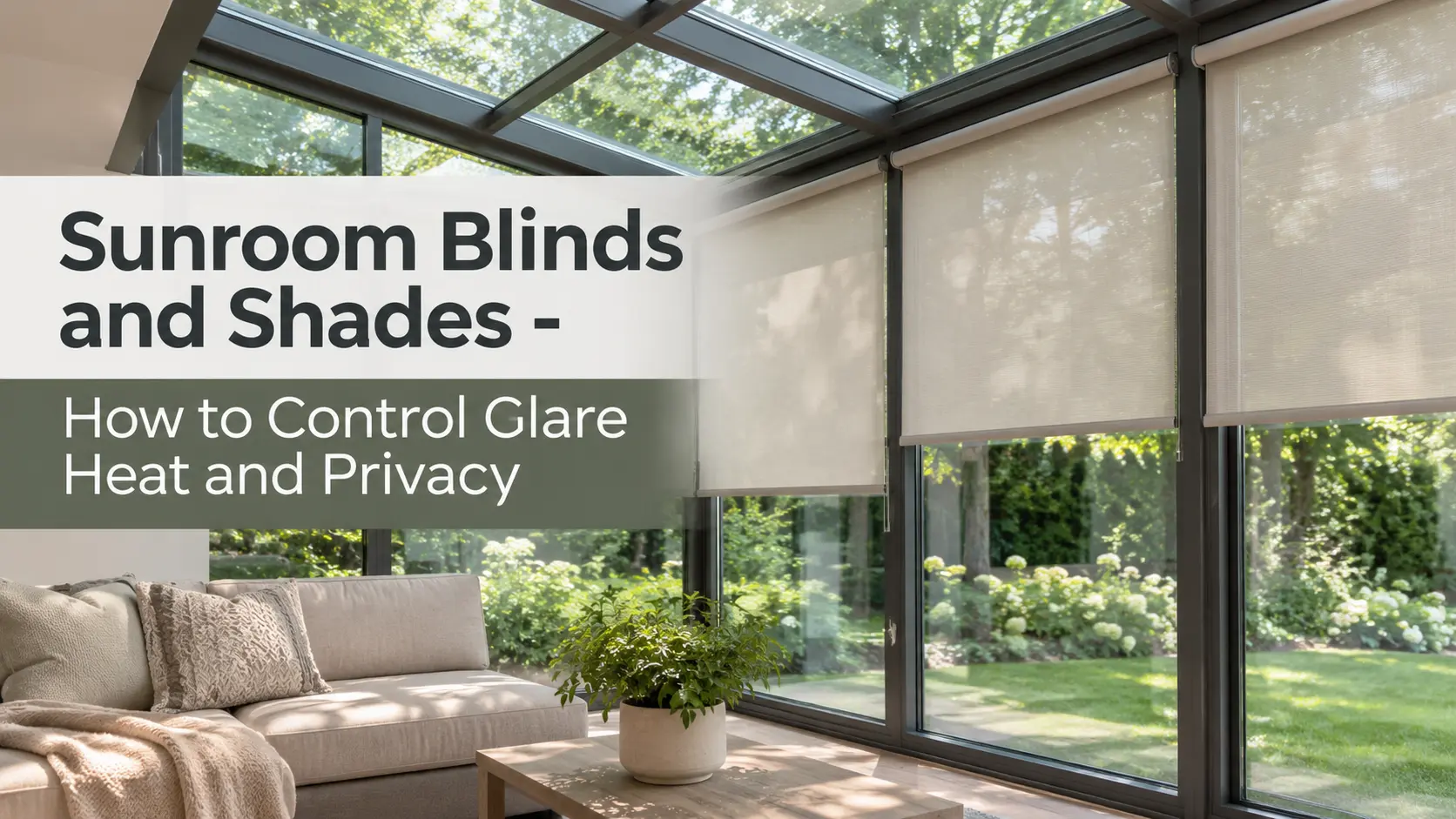
Sunroom Blinds and Shades – How to Control Glare Heat and Privacy
Sunroom blinds help control direct sunlight, screen glare, indoor temperature and privacy without permanently blocking outdoor views. The most suitable option depends on window orientation, glass dimensions, roof design and how the space is used. Pleated shades, cellular shades, roller blinds and motorized screens each address different needs.
For homeowners in New Jersey and New York, adjustable shading is especially useful because sunrooms experience changing sunlight conditions throughout the seasons. A well-planned system reduces uncomfortable summer glare while allowing natural daylight into the room during colder months.
What Should Sunroom Blinds Actually Control?
Sunroom shading should solve specific comfort problems rather than simply cover the windows. A south-facing room may receive sustained sunlight, while west-facing glazing can produce strong afternoon glare. Glass roofs introduce additional solar exposure that ordinary vertical blinds cannot address.
The main considerations are:
- Glare reduction: Light-filtering materials soften direct sunlight and improve visual comfort.
- Heat management: Solar-control fabrics limit unwanted sunlight entering occupied areas.
- Daytime privacy: Translucent materials reduce outside visibility while preserving natural illumination.
- Evening privacy: Opaque shades provide more dependable screening when interior lights are on.
- View preservation: Retractable systems allow homeowners to uncover the glass when shading is unnecessary.
A sunroom used as a home office may need stronger glare control than a casual sitting area. Similarly, a room facing neighboring properties requires different privacy planning from one overlooking a secluded backyard.
Pleated Shades for Soft and Adjustable Daylight
Pleated shades feature fabric folded into an accordion-like structure. When raised, the material gathers into a compact stack, allowing much of the window to remain visible.
Their restrained appearance works particularly well with contemporary aluminum sunroom frames. Light-filtering fabrics soften incoming sunlight without making the interior unnecessarily dark.
Cellular shades offer a related alternative. Unlike standard pleated fabric, their honeycomb-shaped pockets trap air and can improve thermal resistance at the window.
For a four season sunroom, cellular shades may provide useful additional insulation during winter while also managing summer sunlight. Their effectiveness depends on material construction, fitting and installation conditions.
Neither option automatically provides complete darkness. Homeowners requiring stronger privacy should select suitable opaque fabrics rather than relying on light-filtering materials.
Roller Blinds for Large Sunroom Windows
Roller blinds use fabric that winds around a horizontal tube. Their simple construction and minimal appearance make them suitable for expansive glass walls and modern interiors.
Different fabrics deliver different results:
- Solar-screen fabric: Reduces glare while maintaining some visibility toward the outdoors.
- Light-filtering fabric: Diffuses daylight and produces softer interior lighting.
- Opaque fabric: Provides stronger privacy and substantial light reduction.
Screen openness affects both visibility and sunlight control. A more open weave generally maintains clearer outward views, while a denser material offers stronger screening.
Roller blinds may leave light gaps along their edges. For homeowners who require more complete coverage, compatible guided systems or alternative mounting arrangements deserve consideration.
Comparing Sunroom Blind Options
| Blind Type | Main Benefit | Limitation | Suitable Use |
|---|---|---|---|
| Pleated shades | Soft daylight control | Fabric folds require cleaning | Standard sunroom windows |
| Cellular shades | Additional thermal resistance | Performance depends on fit | Year-round living spaces |
| Roller blinds | Minimal appearance | Possible light gaps | Large vertical glazing |
| Slatted blinds | Adjustable light direction | More surfaces to maintain | Frequently changing sunlight |
| Motorized zip screens | Convenient retractable coverage | Requires compatible installation | Large openings and integrated designs |
The strongest choice depends on the intended function. For uninterrupted views, retractable systems are useful. For additional insulation and privacy, cellular or opaque shades may be preferable.
How Do You Shade a Glass Sunroom Roof?
Glass roof shading requires purpose-designed systems because conventional hanging blinds cannot remain properly positioned across overhead glazing.
Suitable solutions include tensioned fabric shades, guided retractable roof blinds and specially designed pleated ceiling coverings. These systems support the material across the glazed opening and prevent uncontrolled sagging.
Motorized roof shades are particularly practical for high or difficult-to-reach sections. They allow homeowners to adjust overhead coverage without manually accessing the ceiling.
There is also an important distinction between interior and exterior shading. Interior roof blinds reduce direct glare and improve visual comfort, but solar energy has already passed through the glass before reaching the fabric.
Exterior shading intercepts sunlight earlier and can provide more effective solar heat control when compatible with the roof structure.
Roof-mounted coverings must not interfere with glazing seals, ventilation components, drainage paths or other structural elements. Installation suitability should be evaluated before selecting a system.
Can Sunroom Blinds Reduce Summer Heat?
Yes. Properly selected shades can reduce direct solar exposure and improve comfort in areas receiving strong sunlight. However, their effectiveness varies according to fabric properties, glass orientation and installation position.
Blinds do not replace insulated glazing, appropriate ventilation or properly designed heating and cooling equipment.
In an aluminum sunroom, the overall enclosure design plays an important role in temperature management. Adjustable shading provides additional control over sunlight without requiring permanent changes to the glass.
During summer, homeowners can lower shades on sun-exposed windows while leaving shaded elevations uncovered. During colder months, opening the blinds when sunlight is beneficial allows more daylight and potential solar warmth into the room.
This selective approach preserves the bright atmosphere that makes a sunroom attractive.
Daytime Privacy Is Different From Nighttime Privacy
Solar-screen fabrics can reduce visibility into a sunroom during daylight while preserving outward views. However, this effect depends on the relative brightness indoors and outdoors.
After sunset, interior lighting may make occupants more visible through the same fabric. Therefore, daytime privacy performance should not be mistaken for complete nighttime screening.
For sunrooms near neighboring properties, dual-layer coverings offer greater flexibility. A light-filtering layer manages ordinary daylight, while an opaque layer provides stronger evening privacy.
Different elevations can also receive different treatments. Garden-facing glazing may remain unobstructed, while street-facing windows receive more substantial screening.
Motorized Sunroom Blinds and Zip Screens
Motorization offers convenient shading control for tall windows, expansive glass walls and overhead glazing. Compatible systems can be operated remotely without adjusting individual coverings by hand.
Motorized zip screens use guided fabric that remains controlled along the sides of an opening. They provide retractable shading while maintaining a clean architectural appearance.
Vision Art Aluminium offers integrated motorized zip-screen options for compatible custom sunroom designs. These systems can be considered during the planning stage to coordinate shading with the aluminum structure and surrounding glass.
Automation is especially helpful where sunlight changes throughout the day or where manual access is inconvenient. Electrical requirements, control compatibility and maintenance access should be established before installation.
Motorization is not necessary for every room. Accessible windows with straightforward shading needs may be adequately served by manual coverings.
Important Installation Considerations
Sunroom installation and shading design should be coordinated whenever possible. Narrow aluminum profiles, moving doors and large glass panels can restrict hardware placement.
- Mounting points: Confirm suitable fixing locations before attaching brackets to aluminum frames.
- Door clearance: Keep shades clear of sliding panels, folding doors and operating handles.
- Roof access: Allow room for cleaning and servicing overhead mechanisms.
- Ventilation: Avoid blocking operable windows or restricting necessary airflow.
- Moisture management: Prevent arrangements that encourage condensation to remain trapped against glazing.
- Operating safety: Consider cordless or appropriately secured controls around children and pets.
Drilling into glazing assemblies or thermally broken framing without approval can compromise their intended performance. Mounting methods should follow the requirements of the specific enclosure system.
Planning Sunroom Shading With Vision Art Aluminium
A successful shading arrangement considers window orientation, roof geometry, privacy requirements and everyday activities together. Selecting blinds after construction can limit suitable mounting locations and complicate integration.
Based in Montclair, New Jersey, Vision Art Aluminium designs custom sunrooms for homeowners across New Jersey and New York. Our approach considers how aluminum framing, glazing, ventilation and compatible shading options work together within the overall space.
Homeowners planning a glass sunroom can explore integrated shading possibilities alongside the enclosure design, including compatible motorized zip-screen solutions.
The goal is straightforward: preserve outdoor views and natural light when conditions are comfortable, while providing practical control over glare, direct sunlight and privacy whenever needed.