

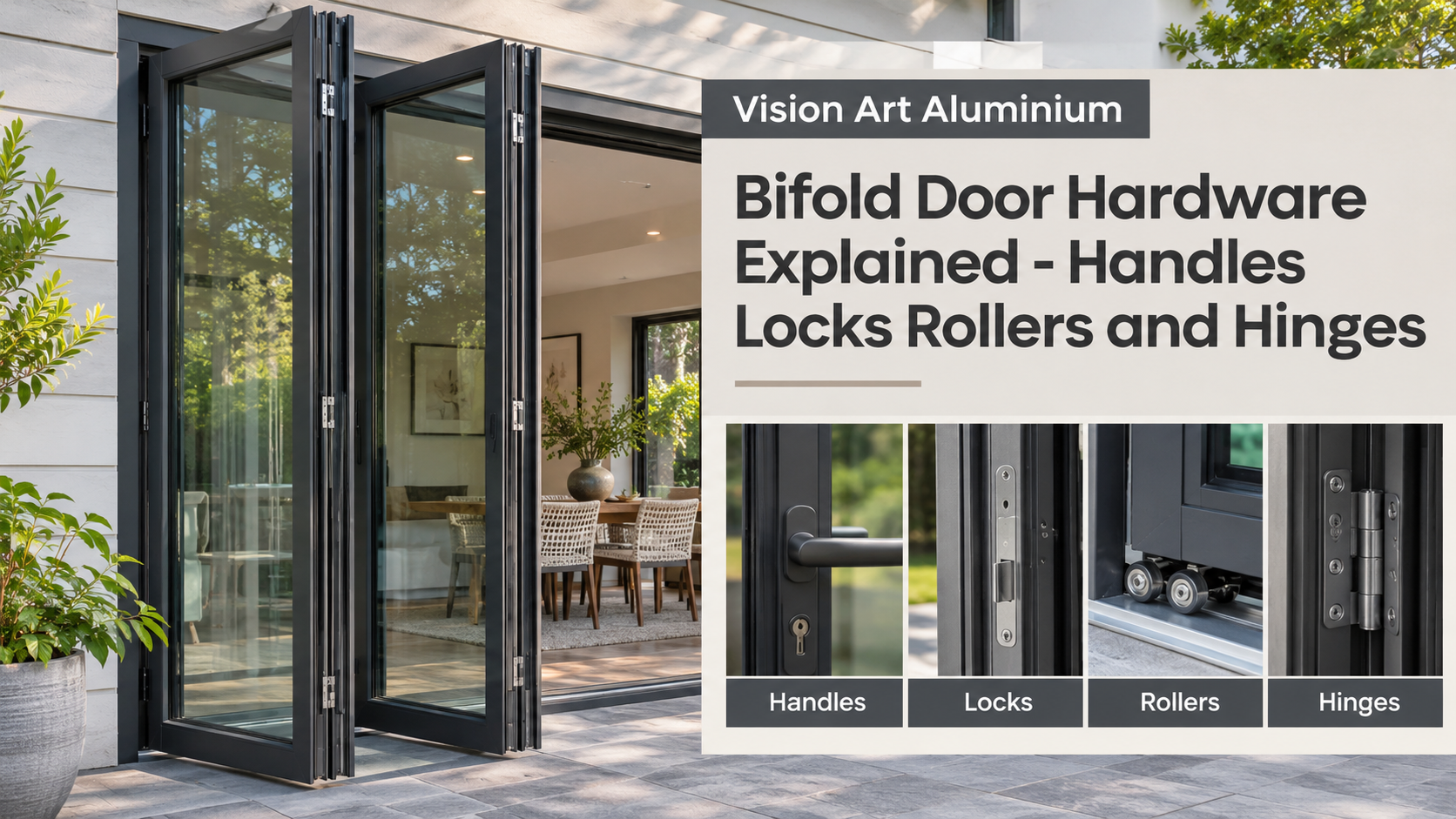
Bifold Door Hardware Explained – Handles Locks Rollers and Hinges
Bifold door hardware includes the handles, locks, rollers, hinges, tracks, and connecting components that allow folding glass panels to open, move, close, and secure correctly. Each component performs a different function. Handles provide operating control, locks secure the closed panels, rollers guide movement along the track, and hinges allow adjoining panels to fold together.
In aluminum folding systems, these components must operate as a coordinated assembly. A well-designed handle cannot compensate for a damaged roller, and a multipoint lock cannot work correctly if the panels are misaligned. Understanding these relationships helps homeowners identify operating problems, evaluate hardware options, and maintain their doors.
The Main Components of Bifold Door Hardware
The hardware used in bifold patio doors differs from conventional hinged door hardware because several connected panels must move together while remaining properly supported and aligned.
| Hardware Component | Primary Function | What to Check |
|---|---|---|
| Handles | Control door operation and activate compatible locking mechanisms. | Comfortable grip, accessible position, and smooth operation. |
| Locks | Secure panels at designated locking points. | Correct engagement, alignment, and compatibility with the door system. |
| Rollers | Allow moving panels to travel along their designated tracks. | Smooth movement, secure positioning, and unobstructed tracks. |
| Hinges | Connect folding panels and permit controlled rotation. | Stable connections, alignment, and sufficient folding clearance. |
| Tracks and Guides | Control the travel path and positioning of moving panels. | Clean running surfaces, correct alignment, and clear drainage where applicable. |
The specific combination depends on whether the system uses bottom-supported or top-hung movement, how the panels stack, and whether the configuration includes an independent access door.
Bifold Door Handles and Their Functions
A bifold door handle is the primary point of contact between the user and the operating mechanism. Depending on the configuration, turning the handle may operate a latch, activate locking points, or release a panel for opening.
Not every handle performs the same task. The main access panel may use a lever handle connected to a locking gearbox, while other folding panels may use dedicated operating handles or hardware controls.
What Makes a Handle Suitable for Folding Doors?
Handle selection involves more than appearance. Important considerations include:
- Grip and operation: The handle should be comfortable to use without requiring excessive force.
- Panel clearance: Its position and projection must accommodate the folding movement without creating interference.
- Lock compatibility: The handle must match the operating mechanism and hardware configuration.
- Finish selection: Visible hardware should complement the aluminum frame and interior finishes.
- Access requirements: Handle placement should suit the intended users and opening arrangement.
Vision Art Aluminium offers different handle designs for its folding door systems, including color-coordinated options on selected models. The appropriate choice depends on the final door configuration.
How Do Bifold Door Locks Work?
Bifold door locks secure the door assembly by engaging locking components when the panels are correctly positioned. Exterior systems commonly use multipoint locking arrangements rather than relying solely on a single latch.
A multipoint mechanism connects several locking positions through a coordinated operating system. Depending on the hardware design, operating the handle or lock mechanism engages the designated locking points along the door.
This arrangement serves two related purposes. It secures the door and helps maintain consistent panel closure. Correct compression against the weather seals also contributes to controlling drafts and water intrusion.
Locking Gearboxes and Additional Panel Security
The gearbox is the mechanism that transfers handle movement to the associated locking components. If the gearbox or connected mechanism develops a problem, the handle may become difficult to operate or the locking points may fail to engage.
Some folding configurations also use additional securing mechanisms on designated panels. Their placement depends on the panel layout and operating sequence.
Vision Art Aluminium incorporates multipoint locking concepts into its aluminum bifold doors for residential and commercial openings. The final locking arrangement should be confirmed against the selected product specification rather than assumed from the appearance of the handle.
Bifold Door Rollers and Track Movement
Rollers allow the moving sections of a folding door to travel along the track while maintaining controlled positioning. They are especially important in wide glazed openings where several interconnected panels must move in sequence.
Different folding systems distribute panel loads differently. In bottom-supported designs, the lower trolley assemblies carry the relevant panel loads while upper guides help control alignment. Top-hung systems use supporting hardware at the head track instead.
Vision Art Aluminium describes its Free Glide bottom trolley system as part of the movement arrangement used in its folding doors. This hardware supports controlled travel as panels slide and fold toward their stacking position.
Signs That Rollers Need Attention
A change in movement does not always mean a roller must be replaced. Common warning signs include:
- Increased resistance when sliding or folding panels.
- Scraping or unusual rolling noises.
- Uneven movement along the track.
- Visible debris obstructing the running path.
- Panels becoming difficult to position for closing.
Debris, track damage, alignment problems, and worn moving components can produce similar symptoms. Identifying the actual cause is important before replacing parts or making adjustments.
Why Are Hinges Essential to Bifold Doors?
Hinges connect neighboring door panels and allow them to rotate relative to one another. Without these connections, the panels could not fold into the compact arrangement that distinguishes bifold doors from ordinary sliding or swing doors.
Hinges also help maintain the intended relationship between adjacent panels during movement. Their positioning affects how neatly the panels fold, how they stack, and how they return to their closed alignment.
A typical folding system includes hinges between adjacent panels and additional pivot or support hardware at designated connection points. The exact arrangement depends on the opening design.
How Hinge Alignment Affects Operation
When a hinge connection becomes loose, damaged, or misaligned, the effects can extend beyond the immediate joint. Adjacent panels may begin to rub, closing gaps may change, or the locking mechanism may become harder to engage.
These symptoms can resemble roller problems because hinges and running hardware work together. For this reason, adjusting a hinge without understanding the complete system may introduce further alignment problems.
Heavy glazed panels should be supported and adjusted only through procedures appropriate to the specific door system. Hardware adjustments affecting panel support are best handled by qualified installers or service technicians.
How Hardware Affects Weather Protection
Bifold door hardware influences weather performance even though handles, locks, rollers, and hinges are not weather seals themselves.
When the door closes correctly, the hardware helps position the panels so the designed gaskets and seals can make proper contact. If the panels remain out of alignment, gaps may develop or the locking mechanism may not achieve the intended closure.
For exterior installations in New Jersey and New York, this relationship matters during changing seasonal conditions. Wind-driven rain, cold weather, and frequent temperature changes make proper closure and unobstructed drainage important.
Hardware alone does not determine thermal efficiency or water resistance. Frame construction, glazing, sealing design, thresholds, installation quality, and the overall tested system specification must also be considered.
Maintaining Bifold Door Hardware
Routine maintenance starts with keeping moving parts and their surrounding areas clean. Dirt accumulating in a lower track can interfere with smooth travel even when the rollers themselves remain serviceable.
A practical inspection routine includes the following steps:
- Inspect the track: Look for leaves, grit, and other material that may obstruct moving components.
- Remove loose debris: Use a soft brush or vacuum attachment without damaging the track surface.
- Check visible hinges: Look for loose connections, unusual movement, or signs of damage.
- Test normal operation: Open and close the doors gently while checking for new resistance or noise.
- Check locking engagement: Confirm that the panels close correctly before operating the locking mechanism.
- Clean exposed hardware: Use suitable nonabrasive cleaning methods and follow the manufacturer’s maintenance instructions.
Lubrication requirements vary between hardware systems. Some bearings are sealed, while other moving components require approved lubricants. Applying unsuitable products can attract dirt or interfere with the intended operation.
Never force a resistant handle or dragging panel. Persistent problems warrant professional inspection rather than repeated operation under excessive force.
Choosing Compatible Hardware for a Door Project
Replacement hardware is not automatically interchangeable between different folding systems. Components must correspond to the door profile, panel arrangement, track design, locking configuration, and required mounting positions.
For a new installation, it is useful to establish the complete hardware arrangement before fabrication. Opening direction, panel count, stacking location, threshold selection, and access requirements can all influence component placement.
A homeowner planning a patio connection may prioritize easy operation and a convenient traffic door. A larger glass opening may require a different panel arrangement and running hardware configuration. In either case, component selection should be based on the engineered door system rather than appearance alone.
Coastal and other exposed locations may also require additional attention to material compatibility, finish specification, and maintenance conditions.
When Should Bifold Door Hardware Be Inspected Professionally?
Professional inspection is appropriate when panels repeatedly drag, hinges appear to shift, rollers stop moving smoothly, or the locking mechanism fails to engage after the door is correctly positioned.
A technician can assess whether the problem originates in the hardware, panel alignment, track condition, or installation. This is more reliable than replacing an individual component without checking how it interacts with the rest of the assembly.
Vision Art Aluminium, based in Montclair, New Jersey, provides custom aluminum folding door solutions for projects throughout New Jersey and New York. Our approach considers the complete operating system, including panel configuration, handles, locking hardware, hinges, and running components. Choosing these elements together helps produce a door arrangement suited to the opening and its intended daily use.