

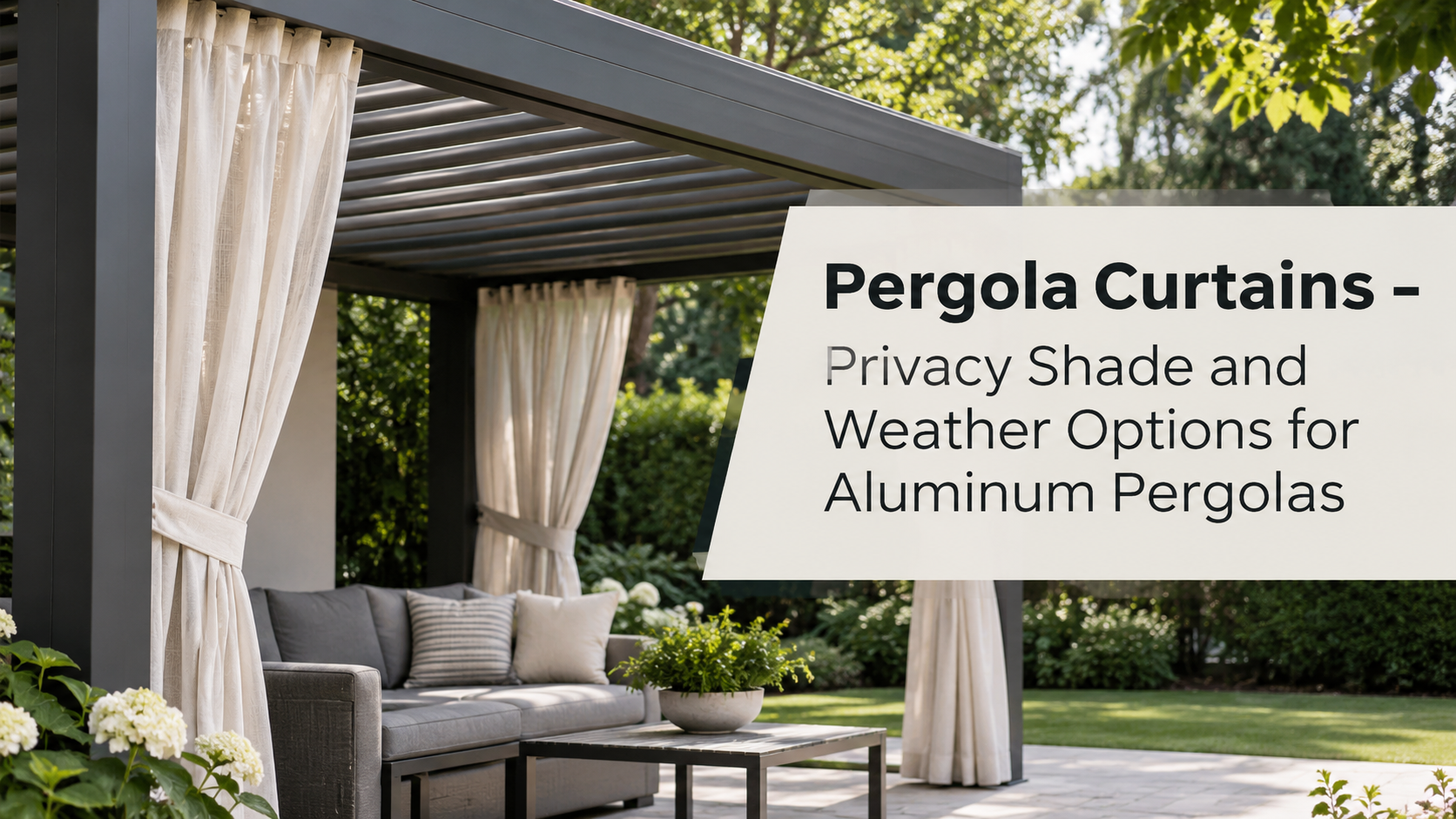
Pergola Curtains – Privacy Shade and Weather Options for Aluminum Pergolas
Pergola curtains create adjustable privacy and side shade without permanently enclosing an outdoor living space. They help block unwanted views, filter low-angle sunlight, and make covered patios more comfortable for dining and relaxing. For aluminum pergolas, the right solution depends on fabric selection, mounting compatibility, and exposure to wind and rain.
Traditional outdoor curtains offer a soft appearance and flexible coverage. Guided screens provide a more controlled alternative for homeowners who want consistent shading and reduced fabric movement. Neither option automatically transforms an open pergola into a weatherproof room.
Why Add Curtains to an Aluminum Pergola?
Even with an adjustable roof, sunlight and neighboring views can enter through the open sides of a pergola. Curtains address these conditions while allowing homeowners to maintain an open-air environment.
The main advantages include:
- Privacy: Opaque panels help obstruct direct views from neighboring properties.
- Side shade: Suitable textiles reduce exposure to sunlight entering beneath the roofline.
- Flexible coverage: Curtains can be opened or closed depending on weather and outdoor activities.
- Visual separation: Fabric panels define dining and lounge areas without permanent walls.
- Design flexibility: Different colors and textures complement modern aluminum structures.
These benefits are most effective when curtains are positioned where exposure actually occurs. Covering every side is unnecessary when privacy or shade is needed in only one direction.
Choosing the Right Pergola Curtain Fabric
Outdoor fabric must withstand sunlight, moisture, and routine movement. However, materials marketed for outdoor use do not necessarily provide identical protection or durability.
| Fabric type | Primary benefit | Important limitation |
|---|---|---|
| Outdoor polyester | Decorative privacy and flexible styling | Weather resistance varies by fabric construction |
| Solution-dyed acrylic | Color retention during outdoor sunlight exposure | Waterproof performance is not automatic |
| Outdoor mesh | Filtered sunlight with airflow | Limited privacy compared with opaque materials |
| Coated outdoor fabric | Improved moisture resistance in suitable products | May restrict ventilation and catch more wind |
Fabric specifications deserve more attention than appearance alone. Water resistance, UV protection, cleaning requirements, and compatibility with the intended mounting system should all influence selection.
Light-colored panels generally create an airy appearance, while darker fabrics provide stronger visual contrast. Actual solar protection depends on material construction and tested performance rather than color alone.
How Much Privacy Can Pergola Curtains Provide?
Privacy depends on opacity, coverage, viewing angle, and lighting conditions. An opaque curtain can obstruct a direct line of sight, but openings between panels may leave portions of a patio visible.
For closely spaced New Jersey homes, covering the side facing neighboring windows may provide the desired separation while preserving views toward the backyard.
Sheer curtains are suitable when visual softness matters more than complete screening. They offer limited privacy, particularly after sunset when lighting inside the pergola makes the fabric easier to see through.
Homeowners who need more consistent coverage can consider guided side screens. Their supported edges reduce the gaps and movement associated with conventional hanging panels.
Mounting Curtains on an Aluminum Frame
Curtain mounting must account for frame design, hardware compatibility, and the movement of fabric during use. Aluminum beams and posts should not be modified without confirming that the proposed attachment method is suitable.
Overhead curtain tracks
Tracks allow curtains to slide beneath the pergola roof along a controlled path. They provide an organized appearance and make it convenient to move fabric into a designated storage position.
Supported curtain rods
Rods provide a traditional draped appearance and may be appropriate for sheltered patios. Their supports must accommodate the fabric and expected movement without interfering with the structure.
Guided vertical screens
Guided systems use dedicated side channels and an upper housing. They keep fabric movement more controlled than loose curtains and create a continuous visual boundary when lowered.
Before installation, verify fastening locations and clearance around drainage components, motors, and lighting. Drilling into structural or drainage profiles without approval can compromise the intended operation of the pergola.
Can Curtains Work With a Louvered Pergola?
Yes. Compatible side treatments can complement a louvered pergola because the roof and perimeter perform different functions.
Adjustable roof blades regulate overhead sunlight and ventilation. Side curtains reduce exposure from lower sun angles and provide additional privacy around seating areas.
Vision Art Aluminium offers custom aluminum pergola systems with motorized louvered and retractable roof configurations. Available solutions include optional side enclosures, with compatibility determined by the selected structure and project requirements.
Roof movement, integrated drainage, and accessory clearances must be considered when planning curtain installation. Incorporating side treatments into the original design can simplify these decisions.
What Happens to Pergola Curtains During Wind?
Wind is a significant limitation for freely hanging outdoor curtains. Gusts can lift fabric, twist panels, and create repeated stress on mounting brackets or tracks.
Heavier fabric does not automatically provide better wind resistance. Dense materials may catch more wind because they allow less air to pass through.
Tiebacks can help control everyday movement, but they do not make curtains suitable for severe weather. Loose panels should be secured, retracted, or removed when conditions exceed the manufacturer’s operating instructions.
Guided screens reduce uncontrolled fabric movement through supported edges. Their actual wind resistance still depends on the product, dimensions, and installation requirements. Homeowners should confirm those limitations before selecting a system.
Do Outdoor Curtains Protect Against Rain?
Pergola curtains can reduce exposure to light spray, but ordinary fabric panels cannot reliably prevent wind-driven rain from entering an open-sided structure.
Water can pass through fabric, seams, gaps, and openings near the ground. Even waterproof textile material does not create a waterproof enclosure when installed as loose hanging curtains.
Rain protection from above depends on the pergola roof and its drainage arrangement. On suitable motorized systems, closed roof configurations direct water into integrated drainage components.
After rainfall, wet curtains should dry thoroughly before being bundled or stored. For more substantial weather protection, a purpose-designed side enclosure is generally more appropriate than decorative fabric panels.
Using Pergola Curtains Through New Jersey Seasons
Seasonal changes affect how outdoor curtains should be used. Summer conditions emphasize shade and privacy, while spring and fall introduce variable winds and intermittent rainfall.
During warm weather, partially opened panels can preserve airflow while reducing direct sunlight. In windy conditions, retracting loose fabric helps prevent unnecessary movement and hardware stress.
Winter requires particular attention to storage and maintenance. Removable curtains can be cleaned, dried, and stored according to the manufacturer’s recommendations.
Outdoor curtains should not be considered insulation. Although they may reduce minor drafts in sheltered conditions, they do not provide the thermal performance of an insulated enclosure.
Pergola Curtains vs Zip Screens
The main distinction between traditional curtains and zip screens is how the fabric is supported and controlled.
- Traditional curtains: Suitable for decorative styling, occasional privacy, and flexible fabric arrangements.
- Track-mounted curtains: Appropriate when convenient sliding movement and an orderly appearance are important.
- Zip screens: Useful when guided operation, more consistent coverage, and reduced fabric movement are priorities.
- Dedicated enclosures: Better suited to projects requiring more substantial protection from outdoor conditions.
Traditional curtains create a relaxed residential appearance. Guided systems introduce a more structured finish and may integrate more naturally into contemporary pergola designs.
The choice should reflect how frequently the side treatment will be used and whether the primary objective is privacy, shade, or additional weather screening.
Planning Curtain Placement Before Installation
An effective layout begins with observing how the patio is used throughout the day. Homeowners should identify where sunlight enters, which neighboring areas overlook the space, and where circulation must remain unobstructed.
Next, determine where panels will gather when opened. Curtains need sufficient clearance around furniture, doors, walkways, and moving roof components.
For existing pergolas, mounting compatibility should be confirmed before purchasing or installing accessories. New projects allow side treatments to be considered alongside roof configuration, drainage, and structural design.
Choosing a Suitable Pergola Side Treatment
Vision Art Aluminium is based in Montclair, New Jersey, and provides custom pergola design and installation services across New Jersey and New York. Our pergola planning process considers the outdoor layout, intended use, structural requirements, and compatible accessory options.
Homeowners should identify their priorities before selecting curtains or guided screens. Traditional fabrics are practical when adjustable privacy and decorative shade are sufficient. More structured side systems deserve consideration when controlled movement and consistent perimeter coverage matter.
Separating these requirements helps establish realistic expectations and ensures that the selected side treatment complements the pergola rather than interfering with its operation.