

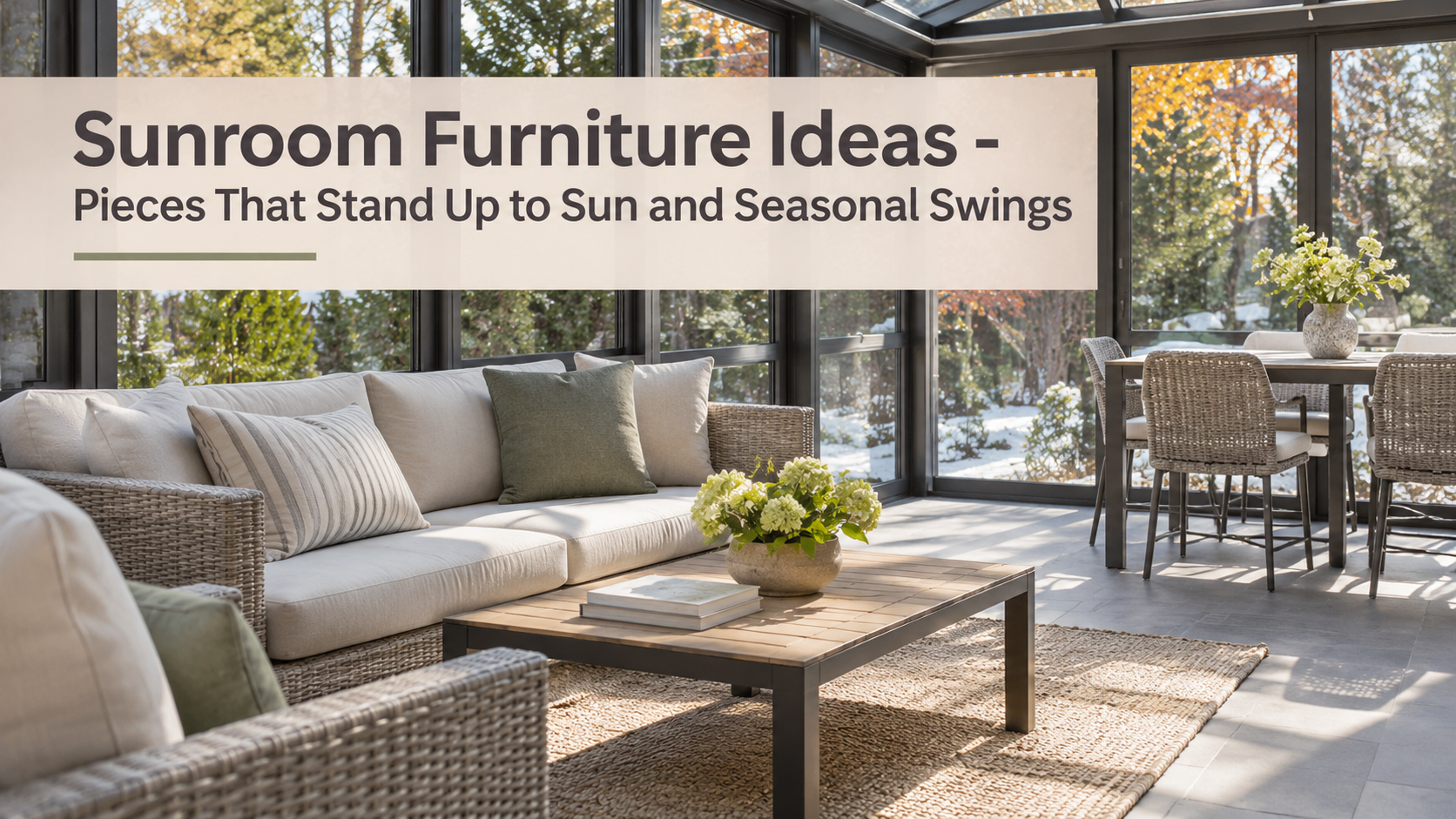
Sunroom Furniture Ideas – Pieces That Stand Up to Sun and Seasonal Swings
The most practical sunroom furniture ideas combine fade-resistant upholstery, durable frames, and layouts that account for changing sunlight throughout the year. A sunroom may look like an ordinary living room, but its large glass surfaces expose furniture to stronger daylight and potentially greater temperature fluctuations than many interior spaces.
For homeowners in New Jersey and New York, furniture selection should begin with the room’s exposure to sunlight and its heating and cooling conditions. Aluminum seating, performance fabrics, synthetic wicker, and carefully selected wood pieces can all work well. The right combination depends on whether the space is climate-controlled, how much direct sunlight enters, and how the family intends to use it.
Choose Furniture Based on Sun Exposure
Before selecting a sofa or dining set, observe where sunlight falls throughout the day. A south-facing sunroom may receive substantial sunlight during winter, while a west-facing room can experience strong afternoon sun during warmer months.
Furniture placed directly beside expansive glass panels faces different conditions from pieces positioned against an interior wall. Upholstery, decorative pillows, rugs, and finished wood can gradually change color under prolonged light exposure.
A practical arrangement separates the room into exposure zones:
- Direct sunlight zones: Use fade-resistant cushions, aluminum frames, ceramic surfaces, and other materials suited to frequent sun exposure.
- Filtered daylight zones: Consider upholstered lounge chairs, woven seating, and finished wood furniture with appropriate maintenance.
- Interior wall zones: Place bookshelves, artwork, delicate textiles, and other light-sensitive belongings away from the brightest glazing.
This approach allows a sunroom to remain comfortable and visually balanced without requiring every furnishing to be designed for outdoor conditions.
Best Furniture Materials for a Sunroom
Furniture frame materials respond differently to sunlight, humidity, cleaning, and seasonal changes. The following comparison helps match each material with suitable sunroom conditions.
| Material | Suitable Use | Important Consideration |
|---|---|---|
| Powder-coated aluminum | Chairs, tables, and lightweight lounge frames | Resists rust and requires relatively little maintenance, but exposed metal can become hot in direct sunlight. |
| Resin wicker | Casual seating and flexible conversation areas | Choose UV-stabilized products, since weather resistance varies by material quality. |
| Teak and other suitable hardwoods | Dining tables, side tables, and occasional chairs | Wood can change color and move with humidity. Finishes and regular care remain important. |
| Natural rattan | Decorative chairs and relaxed seating | Best suited to dry, climate-controlled interiors rather than damp or unheated enclosures. |
| Ceramic and stone | Tabletops and accent furniture | Generally stable under sunlight, although some surfaces can become warm and may require suitable supports. |
Powder-coated aluminum is particularly useful for homeowners who want lightweight furniture that can be repositioned easily. Synthetic wicker offers a softer visual appearance, while wood introduces warmth against modern aluminum framing.
No single material suits every sunroom. A conditioned interior can accommodate a wider range of furnishings than an enclosure exposed to extended periods of cold or dampness.
Which Fabrics Resist Fading in Strong Sunlight?
Solution-dyed acrylic and suitable solution-dyed olefin fabrics are strong candidates for sunroom upholstery. In solution-dyed manufacturing, pigment is incorporated into the fiber rather than applied only to its surface. This supports color retention when the material is exposed to sunlight.
However, fade resistance does not mean a fabric will never change color. Both ultraviolet radiation and visible light contribute to deterioration, so sunlight exposure and fabric construction still matter.
What to Look for in Upholstery
- Documented lightfastness: Check whether the manufacturer provides testing information for resistance to fading.
- Removable cushion covers: Washable or cleanable covers simplify maintenance in frequently used rooms.
- Moisture-resistant construction: Suitable cushion materials are useful where humidity or condensation may occasionally occur.
- Practical textures: Tightly woven fabrics are often easier to maintain than delicate decorative textiles.
- Replaceable cushions: Separate cushions allow worn components to be refreshed without replacing an entire furniture frame.
Neutral beige, warm gray, olive, and muted earth tones work well with modern glass enclosures. Color alone does not determine resistance to fading, however. Fabric specifications are more informative than appearance.
How Do Seasonal Temperature Changes Affect Furniture?
New Jersey and New York experience cold winters, warm summers, and periods of fluctuating humidity. These conditions influence furniture selection, especially in spaces that are not continuously heated and cooled.
Wood is particularly sensitive to changes in moisture content. Repeated swelling and shrinking can affect joints, finishes, and dimensional stability. Natural wicker may also respond poorly to prolonged dampness, while certain adhesives and upholstery components can deteriorate under unfavorable environmental conditions.
A properly designed four season sunroom provides a more suitable environment for conventional indoor furniture than an unconditioned seasonal enclosure.
Vision Art Aluminium designs sunrooms with thermally broken aluminum framing, insulated Low-E glazing, and carefully detailed connections. These components help manage heat transfer and support year-round comfort when combined with appropriate climate control.
Furniture should still be selected with local conditions in mind. Avoid positioning delicate wooden pieces near surfaces where persistent condensation develops, and maintain suitable ventilation and indoor humidity.
Sunroom Furniture Layouts for Different Activities
The most effective arrangement begins with the room’s primary purpose. A lounge, dining area, and home office require different furniture proportions and circulation patterns.
A Relaxed Reading and Lounge Space
Choose a compact sofa or loveseat with supportive cushions, accompanied by a comfortable reading chair and a small side table. Position the main seating to enjoy the outdoor view without placing occupants directly in the strongest glare.
A washable area rug can soften the room, while an adjustable shade makes reading more comfortable during bright afternoons. Upholstered furniture should be positioned where it will not interfere with operable windows or doors.
A Dining Area Surrounded by Glass
A sunroom dining area benefits from a durable tabletop and chairs that are easy to move and clean. Ceramic, appropriately finished wood, and aluminum-framed furniture offer different combinations of appearance and maintenance requirements.
Allow sufficient clearance around the table for chairs to move backward. If the sunroom includes sliding or folding doors, preserve an unobstructed route to the garden or patio.
Use simple centerpieces and washable seat cushions rather than delicate textiles that require constant protection from sunlight.
A Bright Home Office
A sunroom can accommodate a compact workstation when glare and temperature are managed. Position the desk so that direct sunlight does not fall across the monitor or shine into the user’s eyes.
Consider a desk with a durable surface, a supportive chair, and enclosed storage for paperwork and electronics. Avoid placing sensitive equipment where direct sun may cause excessive heat buildup.
Adjustable shading is especially valuable for a workspace because comfortable screen visibility changes as the sun moves throughout the day.
A Flexible Family Room
Modular seating, lightweight chairs, and movable side tables help a sunroom accommodate different activities. Furniture with rounded corners and washable materials can be practical in households with children.
Instead of filling every wall with furniture, preserve open areas for movement and keep window and door controls accessible.
Protect Furniture Without Blocking Natural Light
Low-E glazing can help reduce ultraviolet exposure and solar heat transfer, but its protective effect depends on the glazing specification. It does not eliminate every cause of furniture fading.
Interior shades, suitable solar screens, and careful furniture positioning provide additional protection. Adjustable systems allow occupants to reduce glare during intense sunlight and restore unobstructed views when conditions change.
Other useful habits include rotating loose cushions, moving decorative accessories occasionally, and following manufacturer-approved cleaning instructions. Avoid assuming that outdoor fabrics can be cleaned with any household chemical.
Additional window film should not be installed without confirming compatibility with the existing insulated glazing system and its manufacturer requirements.
Common Sunroom Furniture Mistakes
Some furniture choices create maintenance problems even when the initial arrangement looks attractive.
- Choosing fabric by color alone: Attractive upholstery may fade quickly if it lacks suitable lightfastness.
- Using delicate indoor furniture in an unheated enclosure: Humidity and temperature variations may damage sensitive materials.
- Blocking operable glass panels: Large furniture can interfere with ventilation, access, and door movement.
- Ignoring afternoon glare: A visually appealing seating position may become uncomfortable during certain hours.
- Overcrowding the perimeter: Excess furniture can reduce usable circulation space and obstruct panoramic views.
Furniture selection should balance appearance with the actual environmental conditions and daily activities of the room.
Plan the Furniture Before Sunroom Installation
Furniture planning is most effective when it begins during the sunroom design process. The intended layout influences where doors should open, how much uninterrupted wall space is needed, and where shading or electrical outlets may be useful.
For example, a dining room requires clear circulation around the table, while a reading room benefits from comfortable seating positions relative to the sun. A home office may require different glazing and shading considerations than a casual lounge.
Vision Art Aluminium is based in Montclair, New Jersey, and designs custom aluminum sunrooms for properties throughout New Jersey and New York. Our approach considers the architecture of the home, natural light, glazing configuration, and intended use of the finished space.
Planning these elements together makes it easier to select furniture that complements the structure rather than competing with its windows, doors, and views. A well-furnished sunroom should remain comfortable during everyday use while preserving the daylight and outdoor connection that make the space distinctive.