

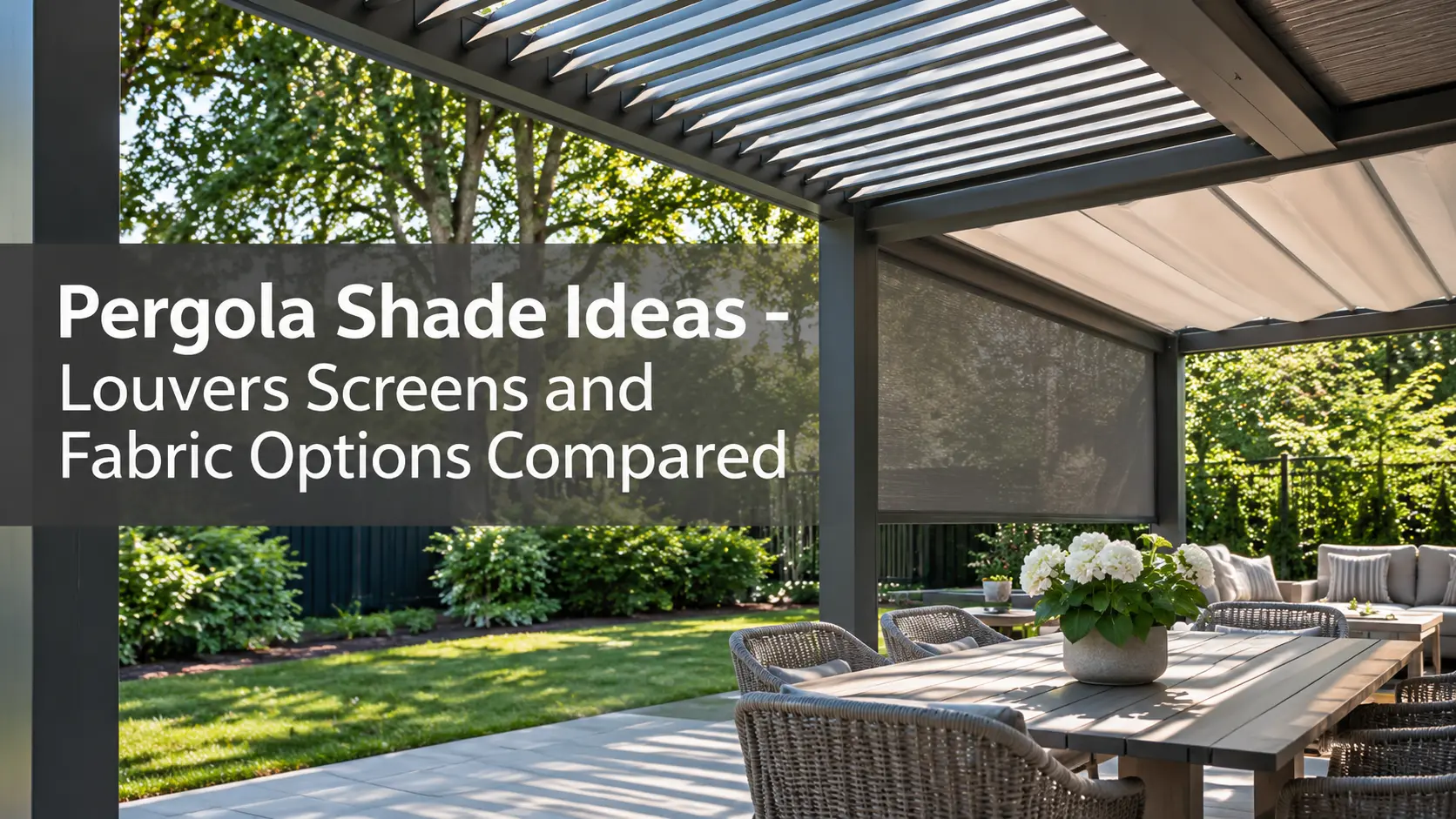
Pergola Shade Ideas – Louvers Screens and Fabric Options Compared
The most effective pergola shade ideas address two different sources of sunlight: direct rays from above and low-angle sun entering through the open sides. Adjustable aluminum louvers control overhead exposure, vertical screens reduce side glare, and fabric covers create continuous or retractable shade. The right combination depends on patio orientation, the time of day, and how the outdoor space is used.
For homeowners in New Jersey and New York, shade planning also involves seasonal changes. A comfortable summer dining area may need more daylight in spring or fall. Rather than permanently blocking sunlight, an adjustable system allows the same patio to respond to changing conditions without sacrificing its open-air character.
Three Pergola Shade Methods Compared
Louvers, screens, and fabric covers operate differently. Each controls sunlight from a particular direction, so choosing between them requires more than comparing appearance.
| Shade method | Primary function | Main advantage | Main limitation |
|---|---|---|---|
| Adjustable aluminum louvers | Control overhead sunlight | Change roof angle to balance shade and ventilation | Cannot independently block low sun entering through open sides |
| Vertical zip screens | Reduce side glare and improve privacy | Protect exposed sides while allowing selected levels of visibility | Do not replace overhead roof coverage |
| Retractable fabric roof | Provide adjustable overhead coverage | Create broad shade and retract for an open-sky experience | Fabric requires appropriate cleaning and weather management |
These methods are not necessarily alternatives. A pergola with adjustable roof panels and side screens can address sunlight entering from several directions. However, a covered roof alone may be sufficient for a patio surrounded by trees or buildings that already block low-angle sunlight.
Adjustable Louvers for Changing Sunlight
An aluminum pergola with rotating louvers provides direct control over the amount of sunlight passing through its roof. The blades tilt between open and closed positions, allowing homeowners to choose between stronger shade, filtered daylight, and greater overhead ventilation.
When the blades are partly open, daylight can enter through the gaps while warm air has a path upward. Closing the panels provides more complete overhead coverage. The ideal blade position depends on sun direction because tilting the same panels differently can change where shadows fall across the patio.
Vision Art Aluminium offers the Sky Blade louvered pergola system with motorized rotating aluminum roof panels. Its adjustable design makes it practical for patios that require different levels of shade throughout the day.
The main advantage is precision. Homeowners can shade a dining table without necessarily keeping the entire roof closed throughout the afternoon. Louvers are particularly useful when the pergola connects to a house because excessive permanent shading could also reduce daylight entering adjacent interior rooms.
Vertical Screens for Afternoon Glare and Privacy
Roof shading becomes less effective against sunlight arriving horizontally. This is especially noticeable when the sun is low in the sky during the morning or late afternoon. A vertical screen addresses this problem by covering the exposed side of the structure.
Zip screens use fabric guided within vertical side tracks. Unlike loose hanging curtains, the screen edges remain supported as the material moves up or down. This arrangement provides more consistent coverage across an opening.
Fabric selection changes the result. Open-weave mesh reduces glare while preserving some visibility toward the yard. Denser privacy material limits views more strongly but also reduces incoming daylight. Blackout material provides greater visual separation at the expense of openness.
Privacy performance also depends on lighting conditions. A mesh screen that obscures the interior during a bright afternoon may provide less privacy after dark when lights illuminate the space behind it.
For properties with neighboring houses close to the patio, vertical screens can serve two purposes without requiring a permanent solid wall. They provide adjustable privacy while reducing direct sunlight from the exposed direction.
Fabric Covers for Softer Overhead Shade
Fabric-covered pergolas offer another approach to controlling sunlight. Instead of rotating individual rigid panels, a retractable roof extends or withdraws a continuous fabric canopy.
The primary difference is how the roof opens. Louvers create adjustable spaces between blades, while a fully retracted fabric canopy can expose the pergola opening to the sky. This makes retractable covers attractive for homeowners who prefer uninterrupted daylight when shade is unnecessary.
Vision Art Aluminium’s SkyFlow retractable pergola uses a motorized fabric roof supported by an aluminum structure. The system provides coverage when extended and opens the space when retracted.
Fabric type influences light quality. Opaque materials create deeper shade, while light-filtering materials can produce a softer appearance beneath the canopy. Homeowners should review actual material samples rather than assuming that every fabric provides the same level of light control.
Fabric roofs also require attention to drainage, tension, cleaning, and operating conditions. A decorative shade sail or simple textile canopy should not be assumed to provide the same weather protection as a purpose-designed retractable roof system.
How Should Pergola Shade Change Throughout the Day?
A useful shade strategy follows the sun’s movement rather than relying on one fixed setting. The following operating pattern illustrates how different shade elements can work together.
| Time of day | Typical shade challenge | Practical adjustment |
|---|---|---|
| Morning | Low sunlight entering from the east | Lower the exposed side screen or adjust roof louvers to reduce direct glare |
| Midday | Stronger overhead sunlight | Angle or close louvers or extend fabric roof coverage over seating areas |
| Late afternoon | Low western sunlight reaching beneath the roof edge | Lower a west-facing screen while adjusting overhead shade as needed |
| Evening | Less direct solar exposure | Open the roof for airflow or sky views and adjust screens for privacy |
This pattern changes with the season, surrounding buildings, nearby trees, and the direction the patio faces. A south-facing pergola and a west-facing pergola will not experience identical shade conditions.
Before selecting equipment, observe where sunlight reaches the intended seating area at different times. Mark areas where glare interferes with dining, reading, or using a screen. This simple exercise helps distinguish a roof-shading problem from one that requires side protection.
Which Shade Options Handle Rain and Wind?
Shade control and weather protection are related but separate functions. A material that blocks sunlight effectively does not automatically provide reliable shelter during rain or strong wind.
Closed aluminum louvers on a purpose-designed roof can direct rainfall into integrated drainage channels. However, an open-sided pergola remains exposed to wind-driven rain entering from the perimeter.
Retractable fabric roofs can provide rain protection when designed with appropriate drainage and operating requirements. Their suitability for particular conditions depends on the system configuration rather than fabric appearance alone.
Vertical screens offer additional protection against wind and blowing debris, but they are not structural walls or substitutes for glazed enclosures. Every moving component should be operated within its manufacturer’s weather limitations.
For New Jersey properties experiencing snow, winter winds, and seasonal storms, structural engineering and appropriate operating procedures matter as much as shade performance. The selected pergola should be evaluated for the actual installation location.
Designing Shade Around Patio Activities
The intended use of a patio helps determine whether one shade method is sufficient or a combination is more practical.
- Outdoor dining: Adjustable roof coverage keeps direct sunlight away from the table. Side screens are useful when evening sun reaches diners below the roofline.
- Lounge seating: Fabric coverage can create a softer setting, while adjustable louvers allow occupants to change the light without moving furniture.
- Outdoor work areas: Screen placement matters because low-angle sunlight and reflected glare can make laptop displays difficult to see.
- Private backyard retreats: Denser side screens help limit views from neighboring properties while leaving other sides open toward the garden.
- Patios connected to living rooms: Adjustable overhead shade helps preserve access to daylight when stronger coverage is unnecessary.
A common design mistake is treating the entire pergola as one uniform shade zone. A dining table near the western edge may experience direct afternoon sunlight while seating closer to the house remains shaded. Screen placement and furniture arrangement should reflect these differences.
What Should Homeowners Check Before Installation?
Effective pergola installation begins with the site’s physical conditions and expected use. Important considerations include roof orientation, available mounting surfaces, drainage routes, electrical access for motorized components, and the position of nearby windows or doors.
Screen systems also require sufficient space for their side tracks and upper housings. Fabric roofs need the correct structural configuration and clearance for their movement. Adding these elements during initial planning can avoid conflicts between posts, beams, and accessories.
Local zoning and building requirements should also be checked. Approval requirements can vary with the municipality, property layout, attachment method, and project scope.
Homeowners should confirm whether a proposed combination of roof panels, screens, and controls is compatible with the selected system. Not every accessory or configuration is available for every pergola design.
Choosing the Right Shade System for Your Backyard
The strongest pergola shade solution is the one that addresses the direction of sunlight and the way the patio is actually used. Choose rotating louvers when precise overhead adjustment is the priority. Consider a retractable fabric roof when broad coverage and an open-sky option are more important. Add vertical screens when low-angle glare or privacy remains a concern.
Vision Art Aluminium is based in Montclair, New Jersey, and serves residential and commercial projects throughout New Jersey and New York. Our Sky Blade and SkyFlow pergola systems provide different approaches to adjustable outdoor coverage.
By reviewing patio orientation, seating layout, weather exposure, and desired controls together, our team can help determine an appropriate pergola configuration for the property.