

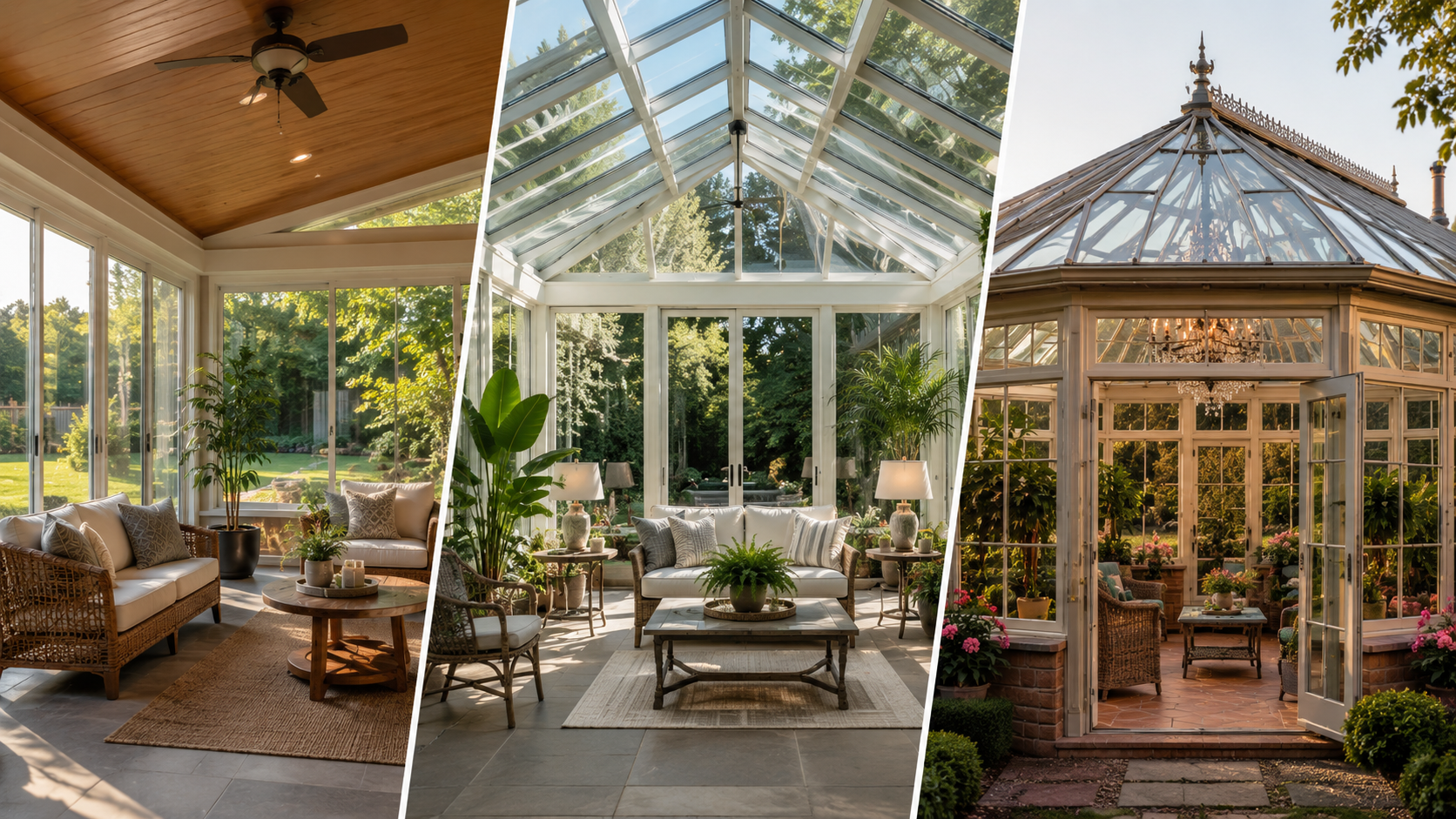
Sunroom vs Solarium vs Conservatory: Key Differences
What is a sunroom?
A sunroom is a glass-walled living space attached to a home, built to bring in daylight while staying usable across seasons. The structure typically pairs a frame with large glazed panels on the walls and a roof that is usually solid. Vision Art Aluminium, a New Jersey contractor based at 28 Valley Road, Suite 1, Montclair, NJ 07042, builds Four Season sunrooms for clients across New Jersey and New York.
A sunroom differs from a screened porch because it uses sealed glass rather than mesh. The Four Season design from this maker uses a thermal aluminum frame and double-glazed tempered Low-E (low emissivity) glass, the coating that reflects heat back into the room. A waterproof seal keeps moisture out. These features let the space hold a stable temperature through winter and summer alike.
What is a solarium?
A solarium is a fully glazed room where the ceiling itself is glass, leaving the sky visible from inside. The word comes from the Latin solarium, meaning a place exposed to the sun. Unlike a sunroom with a solid roof, a solarium replaces the roof with angled or curved glass panels, maximizing overhead light and sky views.
A solarium trades that open feel for higher upkeep and weaker thermal control. Per the Vision Art Aluminium FAQ, the glass ceiling makes a solarium less energy efficient and higher maintenance than a sunroom. Overhead glass collects debris, faces direct sun load, and loses heat faster than an insulated roof. Homeowners who want maximum daylight accept these trade-offs.
What is a conservatory?
A conservatory is a glass-and-frame room rooted in 19th-century British garden architecture, originally built to grow plants in cold climates. The structure combines glazed walls with a pitched or domed glass roof, often in an ornate, period style. Conservatories historically used wood or wrought iron, though modern versions use aluminum or uPVC (unplasticized polyvinyl chloride) frames.
A conservatory sits closest to a solarium in form because both feature a glass roof. The defining trait is style: a conservatory leans decorative and traditional, with detailed framing and classical proportions. The roof glazing means a conservatory shares the solarium’s heat-gain and maintenance profile rather than the sunroom’s insulated stability.
What are the key differences between them?
The key difference among these three structures is the roof. A sunroom usually has a solid, insulated roof and can optionally use a glass roof; a solarium and a conservatory both put glass overhead. That single choice drives the gaps in year-round comfort, energy use, and upkeep that separate the three.
Roof type sets the chain of trade-offs. A solid roof, as used in the Four Season sunroom, holds heat and blocks overhead sun, so the room stays usable in January and July. Glass roofs on solariums and conservatories invite more light and more heat swing, which raises both cooling demand and cleaning effort. Glazing quality, such as Low-E double glazing, narrows but does not erase that gap.
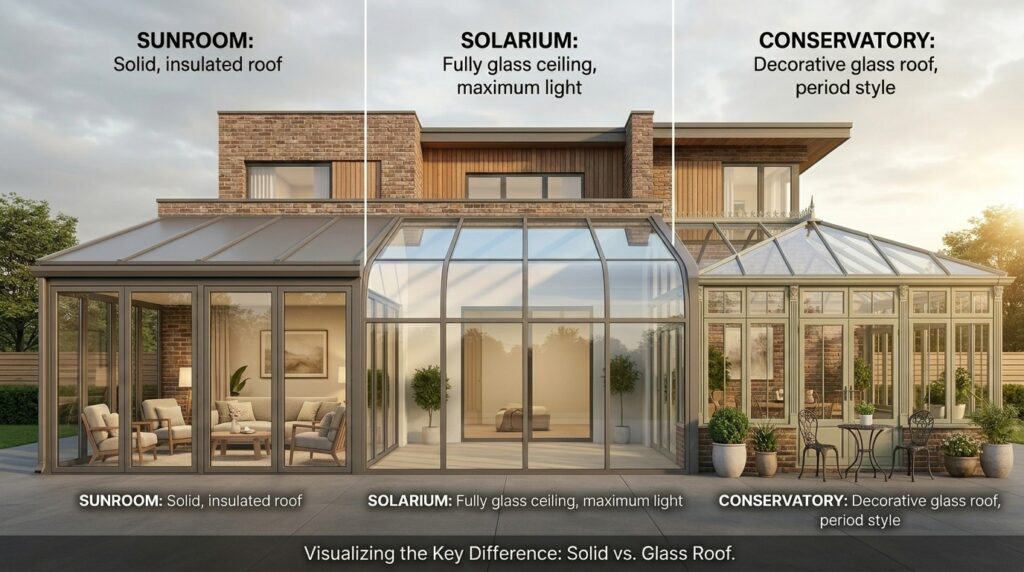
- Roof: sunroom mostly solid, solarium and conservatory glass
- Year-round use: strongest in an insulated sunroom
- Maintenance: lowest for a solid-roof sunroom, highest for a glass ceiling
- Style: conservatory most decorative, sunroom most modern
- Energy efficiency: best with thermal frames and Low-E glass
Sunroom vs solarium vs conservatory: the comparison table
The comparison table below maps each structure across the five factors that matter most when planning an addition. Vision Art Aluminium builds the four-season type as an aluminum sunroom with a thermal frame and sealed glazing. The other two are shown for structural contrast, not as products on offer.
| Factor | Sunroom | Solarium | Conservatory |
| Roof | Usually solid, glass optional | Glass (sky visible) | Glass, pitched or domed |
| Glazing | Double-glazed Low-E on walls | Glass walls and ceiling | Glass walls and roof |
| Year-round use | Strong with thermal frame | Limited by heat swings | Limited by heat swings |
| Maintenance | Lower | Higher (overhead glass) | Higher (overhead glass) |
| Cost and energy | Better energy efficiency | Less energy efficient | Less energy efficient |
How does roof type affect energy and cost?
Roof type is the single biggest driver of running cost in a glazed room. A solid, insulated roof keeps conditioned air inside and shields the room from direct overhead sun, which cuts both heating and cooling loads. A glass ceiling does the opposite: it gains heat fast in summer and sheds it fast in winter, so climate-control bills run higher year after year.
Glazing technology offsets part of the gap but not all of it. Double-glazed tempered Low-E glass, used in the Four Season sunroom, traps two layers of insulating air space and reflects radiant heat. A solarium or conservatory with the same wall glass still loses ground because its roof glazing faces the full sky. Upfront build cost varies by size, materials, and permits, so verify a project quote with the contractor.
- Solid roof: lowest ongoing energy cost, steadiest indoor temperature
- Glass roof with Low-E: better than plain glass, still warmer in summer
- Plain single glazing: highest heat loss and condensation risk
Which one is right for your home?
The right structure depends on how you weigh daylight against comfort and upkeep. A sunroom suits homeowners who want a space usable in every season with lower maintenance, since the solid roof and Low-E glazing hold a steady temperature. The Four Season model from Vision Art Aluminium fits New Jersey and New York climates, where winters are cold and summers are humid.
A solarium suits those who prioritize an open sky view and accept higher cleaning and energy costs, because the glass ceiling is the whole point of the form. A conservatory suits a period or garden aesthetic, trading the same glass-roof penalties for decorative styling. Roof choice, glazing quality, and local climate together decide which trade-off makes sense for a given home.
This content is for informational purposes only; building specifications, permit requirements, and project costs vary, so verify current details with a qualified contractor before deciding.
Frequently Asked Questions
Is a sunroom or a solarium better?
A sunroom and a solarium serve different goals, so neither is universally better. A sunroom usually has a solid roof, giving stronger year-round use and lower maintenance. A solarium has a glass ceiling that shows the sky, offering more daylight but less energy efficiency and higher upkeep. The better choice depends on whether comfort or open sky views matter more.
What are the key differences between them?
The key difference is the roof. A sunroom mostly uses a solid, insulated roof, while a solarium and a conservatory both use glass overhead. That choice cascades into year-round usability, maintenance, and energy cost. A conservatory adds a decorative, traditional style on top of its glass roof, distinguishing it from the more open, plain solarium form.
Which one is cheaper to run?
A sunroom is generally cheaper to run because a solid, insulated roof reduces heating and cooling demand. Solariums and conservatories lose more energy through their glass ceilings, raising ongoing climate-control costs. Low-E double glazing narrows the gap but does not close it. Upfront build cost depends on size, materials, and permits, so confirm figures with the contractor.
Can a sunroom be used year-round?
A four-season sunroom can be used year-round when built with a thermal aluminum frame and double-glazed tempered Low-E glass. Vision Art Aluminium builds this Four Season type with a waterproof seal for New Jersey and New York homes. The insulated frame and reflective glazing hold a stable indoor temperature through cold winters and humid summers, unlike single-glazed three-season rooms.
When should you pick a solarium or conservatory instead?
Pick a solarium when an open overhead sky view is the main goal and higher maintenance is acceptable. Pick a conservatory when a traditional, decorative garden-room style matters and you want a glass roof in a period design. Both deliver more overhead daylight than a solid-roof sunroom, trading away some energy efficiency and adding cleaning effort for the glass ceiling.