

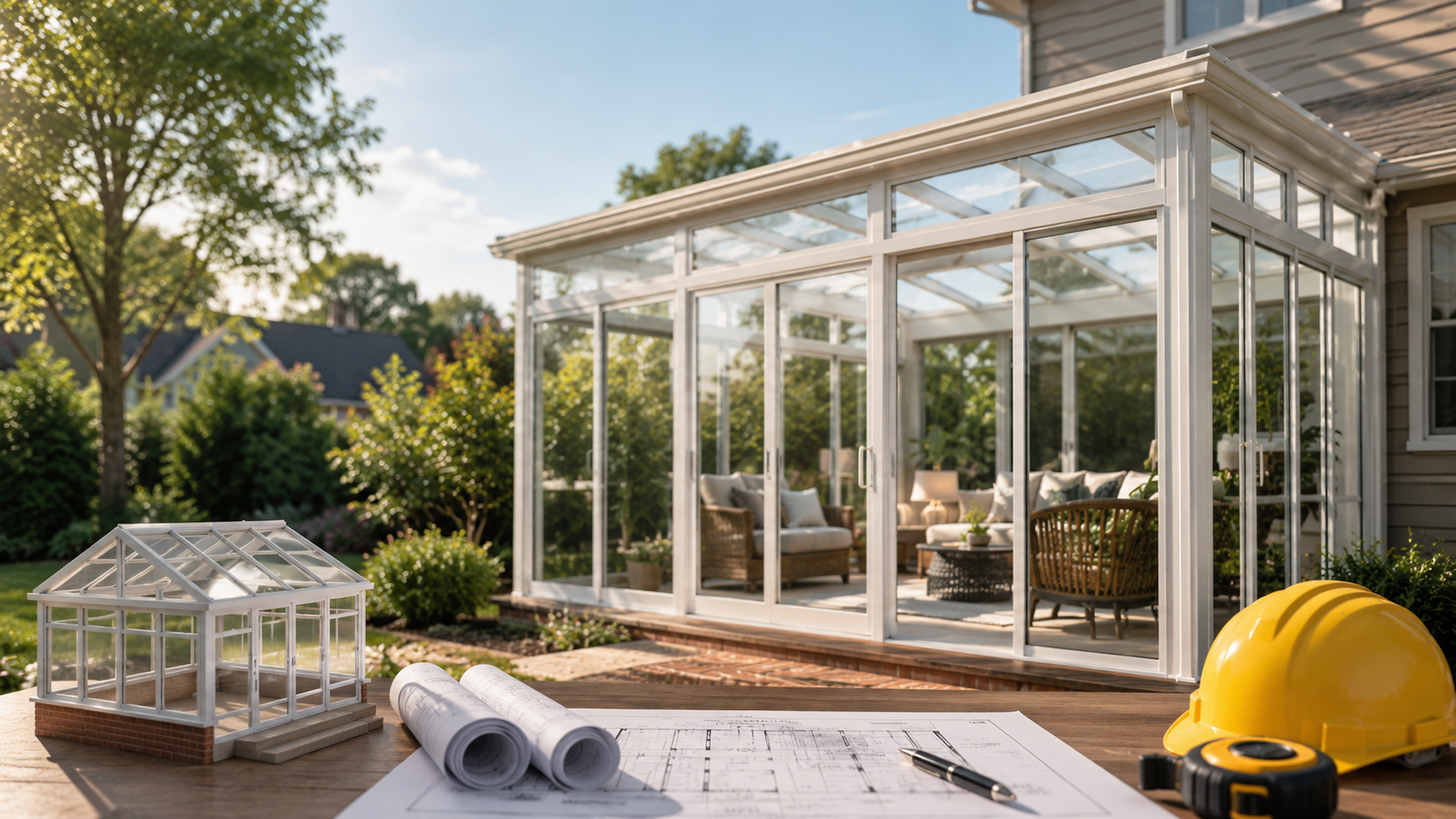
Do You Need a Permit for a Sunroom in New Jersey?
Do sunrooms need a permit in New Jersey?
A sunroom permit in New Jersey is the written approval a homeowner must obtain from the local building department before adding an enclosed glass room to a house. Sunroom additions count as new permanent structures, so they fall under the New Jersey Uniform Construction Code (the statewide building rulebook adopted in 1975). A sunroom changes a building’s footprint, load path, and energy envelope, which means the work generally requires a building permit reviewed by your township. Vision Art Aluminium, a New Jersey based aluminum systems contractor in Montclair, prepares the drawings and documentation for these permits as part of its build process.
Requirements are set at the township level, so the exact submittals and fees differ between Montclair, Hackensack, and Princeton. Most New Jersey municipalities follow the same core framework: a zoning review for placement, a building review for structure, and inspections during construction. A glass-enclosed addition with heating or year-round use, such as a four season sunroom, almost always needs a permit because it adds conditioned living space.
Why does a sunroom addition need a building permit?
A building permit confirms that a sunroom meets safety, structural, and energy standards before and after construction. The New Jersey Uniform Construction Code requires permits for new structures, additions, and changes that affect the building’s structure or systems. A sunroom attaches to the house, sits on a foundation, and often connects to electrical wiring, so it triggers each of these categories at once.
Permits protect the homeowner as much as the township. An unpermitted addition can block a future home sale, void parts of a homeowner insurance policy, or force costly removal if discovered during a title search. Code officials inspect for snow load, wind load, egress, and proper sealing. New Jersey assigns design loads by region, and a sunroom’s roof and glass must carry the same snow and wind forces as the rest of the house.
The permit also records the work in the municipal property file. That record raises the home’s assessed value and documents the addition for the next owner. A sunroom built without this paperwork exists legally as an unrecorded structure, which appraisers and lenders treat as a liability rather than an asset.
What triggers a permit for a sunroom in New Jersey?
A permit trigger is any feature of the project that brings it under a specific section of the construction code. Sunrooms touch several triggers at once because they combine a foundation, a roof, glazing, and often heat and electricity. The table below maps common project features to the review they usually activate.
| Project feature | Review usually triggered | Typical reason |
| New foundation or footings | Building and structural | Frost depth and load bearing |
| Attachment to the house | Building and structural | Shared wall and roof load |
| Setback or footprint change | Zoning | Property line distance limits |
| Electrical outlets or lighting | Electrical subcode | Wiring safety inspection |
| Heating or HVAC tie-in | Mechanical subcode | Energy code compliance |
| Year-round insulated glazing | Energy and building | Conditioned space standards |
A three season sunroom with no heat may face a lighter review than a four season model, but it still needs a building permit because the structure attaches to the home. Townships rarely waive permits for enclosed additions, even small ones. A screened porch with no walls sits in a different category and sometimes needs only a zoning check.
How do zoning and setback rules affect a sunroom?
Zoning rules govern where a sunroom can sit on a lot, separate from whether it is structurally sound. Each New Jersey township sets a minimum setback, meaning the required distance between a structure and the property line. A rear-yard sunroom that crosses that line cannot be permitted as drawn, even with perfect engineering.
Setbacks vary widely by zone and town, often falling in the 5 to 25 foot range for rear yards, though the exact figure comes from the local zoning ordinance. Lot coverage is the second zoning limit: many towns cap the percentage of a lot that buildings may cover. A sunroom that pushes total coverage past that cap needs a variance, which is a formal exception granted by the zoning board.
A variance adds time and a public hearing to the process. Homeowners on tight lots, corner lots, or in historic districts face the most zoning friction. Vision Art Aluminium reviews placement during its site inspection step so the drawings reflect the lot’s real setback and coverage limits before submission.
What about foundation and electrical requirements?
Foundation and electrical work are the two technical reviews most likely to stop a sunroom plan. New Jersey requires footings to reach below the frost line, the depth at which ground freezing stops, which sits near 36 inches in much of the state. A sunroom on a shallow slab can heave and crack in winter, so code officials check footing depth closely.
Electrical work falls under a separate subcode and a separate inspection. Adding outlets, switches, or lighting to a sunroom requires a licensed electrician and an electrical permit in most townships. A four season sunroom with heating also triggers the mechanical subcode, which checks the heat source and the energy envelope.
The glazing itself carries requirements. A four season aluminum sunroom uses a thermal aluminum frame and double-glazed tempered Low-E glass, which meets the energy code for conditioned space. Tempered glass is required near floors and doors as a safety measure, since it shatters into blunt pieces rather than sharp shards.
How does the town approval and inspection process work?
The town approval process moves a sunroom from drawings to a finished, inspected structure in a fixed sequence. The homeowner or contractor submits a permit application with construction drawings to the municipal building department. A plan reviewer checks the drawings against the construction code and zoning ordinance, then issues the permit or requests corrections.
The numbered steps below outline the typical New Jersey path:
- Prepare construction drawings and a site plan showing setbacks.
- Submit the permit application to the local building department.
- Pass zoning review for placement and lot coverage.
- Receive the building permit after plan approval.
- Build the sunroom with the permit posted on site.
- Pass inspections at footing, framing, electrical, and final stages.
- Receive the certificate of approval closing out the permit.
Inspections happen in stages, not all at once. A code official inspects the footings before the slab pours, the framing before walls close, and the electrical before final sign-off. Vision Art Aluminium handles drawings and permit documentation in its build process, then coordinates with the homeowner’s contractor for the work the township requires a local license to perform.
How long does the sunroom permit process take?
The permit timeline depends on the township, the completeness of the drawings, and whether a variance is needed. A straightforward sunroom with clean drawings and no zoning conflict often clears plan review in a few weeks, though busy departments take longer. A project that needs a zoning variance adds a public hearing and can extend the timeline by a month or more.
Manufacturing and installation run on a separate clock from the permit. Vision Art Aluminium reports an average installation time of about one week once the town approval and manufacturing are complete. The permit and the factory lead time usually overlap, so the build phase begins only after approval is in hand.
Homeowners shorten the timeline most by submitting complete, accurate drawings the first time. Missing setback dimensions, an unsigned application, or a missing electrical detail sends the package back for revision. Each round of corrections restarts part of the review clock at the building department.
The verdict on sunroom permits in New Jersey
A sunroom addition in New Jersey requires a building permit in nearly every case because it adds a permanent, often heated structure to the home. The work passes through three reviews: zoning for placement, building for structure, and subcode inspections for electrical and mechanical systems. A four season model with insulated glazing and heat draws the fullest review because it creates conditioned living space.
Setbacks, lot coverage caps, and frost-depth footings near 36 inches are the limits most likely to reshape or delay a plan. The permit protects resale value, insurance coverage, and structural safety, which is why an unpermitted sunroom becomes a liability at sale. Vision Art Aluminium prepares the drawings and permit documentation as part of its New Jersey and New York build process and works alongside the homeowner’s contractor.
This content is for general informational purposes only and is not legal or building-code advice. Sunroom permit requirements vary by township; verify the current rules and fees with your local building department before starting work.
Frequently Asked Questions
Do you always need a permit for a sunroom in New Jersey?
A sunroom permit is required in nearly all New Jersey townships because the addition attaches to the home and adds a permanent structure. The New Jersey Uniform Construction Code treats sunrooms as additions, which need a building permit. Even a three season model on a foundation typically needs one, since it changes the building footprint.
How much does a sunroom permit cost in New Jersey?
Sunroom permit fees are set by each township and usually scale with the project’s construction value, so no single statewide figure applies. Costs commonly include a building permit fee plus separate electrical and mechanical subcode fees. Your local building department publishes its current fee schedule, which is the only reliable source for an exact number.
Does a four season sunroom need more approvals than a three season one?
A four season sunroom typically needs more reviews because it adds heat and insulated glazing, creating conditioned living space. That triggers the mechanical and energy subcodes on top of the building and electrical reviews. A three season sunroom without heat often faces a lighter review, but it still requires a building permit for the structure itself.
Can I build a sunroom without a permit and add it later?
An unpermitted sunroom creates real risk, since townships can require removal, fine the owner, or block a home sale until the work is recorded. Insurance policies may also deny claims tied to unpermitted additions. Retroactive permits exist in some towns but often cost more and may require opening finished walls for inspection.
Who pulls the permit, the homeowner or the contractor?
Either the homeowner or a licensed contractor can pull a sunroom permit in New Jersey, though many townships prefer a licensed party for electrical and structural work. Vision Art Aluminium prepares the drawings and permit documentation, then coordinates with the homeowner’s contractor for the licensed work. The building department confirms who may submit each subcode application.