

Frameless Glass Office Partitions: Cost, Soundproofing (STC) and Types
What is a frameless glass office partition?
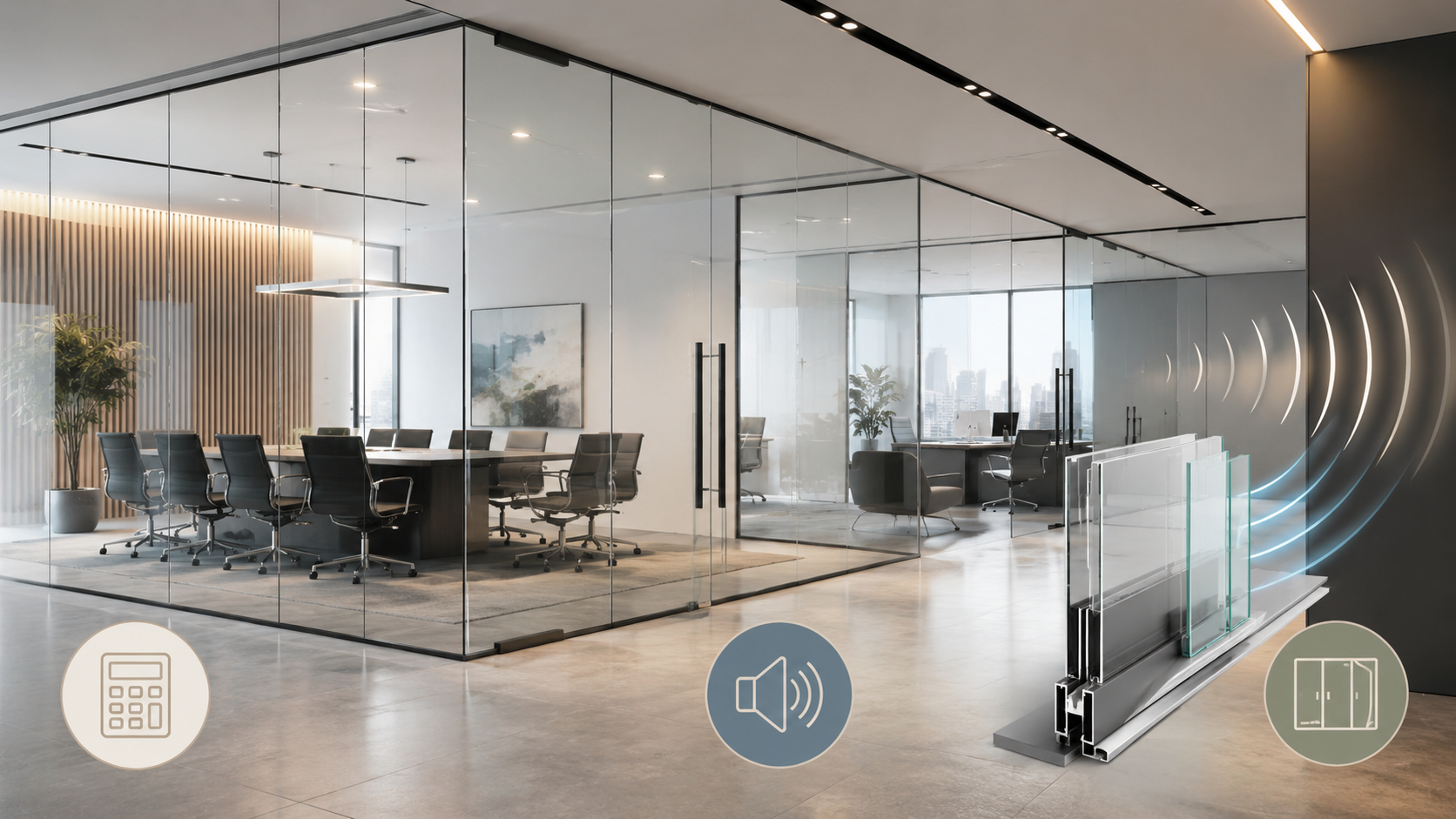
A frameless glass office partition is an interior wall built from large glass panels held by minimal top and bottom tracks, with no vertical metal frame around each pane. It separates workspaces while letting daylight pass through the whole floor. Vision Art Aluminium, a New Jersey aluminum systems manufacturer based in Montclair, supplies this partition type to projects across New Jersey and New York.
The partition category sits between fixed drywall and open-plan layouts. It gives visual separation without blocking light or sightlines. Vision Art Aluminium builds its frameless office partition on the InterNo 42 Series system, with glass panels reaching up to 12 ft in height and a glass thickness of 1/2 in. The company handles design, drawings, manufacturing, and installation as one service.
Frameless does not mean unsupported. Slim aluminum channels (recessed tracks at the floor and ceiling) carry the panel weight, and the vertical joints between panels are sealed with clear silicone or a thin dry gasket. This is why the wall reads as continuous glass to the eye while still meeting the structural and acoustic needs of a working office.
What types of frameless glass office partitions exist?
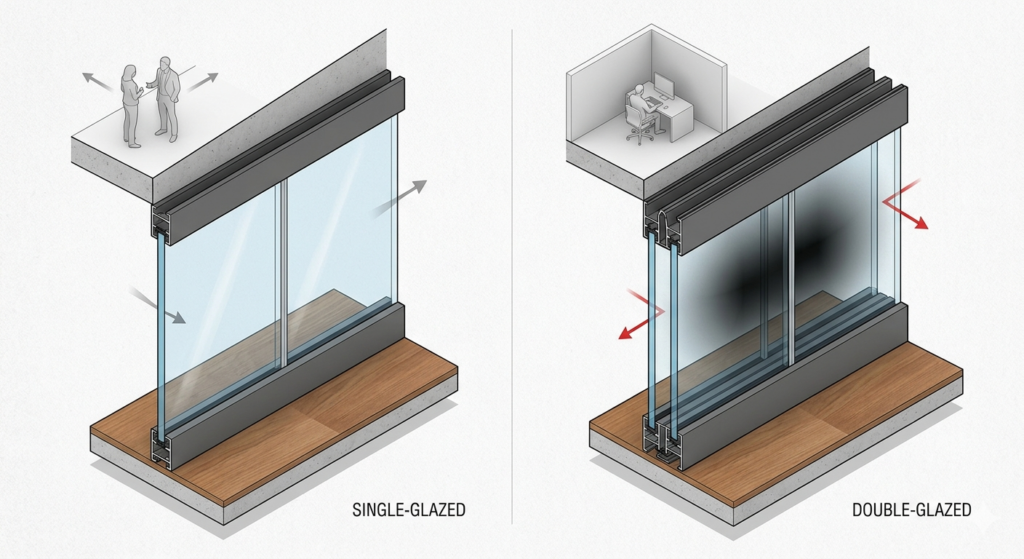
Frameless glass office partitions split into two structural families: single-glazed and double-glazed. A single-glazed partition uses one pane per opening, while a double-glazed partition uses two panes with a sealed air cavity between them. The cavity is what raises the acoustic rating, so the choice drives both sound performance and cost.
Movement type adds a second split. Fixed partitions stay in place as a permanent interior wall, and sliding or operable partitions move on a track to open or close a room. The table below summarizes the common configurations and their typical use.
| Type | Construction | Best-fit use | Relative cost |
| Single-glazed fixed | One pane, sealed joints | Open team zones, meeting nooks | Lower |
| Double-glazed fixed | Two panes, air cavity | Private offices, board rooms | Higher |
| Single-glazed sliding | One pane on top track | Flexible rooms, breakout areas | Medium |
| Double-glazed sliding | Two panes on track | Acoustic rooms that reconfigure | Highest |
Vision Art Aluminium offers wide colour options on the InterNo 42 frame and track elements, so the slim metal trim matches the office palette. The same system supports both fixed runs and operable doors within one continuous glass wall.
How does STC measure soundproofing in glass partitions?
STC (Sound Transmission Class) is a single-number rating that describes how well a wall blocks airborne sound, such as speech, across a range of frequencies. A higher STC number means less sound passes through. The rating is defined by ASTM International, the standards body that publishes the test method (ASTM E90 for the lab measurement and ASTM E413 for the single-number calculation).
STC compresses many frequency readings into one figure for easy comparison. As a practical guide, an STC of 25 lets normal speech be understood through the wall, an STC near 35 makes loud speech audible but not clearly intelligible, and an STC of 40 or higher keeps loud speech faint. Glass partitions usually land in the 30s, since glass is rigid and transmits sound more readily than a thick insulated drywall assembly.
The Vision Art Aluminium frameless office partition reaches an STC of up to 37 and a sound reduction of up to 36 decibels. That level suits private offices and meeting rooms where speech privacy matters. The STC ceiling of a glass partition is set mainly by glass thickness, the air gap in double-glazed builds, and the quality of the perimeter seals.
What drives the cost of a frameless glass office partition?
Cost in frameless glass partitions is driven by glass build, acoustic target, hardware, and installation conditions rather than by floor area alone. Two walls of equal length can differ widely in price once these factors change. The list below sets out the main cost drivers in order of typical impact.
- Glazing build: a double-glazed panel with an air cavity costs more than a single pane because it uses two glass sheets plus extra sealing.
- Acoustic target: pushing toward a higher STC adds thicker or laminated glass and more careful perimeter sealing.
- Glass thickness and treatment: a 1/2 in pane, tempering, and any laminated interlayer each raise material cost.
- Panel height: taller panels, up to 12 ft, need stronger glass and tracks, which increases both material and handling cost.
- Operable elements: sliding sections and integrated doors add track, rollers, and hardware over a plain fixed run.
- Hardware and finish: handles, locks, and the chosen frame colour affect the final figure.
- Site conditions: ceiling height, floor leveling, and access at the job site change installation labour.
Vision Art Aluminium quotes each partition after a consultation and site inspection, since the same product spec performs differently in different buildings. A printed price list does not capture height, acoustic target, and site access at once, so the project quote reflects the specific configuration.
Single-glazed or double-glazed: which build suits an office?
Single-glazed and double-glazed partitions serve different acoustic needs in the same office. A single-glazed partition gives a clean visual divide at a lower cost and suits zones where some sound transfer is acceptable. A double-glazed partition adds a sealed air cavity that lifts the STC, which suits rooms that hold confidential talks.
The decision usually follows the room function. Open collaboration areas and informal meeting corners work well with single glazing, because the priority is light and sightline, not silence. Private offices, human-resources rooms, and board rooms lean toward double glazing, because speech privacy is the point of the wall.
Both builds use the same slim InterNo 42 framing, so the visual style stays consistent across a floor even when the glazing differs room by room. This lets one office mix lower-cost single-glazed runs with double-glazed acoustic rooms under a single design language.
What should you verify before ordering a glass partition?
Verification before ordering protects both budget and acoustic outcome, since a partition is built to a fixed specification. Several details should be confirmed in writing before manufacturing starts. The list below covers the items that most often cause mismatch between expectation and result.
- Stated STC and the glass build that produces it, so the acoustic rating matches the room function.
- Glass thickness, tempering, and whether any pane is laminated for safety or sound.
- Maximum panel height the system supports against the actual ceiling height on site.
- Perimeter sealing method at floor, ceiling, and panel joints, which sets real-world acoustic performance.
- Door and sliding hardware, including handle, lock, and track type, plus the frame colour.
- Lead time across drawings, manufacturing, and installation for the project schedule.
STC ratings come from laboratory tests, so field performance depends on installation quality and any gaps left around the perimeter. A partition rated to STC 37 only reaches that figure when the seals and tracks are fitted correctly, which is why installation by trained crews matters as much as the panel spec.
Frameless glass office partitions: the practical verdict
Frameless glass office partitions give light, openness, and structured acoustic separation in one interior wall, and the right build depends on each room’s privacy need. Single-glazed runs handle open zones at lower cost, while double-glazed builds carry the higher STC needed for private rooms.
Vision Art Aluminium builds its frameless office partition on the InterNo 42 Series, with panels up to 12 ft tall, 1/2 in glass, wide colour options, and an STC of up to 37 (a sound reduction up to 36 decibels). The company serves New Jersey and New York and delivers design, manufacturing, and installation as one process.
Cost tracks the glazing build, acoustic target, panel height, and site conditions rather than area alone, so a project quote after a site inspection reflects the real configuration more accurately than any fixed list price.
This content is for informational purposes only. Specifications, acoustic ratings, and pricing vary by project; confirm current details and a tailored quote with the manufacturer before ordering.
Frequently Asked Questions
What is the STC rating of a frameless glass office partition?
STC (Sound Transmission Class) for glass partitions usually falls in the 30s, because glass transmits sound more readily than thick insulated drywall. The Vision Art Aluminium frameless office partition reaches an STC of up to 37 and a sound reduction of up to 36 decibels. Double-glazed builds with a sealed air cavity reach higher ratings than single-glazed panels.
Are frameless glass partitions soundproof?
Frameless glass partitions reduce sound rather than fully block it, since no glass wall is completely soundproof. A partition rated near STC 37 keeps loud speech faint and supports speech privacy in private offices. Real performance depends on glass thickness, the air gap in double-glazed builds, and how well the floor, ceiling, and joint seals are fitted.
What affects the cost of a glass office partition?
Cost is driven by the glazing build, acoustic target, glass thickness, panel height, operable elements, hardware, and site conditions rather than floor area alone. A double-glazed panel costs more than a single pane, and taller panels up to 12 ft need stronger glass and tracks. Quotes follow a site inspection because each building changes installation work.
What is the difference between single and double glazing in partitions?
Single glazing uses one glass pane per opening, while double glazing uses two panes with a sealed air cavity between them. The cavity raises the STC, so double-glazed partitions block more speech and cost more. Single-glazed runs suit open zones where light matters most, and double-glazed builds suit private rooms that need acoustic separation.
How tall can a frameless glass partition be?
Frameless glass partition height depends on the system and the glass build. The Vision Art Aluminium InterNo 42 Series supports panels up to 12 ft tall with 1/2 in glass. Taller panels need stronger glass and tracks, which raises material and handling cost. The supported maximum height should be checked against the actual ceiling height on site.