


Comparing Aluminum Windows vs Vinyl Windows: Assessing Vision Art Aluminum’s European Quality Materials and Excellent Workmanship
When choosing windows for a home or commercial property, aluminum and vinyl windows are two of the most common options. Each material has advantages depending on the project, budget, architectural style, and performance requirements.
At Vision Art Aluminium, we specialize in modern aluminum window and glazing systems designed around slim profiles, large glass areas, thermal performance, and contemporary architecture. Understanding how aluminum compares with vinyl can help homeowners, architects, and builders choose the right system for their needs.
Cost and Long-Term Value
Vinyl windows are generally more affordable upfront than aluminum systems, making them a popular choice for budget-conscious residential projects.
Aluminum windows typically require a higher initial investment, particularly when using thermally broken frames, insulated glazing, and premium hardware. However, aluminum can offer advantages in durability, structural strength, larger opening capabilities, and architectural flexibility.
The best value depends not only on initial price but also on the desired appearance, opening size, performance requirements, and expected service life of the window system.
Durability and Structural Strength
One of aluminum’s primary advantages is its strength.
High-quality aluminum window systems are resistant to warping, rotting, and many of the dimensional changes associated with other framing materials. Their structural strength also makes aluminum particularly suitable for large picture windows, panoramic glazing, oversized openings, and modern architectural designs.
Vinyl windows can also provide reliable long-term performance for many residential applications, but aluminum is often preferred when larger glass areas and slimmer structural profiles are important to the design.
Energy Efficiency
Modern window performance depends on much more than frame material alone.
Vinyl naturally provides good insulating characteristics. Traditional non-thermally broken aluminum frames, however, can conduct heat more readily.
Modern architectural aluminum systems address this through thermal-break technology, which separates the interior and exterior portions of the aluminum profile with an insulating material. When combined with double- or triple-pane Low-E insulated glass, properly designed aluminum windows can provide strong thermal performance while maintaining the slim-frame appearance that many contemporary projects require.
When comparing windows, homeowners should consider the complete system—including the frame, glass configuration, spacers, seals, and installation quality—rather than evaluating frame material alone.
Maintenance Requirements
Vinyl windows are generally considered low-maintenance and do not require regular painting.
Modern powder-coated aluminum windows are also designed for relatively low maintenance. High-quality architectural finishes provide durable protection while allowing aluminum frames to maintain their appearance for many years with normal cleaning and periodic inspection.
The specific maintenance requirements will depend on the finish, location, environmental exposure, hardware, and operating configuration of the window.
tyle and Architectural Appearance
The visual difference between aluminum and vinyl windows can be significant.
Vinyl windows are available in many traditional residential styles and can be an excellent choice for conventional window openings.
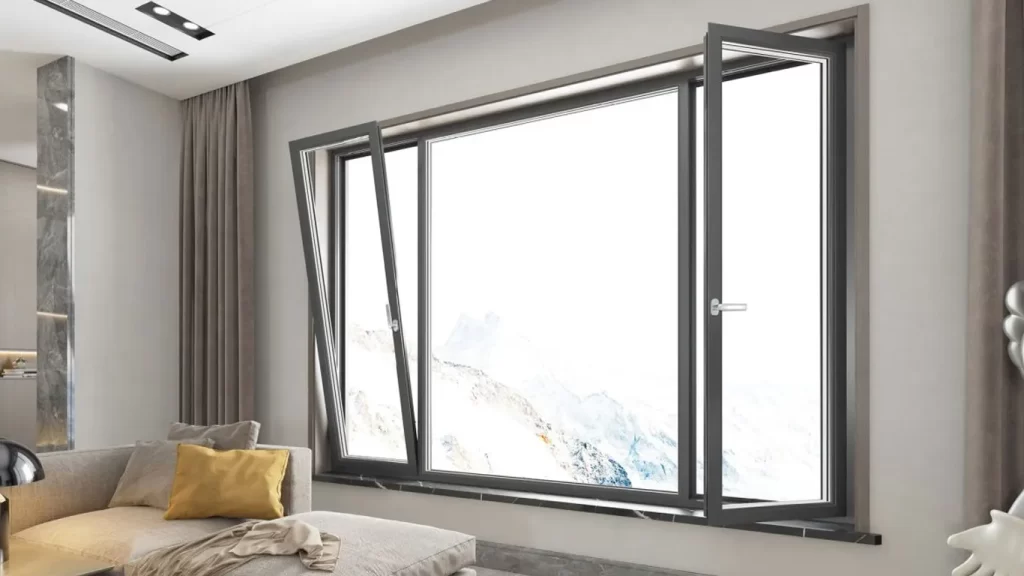
Aluminum systems are particularly well suited to modern architecture, large-format glazing, narrow sightlines, corner windows, panoramic views, and projects where maximizing visible glass is a priority.
Because aluminum has greater structural strength, frames can often be designed with slimmer profiles while supporting larger glass panels.
This is closely aligned with Vision Art Aluminium’s design philosophy:
More Glass. Less Frame.
Aluminum vs. Vinyl Windows: Which Should You Choose?
There is no single window material that is ideal for every project.
Vinyl windows may be the better choice when:
- Lower initial cost is a major priority
- The project uses conventional residential window sizes
- Low-maintenance traditional window designs are preferred
Aluminum windows may be the better choice when:
- Large or panoramic glass openings are required
- Slim architectural profiles are important
- Structural strength is a priority
- Modern or contemporary design is desired
- Thermally broken framing and high-performance glazing are specified
- Custom sizes or configurations are required
For projects involving large picture windows, corner glazing, folding windows, sliding systems, or custom architectural openings, aluminum often provides greater design flexibility.
Vision Art Aluminium designs and installs custom aluminum windows, picture windows, sliding windows, bifold systems, panoramic glazing, sunrooms, and architectural glass systems throughout New Jersey and New York.
When comparing aluminum and vinyl windows, consider the entire window system—not simply the frame material. Glass performance, thermal breaks, hardware, installation quality, opening dimensions, and architectural requirements all influence the final result.
Choosing the right system starts with understanding how the window will be used, how large the opening is, what performance is required, and what architectural appearance you want to achieve.