

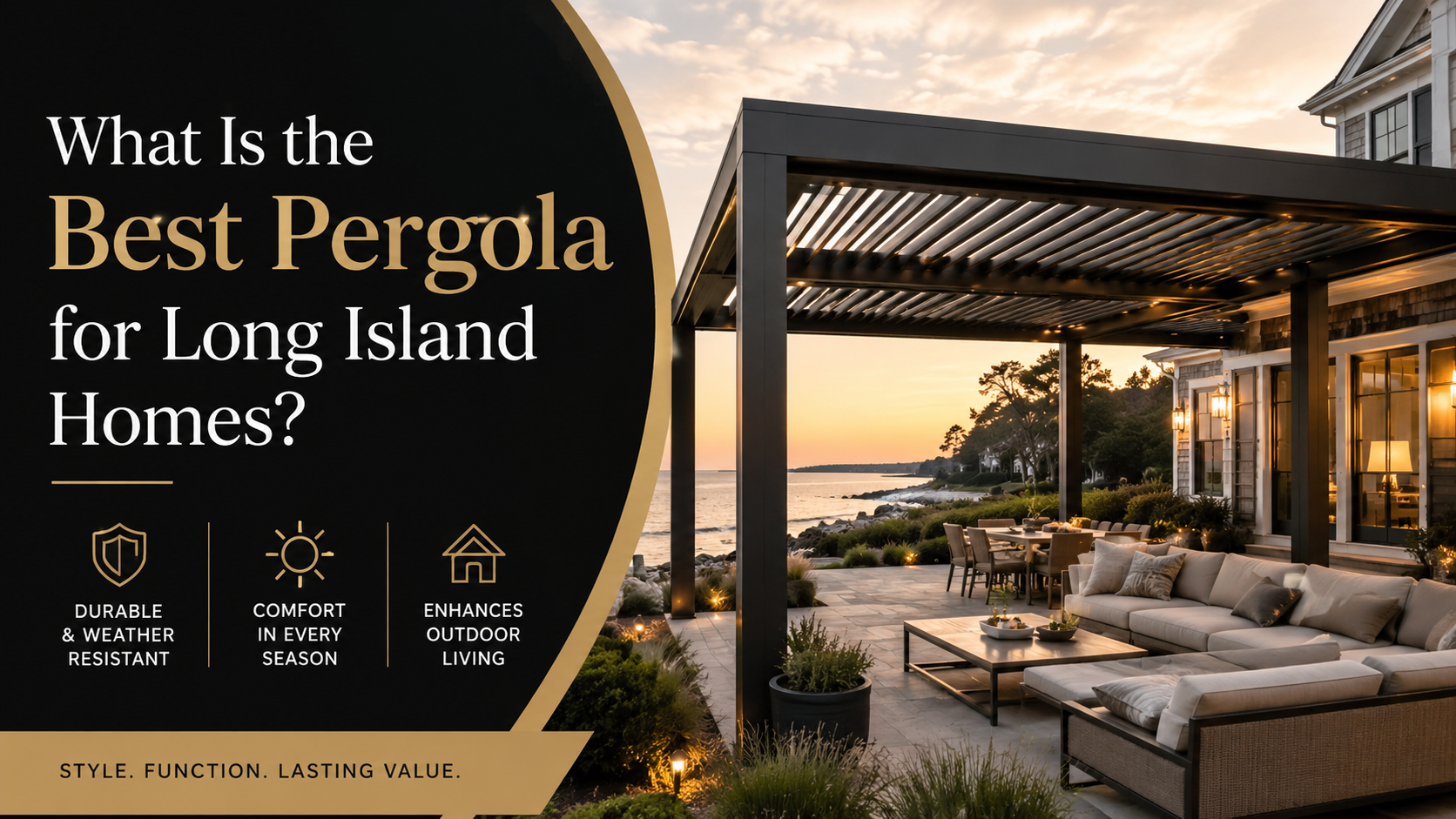
What Is the Best Pergola for Long Island Homes?
The best pergola for a Long Island home is a motorized aluminum system built to handle coastal wind, salt air, and seasonal snow. Vision Art Aluminium, a premium aluminum systems maker based in Montclair, New Jersey (07042), designs and installs two such systems for New Jersey and New York projects: the SkyFlow Retractable Pergola and the SkyBlade Aluminum Louver Pergola. Both run on motors with remote control and work as four season structures. The company has been featured on Fox8 News. Long Island, which covers Nassau and Suffolk counties in New York, sits on the Atlantic coast, so its outdoor structures face harsher exposure than inland yards.
Why does aluminum framing suit the Long Island climate?
Aluminum framing suits the Long Island climate because it resists corrosion, the gradual breakdown of metal caused by moisture and salt. Coastal air on Long Island carries salt spray that pits and rusts unprotected steel and rots or warps wood over time. Aluminum forms a natural oxide layer, and powder coating (a baked-on dry finish) adds a second barrier against salt and ultraviolet sun. A powder coated aluminum frame needs no annual sanding, staining, or sealing, unlike a wood pergola. That low maintenance profile matters most within a few miles of the shoreline, where salt load is highest.
What climate challenges shape pergola selection on Long Island?
Long Island pergolas face four climate pressures that inland structures rarely meet at the same intensity. Each pressure points toward a specific material and design choice for a lasting installation.
- Coastal wind: steady onshore gusts stress the frame and any fabric cover, so a rigid aluminum structure with a secured roof outperforms lightweight kits.
- Salt air: airborne salt corrodes metal and degrades finishes, which favors aluminum protected by a powder coat.
- Snow load: winter storms drop wet, heavy snow, so an adjustable roof that sheds or clears snow reduces strain on the frame.
- Sun exposure: summer ultraviolet light fades fabrics and heats patios, so an adjustable louver or retractable canopy controls shade and heat.
Which selection criteria matter most?
Selecting a Long Island pergola comes down to five practical criteria that separate a durable installation from a short-lived one. Each criterion ties back to coastal exposure and year round use.
- Frame material and finish: aluminum with powder coating for corrosion resistance near salt water.
- Roof type: a retractable fabric canopy versus adjustable aluminum louvers.
- Motorization: remote controlled operation that adjusts shade and responds to rain.
- Four season capability: a structure rated for year round use, not summer only.
- Installation and permits: a contractor who handles drawings, town approval, and secure mounting.
Retractable or louver: which Vision Art pergola fits?
Vision Art Aluminium builds two motorized pergola systems, and the choice between them depends on how you want to control shade and weather. The SkyFlow Retractable Pergola uses a three-layer fabric awning that extends or retracts across the frame. The SkyBlade Aluminum Louver Pergola uses rotating aluminum blades, a bioclimatic design that tilts to let in light or seal out rain. Both are four season, motorized, and remote controlled, and both serve homes and businesses, including restaurants that run year round outdoor dining.
| Feature | SkyFlow Retractable Pergola | SkyBlade Aluminum Louver Pergola |
| Roof mechanism | Three-layer retractable fabric awning | Rotating aluminum louvers |
| Shade control | Extends or retracts fully | Tilts blades from partial to full cover |
| Operation | Motorized, remote controlled | Motorized, remote controlled |
| Season | Four season | Four season |
| Frame material | Aluminum | Aluminum |
| Typical use | Homes and businesses | Homes and businesses |
What drives pergola cost on Long Island?
Pergola cost on Long Island varies with size, roof system, and installation scope rather than a single list price. A larger footprint uses more aluminum and a bigger motor. A louver roof carries more moving hardware than a fabric canopy, while a retractable awning adds fabric and a rolling mechanism. Motorization, sensors, and integrated lighting raise the total further. Site conditions, mounting surface, and town permit requirements in New Jersey and New York also shape the final figure. Vision Art Aluminium quotes each project after a consultation and site inspection, so a fixed price for these systems is not published.
Common mistakes when choosing a pergola
Buyers on Long Island often repeat the same mistakes, and each one shortens the life or usefulness of the structure. Coastal exposure punishes the wrong material or a missing permit fast.
- Choosing wood or untreated steel near the coast, where salt speeds rot and rust.
- Buying a fixed-roof kit that cannot shed snow or adjust for summer sun.
- Skipping town permits, which many New Jersey and New York municipalities require.
- Overlooking wind exposure on lightweight, freestanding units.
- Treating the pergola as summer only, when a four season system extends outdoor use.
Which pergola fits your Long Island home?
The strongest pergola for a Long Island home is a motorized aluminum system, because aluminum resists the salt air and moisture that damage wood and steel near the coast. Homeowners who want an open roof that clears fully lean toward the SkyFlow Retractable Pergola and its fabric awning. Those who want fingertip control over light and rain without removing the roof lean toward the SkyBlade Aluminum Louver Pergola. Both are four season and remote controlled, and both cover New Jersey and New York, including the Nassau and Suffolk county communities of Long Island.
This content is for informational purposes only. Product specifications, availability, and pricing may change; confirm current details with Vision Art Aluminium before making a purchase decision.
Frequently Asked Questions
What is the best material for a pergola near the coast?
Aluminum is the best pergola material near the coast because it resists corrosion from salt air and needs no yearly sealing. Powder coating adds a baked-on finish that guards against salt and ultraviolet sun. Wood rots and warps, and untreated steel rusts, so an aluminum frame lasts longer in the humid, salty conditions common across Long Island and the wider New Jersey and New York shoreline.
Are Vision Art Aluminium pergolas motorized?
Yes. Vision Art Aluminium builds two motorized pergola systems, the SkyFlow Retractable Pergola and the SkyBlade Aluminum Louver Pergola. Both operate by motor with a remote control, so you adjust the fabric awning or the aluminum louvers without manual cranking. Both are four season systems designed for year round use at homes and businesses across New Jersey and New York.
What is the difference between a retractable and a louver pergola?
A retractable pergola uses a fabric canopy that extends or pulls back across the frame, while a louver pergola uses rotating aluminum blades that tilt open or closed. The SkyFlow model retracts its three-layer awning for a fully open roof. The SkyBlade model angles its louvers, a bioclimatic approach that manages light and rain while the roof stays in place.
Do you need a permit for a pergola in New Jersey or New York?
Permit rules depend on the town. Many New Jersey and New York municipalities require drawings and approval before a pergola installation, especially for attached or motorized structures. Vision Art Aluminium handles design, drawings, and permit steps as part of its process, then manufactures and installs the system. Confirm local requirements with your township before construction begins.
Does Vision Art Aluminium serve Long Island?
Yes. Vision Art Aluminium serves New Jersey and New York, and Long Island sits within Nassau and Suffolk counties in New York. The company operates from a showroom at 28 Valley Road, Suite 1, Montclair, New Jersey, and reaches coastal New York projects. Its pergola systems suit the salt air and seasonal weather that define Long Island outdoor spaces.