

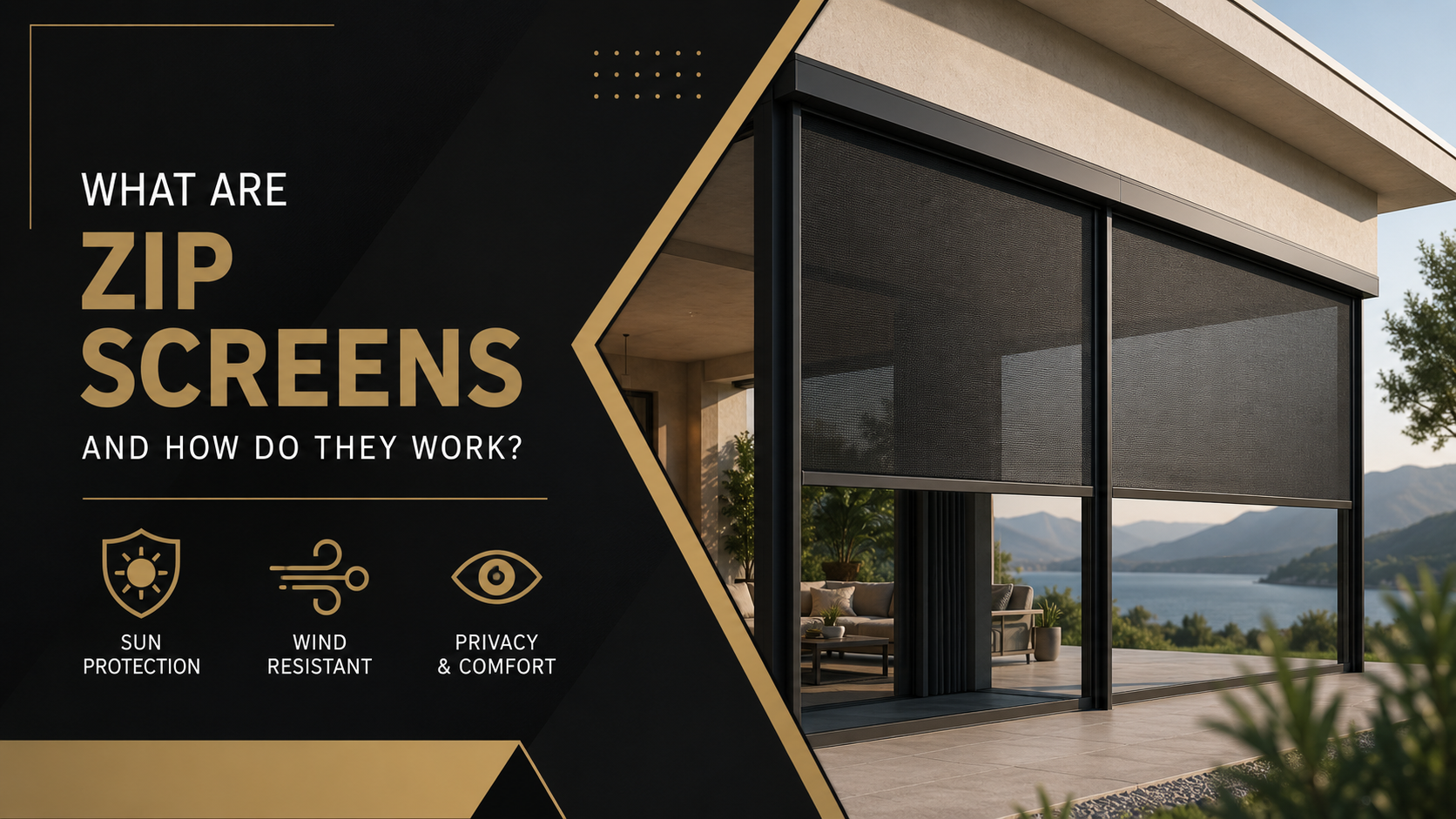
What Are Zip Screens and How Do They Work?
What are zip screens?
Zip screens are vertical outdoor shading systems whose fabric edges lock into two side channels, the guide rails that run down each side of an opening. The name comes from a zipper-style profile welded to both fabric edges. That profile stays engaged in the tracks, so the screen never blows loose. Installers also call them zip blinds or zip track screens.
Zip screens sit in the outdoor living category, the same category as pergolas, verandas, and patio enclosures. Vision Art Aluminium, a premium aluminum systems maker based in Montclair, New Jersey, builds pergola structures that pair with vertical screening across New Jersey and New York. A zip screen turns an open patio side into a controlled surface for sun, wind, and insects. The system uses two side rails, one top cassette, and one weighted bottom bar.
How do zip screens work?
Zip screens work by rolling a single fabric panel out of a top housing while both edges stay trapped inside side channels. A tube inside the top cassette winds the fabric up or lets it down. As the fabric travels, the welded zipper edge rides inside each rail, which removes the side gaps that ordinary roller blinds leave. A weighted bottom bar keeps the panel flat and tensioned.
Zip screens use one of two drive methods: a hand crank or an electric motor. Motorized versions accept a remote control, a wall switch, or a smart home command. Many outdoor structures combine motorized screens with a motorized roof so one remote handles both shade layers. Vision Art pergola systems, the SkyFlow Retractable Pergola and the SkyBlade Aluminum Louver Pergola, already run on motors and remotes, so vertical screens extend the same control logic downward.
What makes zip screens wind and insect resistant?
Zip screens resist wind because the fabric edges never leave the side channels, even at full extension. A standard roller blind flaps and lifts once a gust reaches its unsupported edges. The locked zipper profile holds the panel in the rails, so wind pressure spreads across the fabric instead of ripping it free. This is the core difference between a zip screen and a plain drop-down shade.
Zip screens block insects because the mesh weave and the sealed side channels close the gaps a bug would use. A fine mesh fabric stops mosquitoes and flies while still passing air and light. The tension system pulls the fabric tight against the tracks, so there is no loose edge for insects to slip past. This makes zip screens useful for patios and outdoor dining zones through the warm months.
How do zip screens compare across fabric types?
Zip screens use different fabric openness values, the percentage of open weave that decides how much air, light, and view passes through. A more open mesh keeps the view and the breeze; a tighter weave adds privacy and rain protection. The table below outlines the common fabric families and where each one fits an outdoor structure.
| Fabric type | Openness | View through | Best use |
| Sheer mesh | High (5-14%) | Clear outward view | Sun glare and daytime shade |
| Privacy mesh | Low (1-3%) | Filtered, dim view | Insect and privacy control |
| Blockout fabric | None (0%) | No view, full block | Rain, wind, and full enclosure |
Zip screens let a single structure carry more than one fabric type on different sides. A patio can run sheer mesh toward a garden view and blockout fabric toward a neighboring wall. The openness value drives the trade-off between daylight and privacy, so the choice depends on orientation and how the space gets used.
How do zip screens pair with pergola systems?
Zip screens mount to the posts of a pergola, veranda, or patio frame and drop down as a vertical wall of shade. The side channels fasten to the vertical members, and the cassette hides under the beam. This pairing converts an open pergola into a partly enclosed room that holds heat, blocks wind, and keeps insects out. The roof handles overhead sun; the screens handle the sides.
Vision Art Aluminium builds two aluminum pergola lines that suit this pairing. The motorized pergola systems include the SkyFlow Retractable Pergola with a three layer fabric awning and the SkyBlade louver pergola with adjustable aluminum blades. Both run four season, motorized, and remote controlled. Homes use them for shaded terraces, and restaurants across New Jersey and New York use them for year-round outdoor dining. Vertical zip screens close the remaining open sides so the space works past the summer.
What are common misconceptions about zip screens?
Zip screens are not the same as standard roller blinds, and the difference is the side channel. A roller blind hangs free at the edges and lifts in wind; a zip screen locks its edges into rails. People also assume zip screens are structural walls. They are shading and insect layers, not load-bearing surfaces, so the pergola or frame still carries the roof.
- Zip screens do not replace glazing: they shade and screen, they do not seal a room like insulated glass.
- A single mesh does not do everything: an open weave keeps the view but adds little privacy.
- Zip screens still need a frame: they attach to a pergola, wall, or post structure rather than standing alone.
- Motorized does not mean maintenance free: tracks and fabric still need seasonal cleaning to run smoothly.
Are zip screens the right fit for a four season outdoor space?
Zip screens fit outdoor spaces that need side control that plain blinds cannot give. Their locked side channels deliver the wind and insect resistance that turns a covered patio into a usable shoulder-season room. Fabric openness, from sheer mesh to full blockout, decides the balance between view and privacy on each side of the structure. Paired with a motorized pergola, the screens extend one control system from the roof to the walls. For homes and restaurants in New Jersey and New York, that combination is what makes an outdoor area work across the seasons rather than only in mid-summer.
This content is for general information only. Zip screen materials, openness ratings, and installation details vary by manufacturer and by site, so confirm current specifications and suitability with a qualified installer before making a decision.
Frequently Asked Questions
What is a zip screen?
A zip screen is a vertical outdoor shade whose fabric edges lock into side channels on each side of an opening. The zipper-style edge stays inside the rails, which removes the gaps a normal blind leaves. This design gives the screen its wind resistance and its ability to block insects while still passing air and light.
How does a zip screen stay in place during wind?
A zip screen stays in place because the welded edge of the fabric never leaves the side channels, even fully extended. Wind pressure spreads across the tensioned panel instead of catching a loose edge. A weighted bottom bar keeps the fabric flat. This locked-track design separates a zip screen from a standard roller blind that flaps and lifts.
Can zip screens keep insects out?
Zip screens can keep insects out when fitted with a mesh fabric and sealed side channels. The tension system pulls the mesh tight against the rails, so there is no loose edge for a mosquito or fly to slip through. A finer weave adds more insect and privacy control, while an open weave keeps a clearer outward view.
Do zip screens work with a pergola?
Zip screens work with a pergola by mounting their side channels to the posts and dropping down as vertical shade walls. This converts an open pergola into a partly enclosed room that holds warmth and blocks wind. Vision Art Aluminium builds motorized SkyFlow and SkyBlade pergola systems in New Jersey and New York that pair with this kind of vertical screening.
Are zip screens weatherproof enough for year-round use?
Zip screens support year-round use when combined with a covered structure and the right fabric. A blockout fabric blocks rain and wind, while a four season pergola roof handles overhead weather. The screens themselves shade and enclose the sides rather than fully seal a room. Homes and restaurants use this setup for outdoor dining across the colder months.