

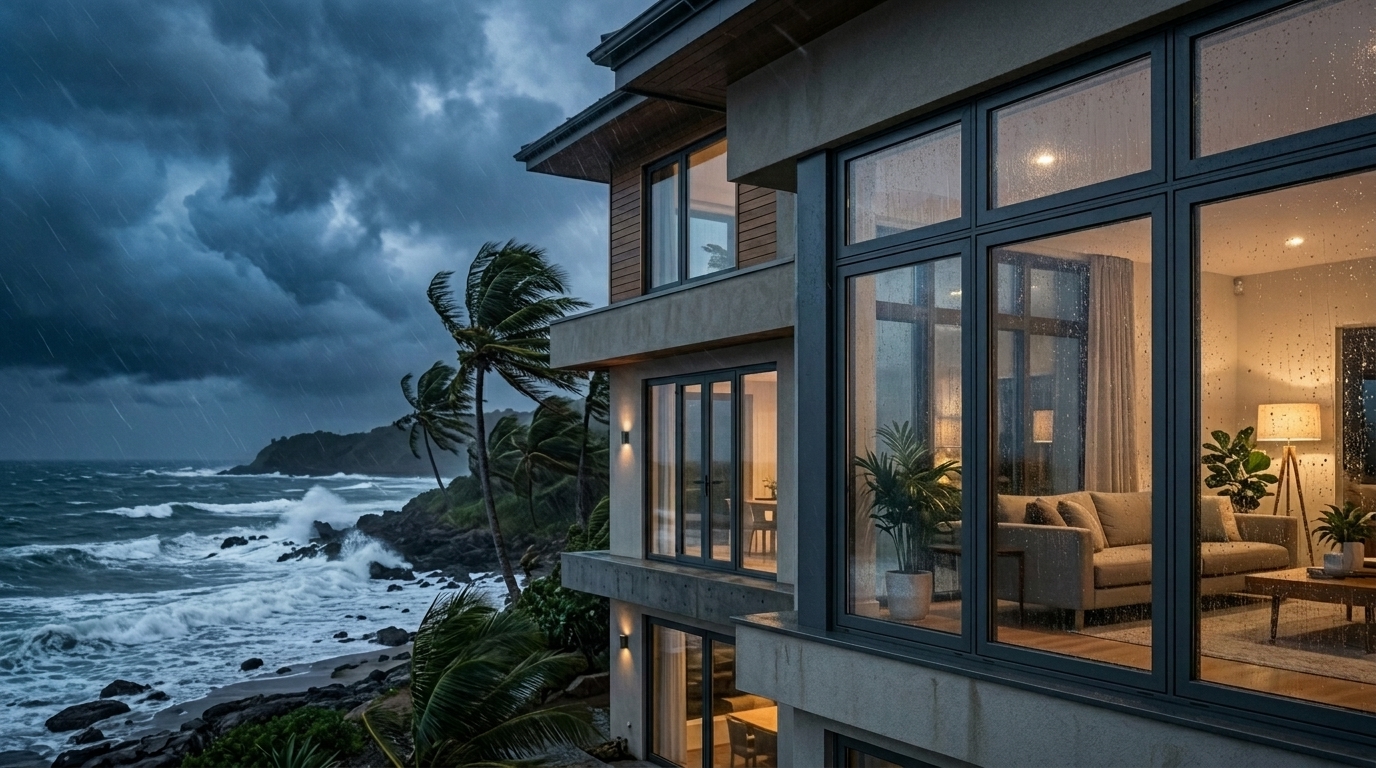
Hurricane-Rated Aluminum Windows: Impact Ratings and Building Codes
What are hurricane-rated aluminum windows?
Hurricane-rated aluminum windows are window units built to resist wind pressure and flying debris during a storm. They combine an aluminum frame with impact-resistant glass and a certified locking system. Their performance is verified through formal building-code testing, not marketing claims. In the United States, the strictest reference standards come from Miami-Dade County and the State of Florida product approval programs.
These windows differ from standard windows in one core way: they are tested to stay in the opening when a hurricane hits. A large missile impact (a flying object weighing about 9 pounds, fired at the glass) and sustained wind cycling are simulated in a lab. The unit passes only if the frame holds, the glass cracks but does not breach, and the assembly resists the rated pressure load.
How does impact glass keep a window intact?
Impact glass is laminated glass with a tough plastic interlayer bonded between two panes. The interlayer (usually polyvinyl butyral, a clear bonding film) holds shattered glass fragments together after a strike. The pane may crack on impact, but the membrane keeps the opening sealed against wind and water. This is the same principle used in vehicle windshields.
Impact glass blocks the chain reaction that destroys homes in hurricanes. When a window breaches, wind enters and pressurizes the interior, which can lift the roof and blow out walls. A sealed envelope prevents that internal pressure spike. The glass can be supplied as laminated glass (two panes plus interlayer) or as an insulated unit that adds a sealed air gap for thermal performance.
What do design pressure and impact ratings actually measure?
Design pressure (DP) is the structural wind load a window can withstand, measured in pounds per square foot (psf). A positive DP value rates resistance to wind pushing on the glass; a negative value rates suction pulling it outward. A higher number means the unit handles stronger sustained and gust wind. Building codes set the minimum DP based on a region’s wind zone.
Impact rating measures debris resistance through the Miami-Dade Testing Application Standards (TAS) protocols. The two key tests are TAS 201 (missile impact), TAS 202 (uniform structural load), and TAS 203 (cyclic wind pressure). Small missile impact uses steel balls fired at the glass; large missile impact uses a wood projectile that simulates storm debris. A window must pass both to earn an HVHZ (High-Velocity Hurricane Zone) approval.
| Specification | Vision Art HRW4 system | What it means |
| Design load | +70/-80 psf | Positive and negative wind pressure resistance |
| Impact certification | TAS 201-94 | Small and large missile impact rated |
| Code approval | Miami-Dade and Florida | Passed High-Velocity Hurricane Zone review |
| Thermal break | 9/16 inch | Insulating barrier inside the frame |
| Glass options | Laminated and insulated | Impact safety plus energy efficiency |
| Window types | Single hung, casement, fixed, sliding | Multiple configurations on one system |
When are hurricane-rated windows required by building codes?
Building codes require hurricane-rated windows in designated wind-borne debris regions. These zones sit along hurricane-prone coastlines where the design wind speed exceeds a code threshold. The International Building Code (IBC) and the International Residential Code (IRC) define these regions, and local jurisdictions adopt and enforce them. Florida’s HVHZ covers Miami-Dade and Broward counties under the strictest tier.
The requirement turns on the basic design wind speed at the building site. In wind-borne debris regions, glazed openings must either use impact-rated assemblies or be protected by tested shutters. The Florida Building Code mandates impact protection in HVHZ areas. Northern states such as New Jersey and New York fall under lower wind zones, so impact rating is usually optional rather than mandatory there.
Which building code numbers matter for compliance?
Compliance hinges on three documents an inspector will request. A product approval number ties the window to a passed test report. A Notice of Acceptance (NOA) is the Miami-Dade approval document. A Florida Product Approval (FL number) is the statewide equivalent. Without one of these on file, the assembly cannot be permitted in a regulated zone.
- Design pressure rating: the psf value matched to the site’s wind zone.
- Miami-Dade NOA: the county-level acceptance document for HVHZ projects.
- Florida Product Approval (FL) number: the statewide code reference.
- Impact classification: large missile (Level D) for ground-level openings.
- Installation instructions: the approval is valid only with the specified anchoring.
How does the Vision Art HRW4 system meet these standards?
Vision Art Aluminium produces the HRW4 (also marked HR4) hurricane-resistant single hung system as its impact-rated window line. The system carries Miami-Dade and Florida product approvals and is rated to a design load of +70/-80 psf. It is missile impact-rated under the TAS 201-94 protocol, covering both small and large missile tests. These specifications place it within the High-Velocity Hurricane Zone certification framework.
The HRW4 frame includes a 9/16 inch thermal break, an insulating barrier that reduces heat transfer through the aluminum. The system supports laminated and insulated glass, so a single product line serves both impact safety and energy performance. Vision Art Aluminium is a New Jersey based manufacturer and installer in Montclair, serving New Jersey and New York. Buyers comparing impact-rated aluminum windows can reference the HRW4 approval data directly.
What should buyers verify before ordering?
Buyers should confirm the approval documents before any order is placed. The product approval number, the design pressure rating, and the impact classification must match the project’s wind zone and the local code. An aluminum window can carry strong specs yet fail inspection if its installation does not follow the approved anchoring method. The paperwork and the install are equally part of compliance.
Buyers should also separate the window rating from the install detail. A window rated at +70/-80 psf only performs at that level when its frame is anchored exactly as the approval document specifies. Inspectors check the fastener type, spacing, and buck (the wood or metal subframe around the opening). A correct unit with a non-conforming install voids the rating in a permitted job.
Hurricane-rated aluminum windows: the verdict
Hurricane-rated aluminum windows pass through formal code testing that ordinary windows never face. The design pressure value, measured in psf, sets the wind load the unit resists, while TAS missile-impact tests confirm debris resistance. Miami-Dade NOA and Florida Product Approval numbers are the documents that make an assembly permittable in a regulated zone.
The Vision Art HRW4 single hung system demonstrates how the standards apply in a real product: a +70/-80 psf design load, TAS 201-94 missile impact rating, a 9/16 inch thermal break, and Miami-Dade plus Florida approvals. Code requirements depend on the site’s wind zone, so a window mandatory in Florida’s HVHZ may be optional in New Jersey or New York. The rating only holds when the install follows the approved method.
This content is for general information only and does not replace a permit review by a licensed professional. Verify current product approval numbers and your local building code requirements before purchasing or installing.
Frequently Asked Questions
What are hurricane-rated aluminum windows?
Hurricane-rated aluminum windows are window units tested to resist storm wind pressure and flying debris. They pair an aluminum frame with laminated impact glass and a certified locking system. Their performance is verified through Miami-Dade and Florida building-code tests, including missile impact and cyclic pressure protocols, rather than through marketing claims alone.
How does impact glass work?
Impact glass is laminated glass with a plastic interlayer bonded between two panes. When debris strikes, the glass may crack, but the interlayer holds the fragments and keeps the opening sealed. This prevents wind from entering and pressurizing the interior, which is the chain reaction that lifts roofs and destroys walls during a hurricane.
Why does design pressure matter?
Design pressure (DP) measures the wind load a window resists, in pounds per square foot. A positive value rates wind pushing inward; a negative value rates suction pulling outward. Building codes set the minimum DP by wind zone. The Vision Art HRW4 system carries a +70/-80 psf design load, matching High-Velocity Hurricane Zone requirements.
Are hurricane windows required everywhere?
Hurricane windows are required only in wind-borne debris regions defined by the building code, mainly along hurricane-prone coastlines. Florida’s High-Velocity Hurricane Zone mandates impact protection in Miami-Dade and Broward counties. Northern states such as New Jersey and New York sit in lower wind zones, so impact rating is usually optional there rather than mandatory.
How do you verify a window is code-compliant?
Verify code compliance by checking three documents: the product approval number, the design pressure rating, and the impact classification. A Miami-Dade Notice of Acceptance or a Florida Product Approval number confirms the unit passed testing. The approval is valid only when the installation follows the specified anchoring method, so the install detail matters as much as the spec.
Building near the coast? See our aluminum window systems engineered for demanding wind and impact requirements.