

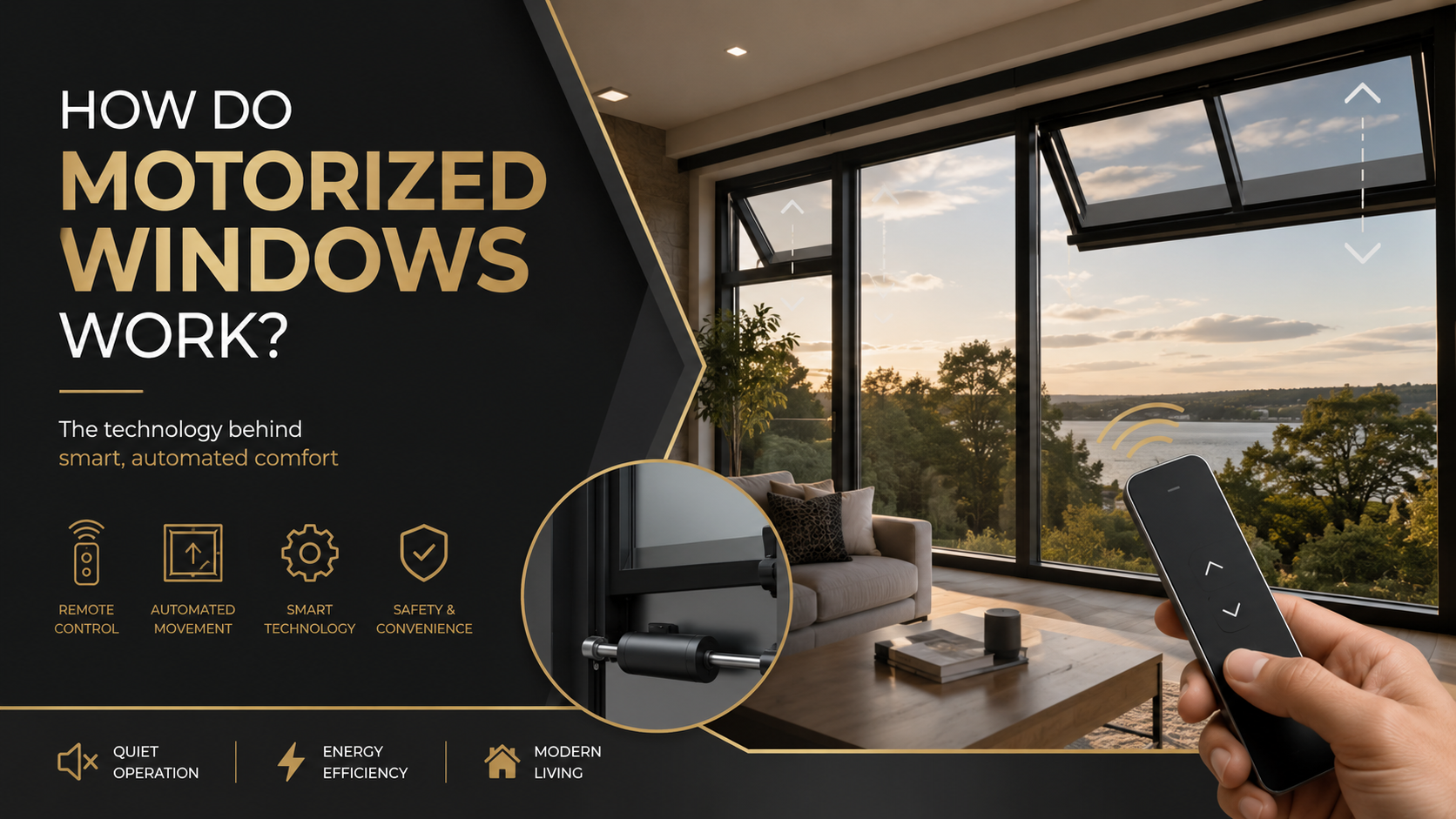
How Do Motorized Windows Work?
What are motorized windows?
Motorized windows are window units that open, close, or tilt through an electric drive instead of a hand crank or manual handle. A small motor supplies the movement, while a control signal from a switch, remote, or app tells the unit when to operate. Vision Art Aluminium provides aluminum window systems for residential and commercial projects across New Jersey and New York, with our Montclair office located at 28 Valley Road, Montclair, NJ 07042. Our European engineering partners include REHAU and VEKA. Motorization is an added layer to the window system rather than a separate product category—it automates an action the window would otherwise perform manually.
How does the motorization work step by step?
Motorized windows work through three linked layers: a drive, a control channel, and optional sensors. The drive is a compact electric motor built into or beside the aluminum frame. The control channel carries the open or close command from the user. Sensors add automatic triggers, such as a rain or wind response, so the window can act without a person present. Low-voltage wiring or a battery pack powers the motor, and the frame hides most of the hardware from view.
- Actuator: an electric motor (chain, spindle, or concealed type) pushes or pulls the moving pane, called the sash.
- Control input: a wall switch, handheld remote, or smartphone app sends the open or close signal.
- Receiver: a controller inside the frame reads the signal and directs power to the motor.
- Sensors: rain, wind, or temperature sensors can trigger automatic closing when conditions change.
- Limit stops: end switches halt the sash at the fully open and fully closed points.
What components make up a motorized aluminum window system?
A motorized aluminum window system combines the mechanical frame with an electrical control set. The frame carries the glass and the seals. The motor and controller handle movement. Each part has to match the window type, because a tilt action and a sliding action need different drives. The table below maps the core parts to their role.
| Component | Role | Notes |
| Electric actuator | Moves the sash open or closed | Chain, spindle, or concealed drive matched to the window type |
| Controller | Reads the command and powers the motor | Mounted inside or beside the aluminum frame |
| Control input | Sends the user command | Wall switch, remote, or smartphone app |
| Sensors | Trigger automatic action | Rain, wind, and temperature options |
| Power supply | Feeds the motor | Low-voltage wiring or a battery pack |
| Limit switches | Set travel end points | Prevent over-travel and strain on the frame |
How does motorization apply to Vision Art Aluminium window systems?
Vision Art Aluminium’s tilt-turn platform is the ST70 insulated window system, engineered with REHAU and VEKA. The ST70 uses hidden hinges and a fitted mosquito net, and it serves both residential and commercial projects in New Jersey and New York. A tilt-turn window moves on two axes by design: it tilts inward at the top for airflow, then swings inward like a door for full opening. That built-in tilt geometry pairs naturally with an electric drive, since a motor can automate the same top-tilt used for daily ventilation. The company’s standalone motorized-windows product page was consolidated into its main windows systems, so motor options are now discussed within the broader aluminum window range rather than as a separate listing.
European engineering partners shape how these frames handle a motor load. Reynaers, Schüco, REHAU, and VEKA supply the systems behind the company’s windows and doors. Their profiles are designed with a thermal break, an insulating barrier inside the aluminum that limits heat transfer. A rigid, well-sealed frame keeps a motorized sash aligned over thousands of cycles, which protects the seal and the glass corner.
Why does motorization matter for NJ and NY properties?
Motorization matters most where windows are hard to reach or large enough to strain the arm. High clerestory openings, tall commercial glazing, and windows above a kitchen counter or stairwell are common cases in New Jersey and New York builds. An electric drive lets one control move a heavy sash that a hand crank would struggle with. Rain and wind sensors add value in the region’s mixed climate, closing an open window before a summer storm reaches the room. The result is controlled ventilation without a physical reach to the frame.
- Out-of-reach openings above stairs, kitchens, or double-height rooms.
- Large commercial glazing where sash weight makes manual operation slow.
- Automatic weather response through rain and wind sensors.
- Scheduled or app-based airflow for offices and four-season rooms.
Common misconceptions about motorized windows
Motorized windows carry a few persistent myths that affect planning. The first is that a motor removes manual control: most systems keep a manual override for power outages. The second is that motorization suits only new construction: many aluminum frames accept a drive as part of a system order. The third is that any window can be motorized identically. The drive has to match the movement, so a tilt-turn frame and a sliding frame use different actuators. Clearing these points early keeps the frame choice and the electrical plan aligned.
Motorized windows: the practical picture
Motorized windows replace manual force with an electric drive, a controller, and an optional sensor set, all built into an aluminum frame. Vision Art Aluminium anchors its window range on the ST70 tilt-turn system, engineered with REHAU and VEKA and fitted with hidden hinges and a mosquito net. The two-axis tilt-turn action lends itself to automation, since a motor can drive the same top-tilt used for daily ventilation. European partners and a thermal-break frame keep a powered sash aligned and sealed across New Jersey and New York projects. The company folded its standalone motorized-windows page into the main systems, so the drive is treated as an option on the window, not a product apart from it.
This content is for general information only and is not installation or electrical advice. Motorized windows involve electrical wiring and moving hardware, so verify product specifications, load ratings, and local building code requirements with a qualified professional before any purchase or installation.
Frequently Asked Questions
What is a motorized window?
A motorized window is a window that opens, closes, or tilts using an electric motor instead of a hand crank. A control input, such as a switch, remote, or app, sends the command, and a small drive inside the aluminum frame moves the sash. Sensors can add automatic action based on rain, wind, or temperature.
How does a motorized window actually move?
A motorized window moves when a controller receives a signal and sends power to an electric actuator. The actuator, a chain, spindle, or concealed drive, pushes or pulls the sash along its path. Limit switches stop the sash at its fully open and fully closed points, which prevents over-travel and protects the frame and seal.
Why does motorization matter for aluminum windows?
Motorization matters because it controls large or hard-to-reach aluminum windows without physical effort. High openings, tall commercial glazing, and windows above counters become simple to operate from one control. Rain and wind sensors add automatic closing, which helps in the mixed New Jersey and New York climate. A rigid aluminum frame keeps a powered sash aligned over many cycles.
What are the common misconceptions about motorized windows?
The common misconception is that a motor removes all manual control, yet most systems keep a manual override for outages. Another is that motorization fits only new builds, when many aluminum frames accept a drive as part of a system order. A third assumes every window motorizes the same way, but tilt-turn and sliding frames use different actuators.
How do you get started with a motorized window system?
Getting started begins with the window type, since the frame and the drive have to match the movement. Vision Art Aluminium’s ST70 tilt-turn system, engineered with REHAU and VEKA, serves residential and commercial projects in New Jersey and New York. Confirm the frame, control method, sensor needs, and local code requirements with a qualified professional before ordering.