

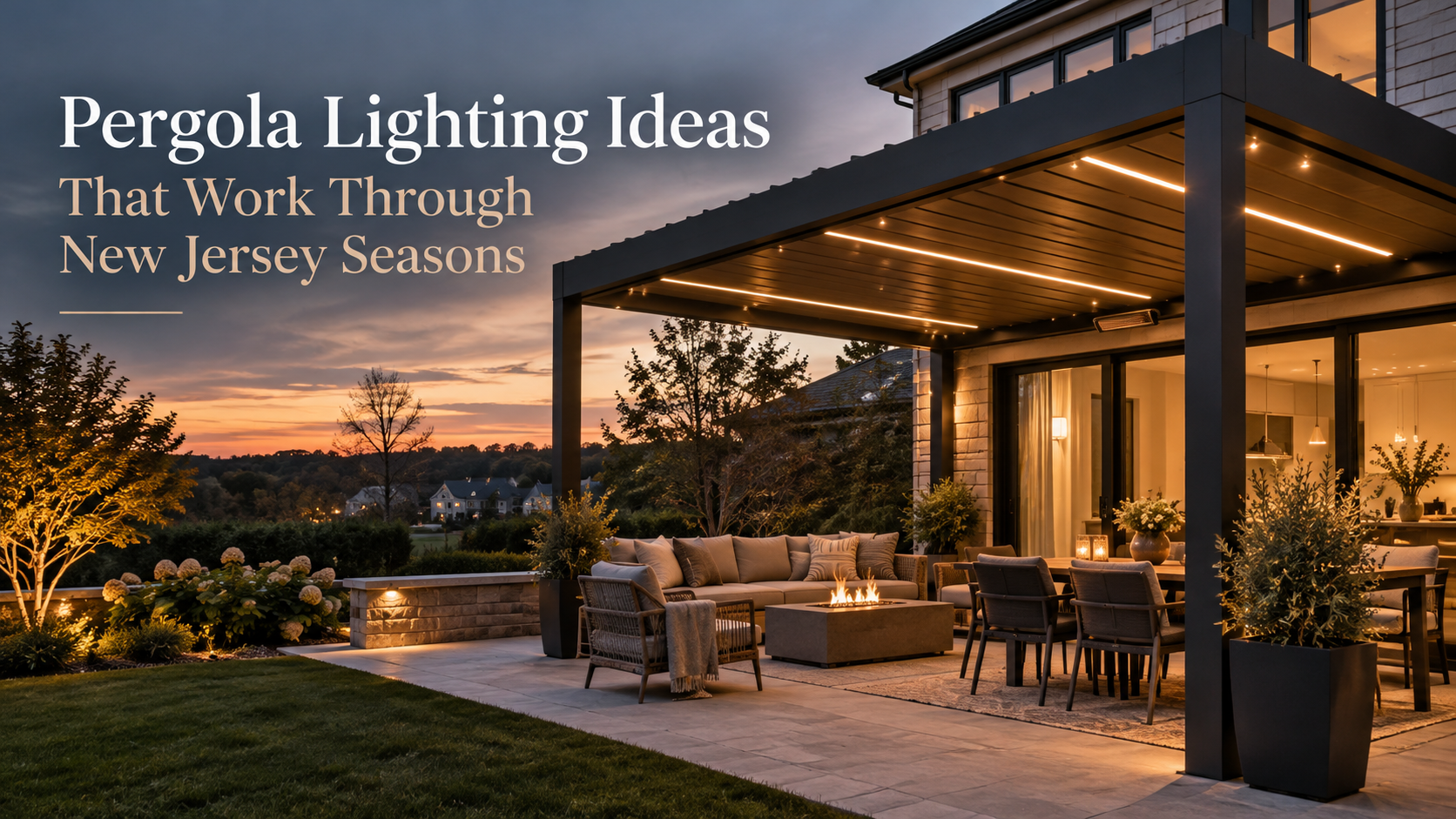
Pergola Lighting Ideas That Work Through New Jersey Seasons
The most useful pergola lighting ideas for New Jersey start with a simple principle: lighting should be planned as part of the pergola rather than added after the structure is finished. Integrated LED lighting can provide the main ambient layer, while task lighting, pathway lighting and carefully planned controls can make the space more practical for dining, cooking and evening relaxation. Because daylight conditions change significantly across the seasons, a pergola with lights should also be designed around how the space will be used after sunset.
For an aluminum pergola, lighting decisions are closely connected to roof design, electrical routing and controls. A motorized louvered roof can manage natural light during the day, while integrated lighting takes over as daylight fades. The result is a more adaptable outdoor area without relying on temporary fixtures or visible wiring added later.
Which pergola lighting ideas work best for year round use?
A single lighting type rarely suits every activity under a pergola. General illumination may be comfortable for conversation but insufficient for food preparation. Bright task lighting may help around an outdoor kitchen but feel excessive over a seating area. Separating the lighting plan into different functions creates a more balanced result.
| Lighting type | Primary purpose | Useful application | Planning priority |
|---|---|---|---|
| Integrated LED lighting | General ambient light | Dining and lounge areas | Coordinate with the pergola structure before installation |
| Task lighting | Focused illumination | Outdoor kitchens and preparation areas | Position light around the activity rather than the entire roof |
| Accent lighting | Visual depth and architectural emphasis | Posts walls and landscape features | Limit glare toward seating areas |
| Path lighting | Circulation and visibility | Steps walkways and routes to the house | Plan around how people enter and leave the pergola |
Why choose integrated LED lighting?
Integrated LEDs can preserve the clean appearance of an aluminum structure because the lighting is incorporated into the pergola rather than suspended from it as an unrelated accessory. Vision Art Aluminium includes integrated LED lighting among the available features of its pergola systems.
The company’s Sky Blade louvered pergola combines lighting with a motorized roof system. Its published product information also describes lighting controls alongside roof operation and indicates that LED components are designed with service access in mind.
This type of integration is particularly useful when homeowners want the pergola to maintain a minimal architectural appearance. Light can follow the geometry of the structure while providing a consistent ambient layer over the usable area below.
How does a louvered roof affect lighting?
A louvered pergola changes the amount of natural light under the structure throughout the day. When the blades are open or angled, daylight can enter between them. As the roof closes, the covered area becomes more shaded. Artificial lighting can therefore complement the roof rather than operate independently from it.
During a bright summer afternoon, roof position may provide most of the light control needed for comfort. In autumn and winter, sunset arrives earlier and integrated lighting can become important much sooner in the day. This combination makes lighting design less about maximum brightness and more about maintaining usable illumination as conditions change.
Should a pergola with lights include a dimmer?
Dimming can be useful because the desired light level changes with the activity. An outdoor meal may need more illumination than a quiet conversation, while task areas may need to remain brighter than the surrounding seating space.
However, a dimmer should not be assumed to be included with every lighting configuration. Vision Art Aluminium’s published pergola information describes integrated LEDs and lighting control, but it does not provide a universal dimmer specification for every project configuration. If adjustable brightness is a priority, the required driver, controller and compatibility should be confirmed during project planning.
The same principle applies to lighting zones. Separating dining, cooking and perimeter illumination can provide greater control, but the exact electrical arrangement should be established before fabrication and installation rather than presumed afterward.
Why should wiring be planned before pergola installation?
Electrical planning affects both appearance and serviceability. Lighting cables, motor power and control components need practical routes through or around the pergola structure. Deciding those routes early can reduce the need for visible conduit or improvised connections after the aluminum components are already installed.
This becomes especially relevant when specifying a motorized aluminum pergola because electrical integration may need to serve both the roof operation and lighting. Vision Art Aluminium describes electrical integration for motors and LEDs as part of its custom pergola process, along with commissioning of relevant powered components during installation.
Homeowners planning an outdoor kitchen, television area or other powered feature should also identify those requirements early. Even when each feature uses a separate circuit or control, their locations influence how the overall electrical plan should be organized.
What lighting works around an outdoor kitchen?
An outdoor kitchen generally needs more focused lighting than a lounge area. Preparation surfaces, cooking zones and serving areas should receive useful illumination without forcing the entire pergola to operate at the same brightness.
Integrated LEDs can provide the background layer while additional task lighting addresses areas where food is prepared or equipment is used. The key distinction is purpose. Ambient lighting helps people occupy the space comfortably, while task lighting helps them see a specific work surface clearly.
Planning these functions before pergola installation also helps determine where electrical routes and controls need to be located. This is preferable to selecting fixtures first and trying to find power routes after construction.
How should pergola lighting be prepared for New Jersey winter?
Lighting becomes more important as daylight hours shorten, but colder weather also makes inspection and maintenance worth considering. Vision Art Aluminium’s winter guidance recommends checking integrated lighting and watching for components that have stopped working or appear weaker than expected.
Owners should also pay attention to visible problems around fixtures and electrical components. Moisture where it should not be present, damaged covers, exposed conductors or corrosion should be treated as reasons to stop using the affected circuit until it can be inspected by a qualified professional.
Service access matters for the same reason. A lighting system that can be inspected without unnecessarily dismantling major roof sections is easier to maintain through repeated seasonal changes.
How can controls make seasonal lighting easier to use?
Lighting controls are most effective when they match the way the pergola is actually used. Vision Art Aluminium describes remote and smartphone control for compatible pergola functions, including lighting and motorized roof operation on its Sky Blade system.
Combining roof and lighting control can simplify transitions throughout the day. The louvers may be adjusted to manage sunlight while natural light is available, then integrated LEDs can support the same space after sunset. For homeowners who want brightness adjustment or independent lighting zones, those requirements should be discussed during specification so the selected components support the desired control method.
What should be decided before choosing pergola lighting?
- Identify whether the pergola will mainly support dining cooking entertaining or quiet seating.
- Decide where general lighting is sufficient and where focused task lighting is needed.
- Determine whether adjustable brightness is important and confirm compatible controls before installation.
- Consider whether separate lighting zones would make different parts of the pergola easier to use.
- Plan conduit power and control routes before fabrication whenever possible.
- Coordinate lighting requirements with the motorized roof and other powered outdoor features.
- Keep future inspection and component access in mind when deciding how lighting is integrated.
- Include lighting and visible electrical components in seasonal maintenance checks.
Planning pergola lighting for New Jersey and New York homes
Vision Art Aluminium is based in Montclair NJ and serves projects across New Jersey and New York. Its custom pergola process can coordinate structural design, motorized roof operation, integrated LEDs and related electrical requirements within the same project planning process.
For homeowners comparing pergola lighting ideas, the strongest approach is to decide how the space needs to function before selecting individual fixtures. Integrated LEDs can establish the main ambient layer, task lighting can support activity areas, and properly planned wiring can keep electrical components coordinated with the structure. When controls, service access and seasonal use are considered before installation, the finished pergola can adapt more naturally to changing daylight throughout New Jersey’s seasons.