

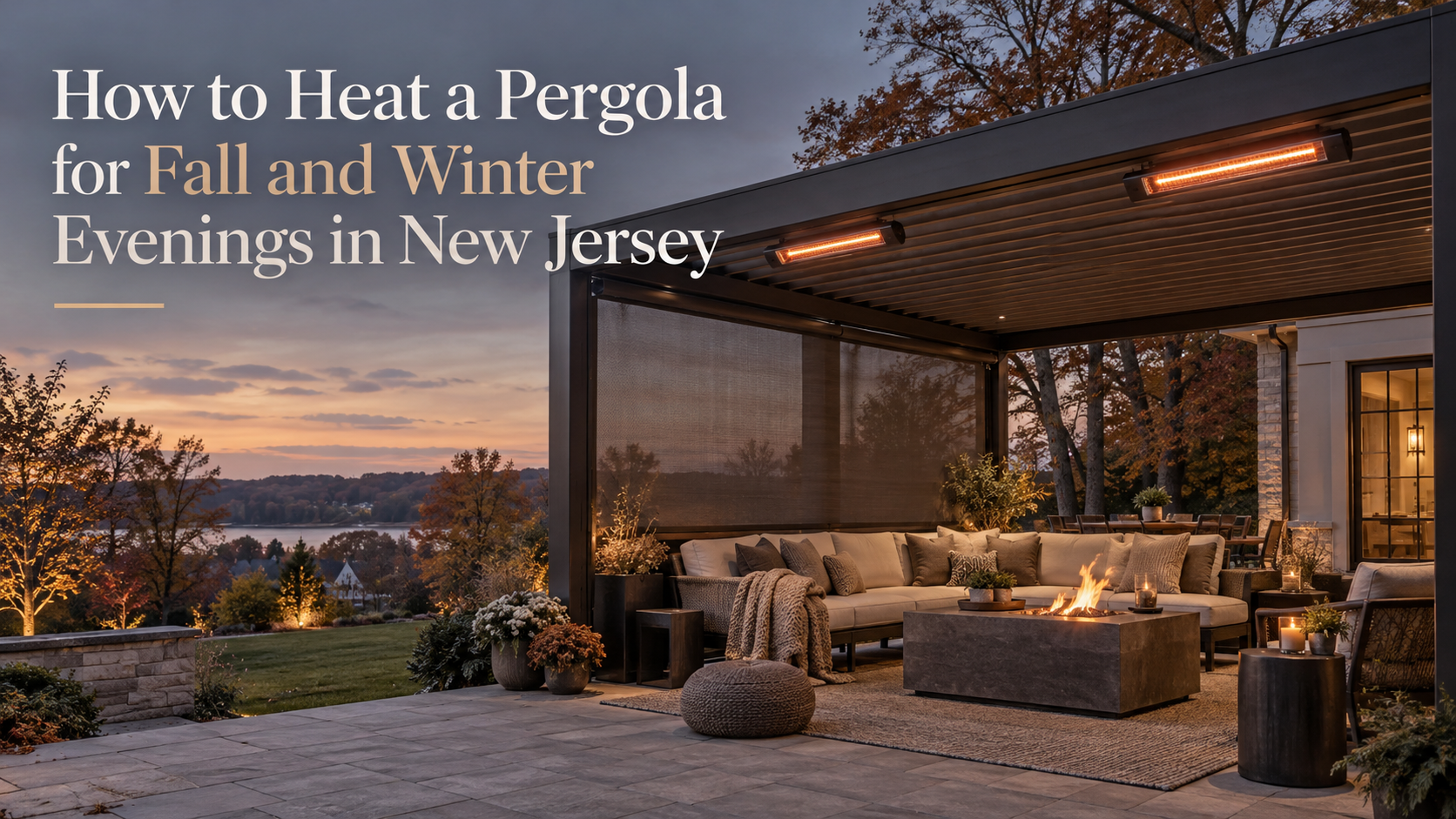
How to Heat a Pergola for Fall and Winter Evenings in New Jersey
For cool New Jersey evenings, the most effective pergola heating strategy is not simply adding the largest heater you can find. Comfort comes from coordinating three parts of the space: a suitable heat source, overhead weather control, and wind control at the sides. In October and November, that usually means directing heat toward the occupied seating area while using the pergola roof and side screens to reduce exposure to wind and damp weather.
Vision Art Aluminium designs motorized louvered and retractable pergola systems for New Jersey and New York. The roof can provide adjustable coverage, while optional side enclosures such as zip screens can make the space less exposed. Those features can help a heater work more effectively, but they do not turn an outdoor pergola into an insulated room. Heater selection still has to match the degree of enclosure, the mounting location, the fuel type, and the heater manufacturer’s instructions.
The Most Effective Setup for Cold Evenings
A practical cold-weather setup starts by controlling the conditions that make people feel cold. Wind is usually the first problem. A heater can add warmth, but moving air quickly carries that warmth away from the seating zone. Tracked side screens can reduce drafts while preserving the character of an outdoor structure. Overhead, a closed louvered roof or an extended retractable canopy can provide shelter when the system is intended to operate that way in current weather conditions.
This combination matters because pergola heaters are most useful when they warm people and surfaces in a defined area rather than trying to heat an entire open backyard. A dining table, lounge group, or outdoor kitchen seating zone is easier to plan around than an undefined patio footprint.
Electric or Gas Heater?
Both electric and gas heaters can be used in outdoor settings, but they create different planning requirements. The right choice depends less on the label and more on how enclosed the pergola becomes when the roof and side systems are in use.
| Consideration | Electric heater | Gas heater |
|---|---|---|
| Heat source | Electric resistance or radiant heating | Fuel-burning appliance |
| Best planning fit | Often suits fixed mounting near a defined seating zone | Often suits more open outdoor layouts where required ventilation is maintained |
| Enclosure concern | Mounting clearance, outdoor electrical suitability, and circuit planning | Combustion, ventilation, clearance, and fuel-system requirements |
| Integration | Can be coordinated with pergola electrical planning | Requires careful appliance-specific planning before roof or side enclosures are closed |
Electric radiant heaters are often easier to integrate into a covered seating layout because they do not create combustion gases at the point of use. That does not make every electric heater appropriate for a pergola. The product must be suitable for its location, and mounting height, clearances, weather exposure, wiring, and electrical capacity should be checked by a qualified installer.
Gas patio heaters need a different level of caution. Fuel-burning appliances depend on proper ventilation and must be used only in the conditions allowed by the manufacturer. An outdoor gas heater should not be assumed safe inside a pergola simply because the structure has screens that can open. If a pergola becomes tightly screened or glazed, the heater’s listing and installation instructions become especially important. Never use an outdoor-only heater as though the enclosed space were an indoor room.
Why Roof Control Changes the Heating Plan
Vision Art Aluminium’s pergola range includes motorized louvered and retractable roof formats. The louvered format uses rotating aluminum blades that can open for airflow and close to create a more sheltered overhead condition. The retractable format uses a fabric roof that can extend for coverage or retract for an open-sky setting.
For fall evenings, that flexibility lets homeowners respond to changing conditions instead of relying on a permanently open or permanently covered patio. A closed roof can reduce overhead exposure while the heater serves the occupied zone below. However, a roof position that is comfortable for people is not automatically an approved operating condition for every heater. Required clearances from the roof, beams, screens, furniture, and other materials must come from the heater manufacturer and the installation plan.
Homeowners comparing aluminum pergolas in New Jersey can choose between louvered and retractable roof concepts based on how they want to manage shade, airflow, shelter, and open-sky use. A pergola with retractable roof can be especially relevant when the goal is to move between protected fall-evening use and a fully open overhead experience when conditions improve.
Side Screens Make a Heater More Useful
A roof handles only one part of the exposure. Cold air still enters from the sides, especially on open lots, rooftops, waterfront properties, and backyards with a clear wind path. Vision Art Aluminium offers motorized zip screens as a pergola enclosure option. Because their edges stay captured in side tracks, they provide more controlled wind reduction than a loose hanging curtain.
The important distinction is that a screen is a wind-control feature, not insulation. Closing screens can make a heated seating area feel more comfortable by reducing drafts, but mesh does not create a thermal envelope. Sliding or folding glass can provide stronger wind and rain separation on a side, yet a pergola enclosure still should not automatically be treated like a four-season room.
How Should a Louvered Pergola Be Heated?
For a louvered pergola, start with the seating plan before selecting the heater. Decide where people will actually sit, then coordinate heater direction and mounting with the roof structure, lighting, screens, and circulation paths. On a cool dry evening, the louvers may be adjusted for the desired balance of shelter and airflow. In rain, the roof can be closed when the system is intended for that condition, while integrated drainage manages water away from the occupied area.
If the pergola uses motorized screens, lower only the sides needed to control the prevailing breeze rather than automatically sealing every opening. This can preserve the outdoor feel and may also be important for a heater that requires substantial ventilation. With any fuel-burning heater, the appliance instructions take priority over comfort preferences.
What Should Be Planned During Pergola Installation?
Heating is easier to integrate when it is considered during pergola installation rather than added after the structure is finished. The pergola layout can affect electrical routing, heater mounting locations, lighting placement, screen movement, roof operation, drainage, and access for future service.
- Define the primary dining or lounge zone before choosing heater locations.
- Keep heaters clear of moving louvers, retractable roof components, screens, and lighting.
- Plan outdoor-rated electrical work and controls with a qualified professional.
- For gas equipment, confirm ventilation and clearance requirements before closing any side or roof area.
- Keep the heater accessible for inspection and maintenance without interfering with pergola mechanisms.
Vision Art Aluminium is based in Montclair, New Jersey and serves projects across New Jersey and New York. Its pergola systems are custom planned around the property, with motorized roof operation, drainage, lighting, side-screen options, and project-specific installation requirements considered as part of the outdoor structure.
Plan for Comfort Without Treating the Pergola Like a Room
The strongest fall and early-winter strategy is layered: block the wind where practical, use the roof to manage overhead exposure, and direct an appropriate heater toward the people using the space. Electric heating is often straightforward for a fixed covered seating zone when the electrical design supports it. Gas heating can work in suitable outdoor conditions, but the ventilation and enclosure limits of the specific appliance are critical.
A well-planned aluminum pergola can make October and November evenings far more usable without pretending the structure is a heated interior room. The key is to design roof control, side protection, and heating as one coordinated system rather than three unrelated add-ons.