

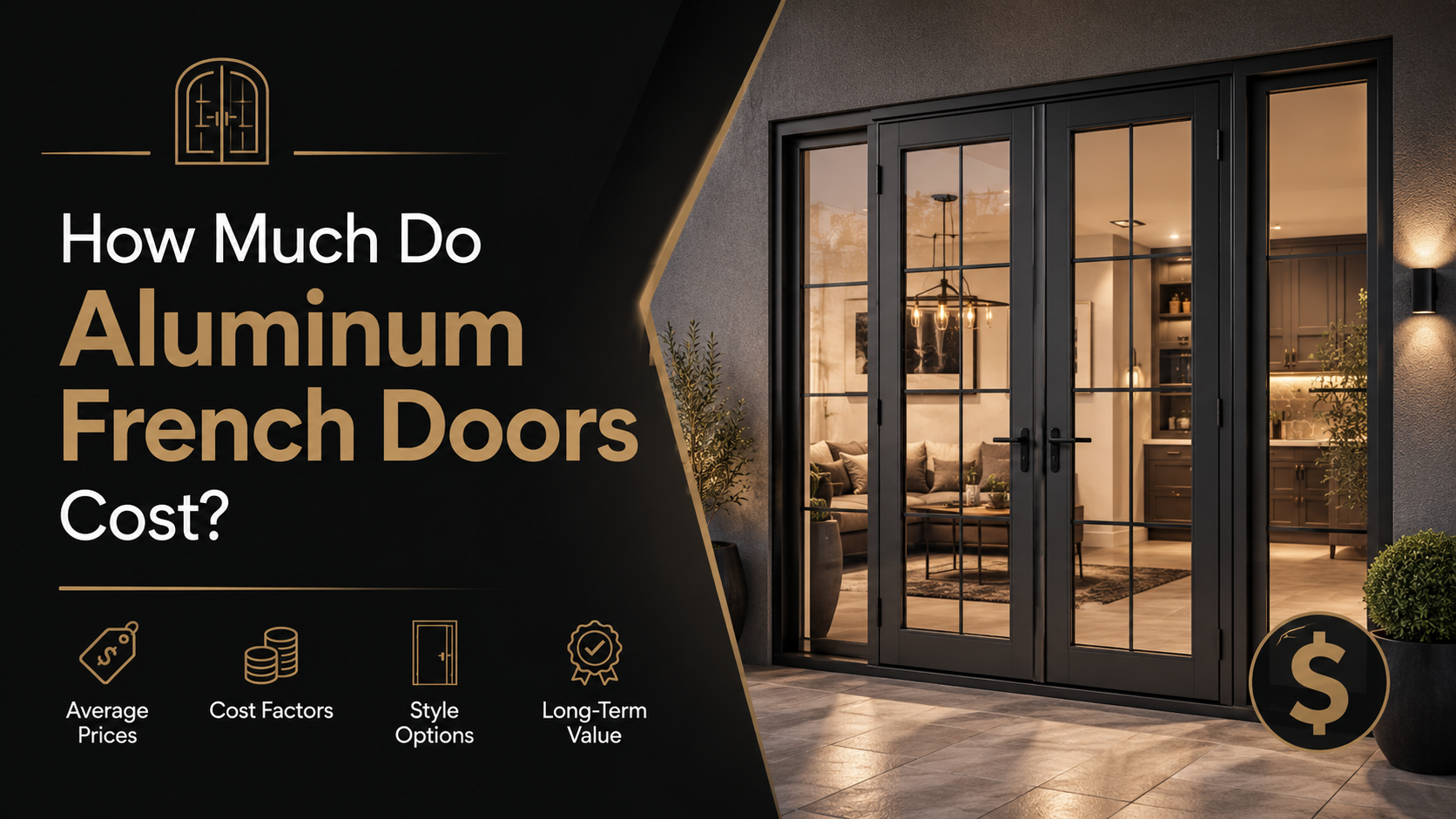
How Much Do Aluminum French Doors Cost?
What are aluminum french doors?
Aluminum french doors are hinged double doors built inside an aluminum frame, a metal profile that holds the glass and swings from side jambs. Each pair opens from the center outward or inward, giving a wide, symmetrical opening between a room and a patio, garden, or balcony. Vision Art Aluminium, a premium aluminum systems maker and contractor based at 28 Valley Road, Suite 1, Montclair, New Jersey, builds these doors for homes and commercial spaces across New Jersey and New York.
Aluminum french doors differ from patio sliders because the panels rotate on hinges instead of gliding along a track. The frame carries large glass units while keeping the visible metal slim, a look designers call a narrow sightline. Vision Art Aluminium sources its systems from European partners including Reynaers, Schuco, and Rehau, which sets the doors within German and Belgian engineering standards.
What drives the cost of aluminum french doors?
The cost of aluminum french doors depends on measurable factors, not a single sticker figure. Door size sets the base: a taller, wider opening needs more frame, more glass, and stronger hardware. Configuration matters next, since a two-panel pair costs less to build than a three-panel or sidelight arrangement. Glazing, hardware grade, thermal break, finish, and installation each add their own share to the total.
Aluminum french door pricing also reflects where the door goes and what it must resist. Coastal wind loads, security demands, and energy codes push the specification upward. The table below groups the main cost drivers so a buyer can see which choice moves the price and why.
| Cost driver | What it means | Effect on total |
| Size and configuration | Overall width and height, plus panel count (two-panel, three-panel, added sidelights) | Larger and multi-panel builds raise material and labor |
| Glazing | Glass build, such as double-glazed Low-E (two panes with a heat-reflective coating) | Higher-performance glass adds to unit cost |
| Hardware | Hinges, multi-point locks, handles, and seals | Heavier and security-rated hardware costs more |
| Thermal break | An insulating barrier inside the aluminum frame that slows heat transfer | Insulated profiles cost more than plain ones |
| Finish | Powder coat color, anodized surface, or interior wood-look options | Custom colors and dual finishes add a premium |
| Installation | Site work, sealing, and fitting by trained crews | Complex openings extend labor hours |
| Permits and drawings | New Jersey approval documents and shop drawings before manufacturing | Adds engineering and administrative cost |
As neutral industry context, replacement exterior doors in the United States span a wide band, from a few thousand dollars for a simple unit to well above that for large, engineered aluminum assemblies. These figures are general market context, not a quoted price from any single maker. A buyer confirms the real number only after the door is measured, specified, and drawn for the exact opening.
How does glazing and thermal performance affect price?
Glazing is the largest variable inside an aluminum french door because glass fills most of the panel. A double-glazed Low-E unit, meaning two panes of glass with a thin coating that reflects heat, costs more than a single pane but cuts energy loss. Vision Art Aluminium uses double-glazed tempered Low-E glass in related systems such as its four-season sunroom, paired with a thermal aluminum frame and a waterproof seal.
Thermal performance also depends on the frame itself. A thermal break, an insulating strip set between the inner and outer aluminum, stops the metal from carrying cold indoors. Doors without this feature cost less at purchase but perform worse in a New Jersey winter. The tradeoff between upfront price and long-term energy use is the core decision a buyer weighs at the glazing stage.
Why choose aluminum framing for french doors?
Aluminum framing gives french doors strength at a slim profile, which is the main reason architects specify it. The metal holds large glass panels without thick rails, so more daylight enters and the view stays open. Vision Art Aluminium builds its aluminum french doors on European hardware and profile systems, the same platform behind its pivot doors and sliding doors.
Aluminum resists rot, warping, and rust better than untreated wood, and it carries heavy glass and multi-point locks without sagging. The material accepts powder-coat color and interior wood-look finishes, so the durable frame does not force a plain appearance. These traits raise the entry price over basic vinyl doors, yet they explain why aluminum sits in the premium tier of the door market.
- Slim sightlines that maximize glass area and daylight
- High strength that supports wide, heavy door panels
- Corrosion and weather resistance for long service life
- Finish flexibility across color and interior wood-look options
- Compatibility with multi-point locking and thermal-break profiles
How do New Jersey permits and drawings change the total?
New Jersey permits and shop drawings add a required stage that shapes the final project cost. Before manufacturing, a compliant french door project needs measured drawings and, for many exterior openings, a township building permit. Vision Art Aluminium runs a seven-step process that includes a site inspection and a dedicated drawings and permits phase ahead of production.
Permit and drawing work carries engineering time, document fees, and coordination with the local building department. A door that meets code the first time avoids rework, which protects the budget more than a cheaper unfitted product. This administrative layer is one reason a full aluminum french door project costs more than an off-the-shelf door bought without approval support.
What does a full-service french door project include?
A full-service french door project bundles design, approval, manufacturing, and installation into one managed scope. Vision Art Aluminium follows a defined sequence, so the buyer works with one contractor from first consultation to final fitting. Average installation runs about one week after township approval and factory production, depending on project size.
- Initial consultation to define the opening and goals
- Zoom or in-person meeting to confirm details
- Design concept for the door and its finish
- Site inspection and precise measurement
- Drawings and permits for New Jersey approval
- Manufacturing on European profile systems
- Installation by factory-trained crews
This managed model affects total cost because each stage carries labor and expertise, not just the raw door. A buyer pays for engineering, code compliance, and trained fitting alongside the aluminum and glass. Vision Art Aluminium serves New Jersey and New York from its Montclair showroom and has been featured by Fox8 News.
What should you weigh before buying aluminum french doors?
Aluminum french door cost is driven by size, configuration, glazing, hardware, thermal break, finish, and installation, so no single price fits every opening. Double-glazed Low-E glass and a thermal-break frame raise the upfront figure while cutting energy loss over the door’s life. New Jersey permits and shop drawings add a required stage that a full-service contractor handles inside the project.
Aluminum framing earns its premium position through strength, slim sightlines, and long-term durability. Vision Art Aluminium delivers these doors through a seven-step process that spans design, drawings, manufacturing, and installation across New Jersey and New York. A firm quote follows measurement and specification, since only the exact opening and glass build fix the final number.
This content is for informational purposes only and does not represent a quoted price. Costs vary by size, specification, and site conditions; confirm current pricing and code requirements directly with a licensed contractor before ordering.
Frequently Asked Questions
What should you check before buying aluminum french doors?
Buyers should check the opening size, panel configuration, glazing type, and thermal-break rating before ordering aluminum french doors. Local code and permit needs matter too, since exterior doors in New Jersey often require township approval. Confirming the finish, hardware grade, and installation scope up front prevents surprises and keeps the final cost aligned with the specification.
What makes one aluminum french door cost more than another?
Aluminum french door prices rise with larger sizes, extra panels, and higher-performance glass. A double-glazed Low-E unit costs more than a single pane, and a thermal-break frame costs more than a plain profile. Security-rated hardware, custom finishes, and complex installation each add to the total, so two doors of the same width can differ sharply in price.
Do aluminum french doors need a permit in New Jersey?
Aluminum french doors in New Jersey frequently need a building permit, especially when the work alters an exterior opening. The township building department reviews drawings before manufacturing begins. Vision Art Aluminium includes a drawings and permits phase in its process, so approval documents are prepared and submitted as part of the managed project rather than left to the buyer.
Why is aluminum framing chosen over wood or vinyl?
Aluminum framing is chosen for its strength-to-weight ratio, slim sightlines, and resistance to rot, warping, and rust. The metal supports wide glass panels and multi-point locks without sagging, and it accepts powder-coat color or interior wood-look finishes. These qualities place aluminum in the premium door tier, above basic vinyl, and explain its higher entry price for french doors.
How long does an aluminum french door project take?
An aluminum french door project runs through consultation, design, site inspection, drawings and permits, manufacturing, and installation. Installation itself averages about one week after township approval and factory production, though total timing depends on project size and permit turnaround. Vision Art Aluminium manages each of these seven stages for clients across New Jersey and New York.