

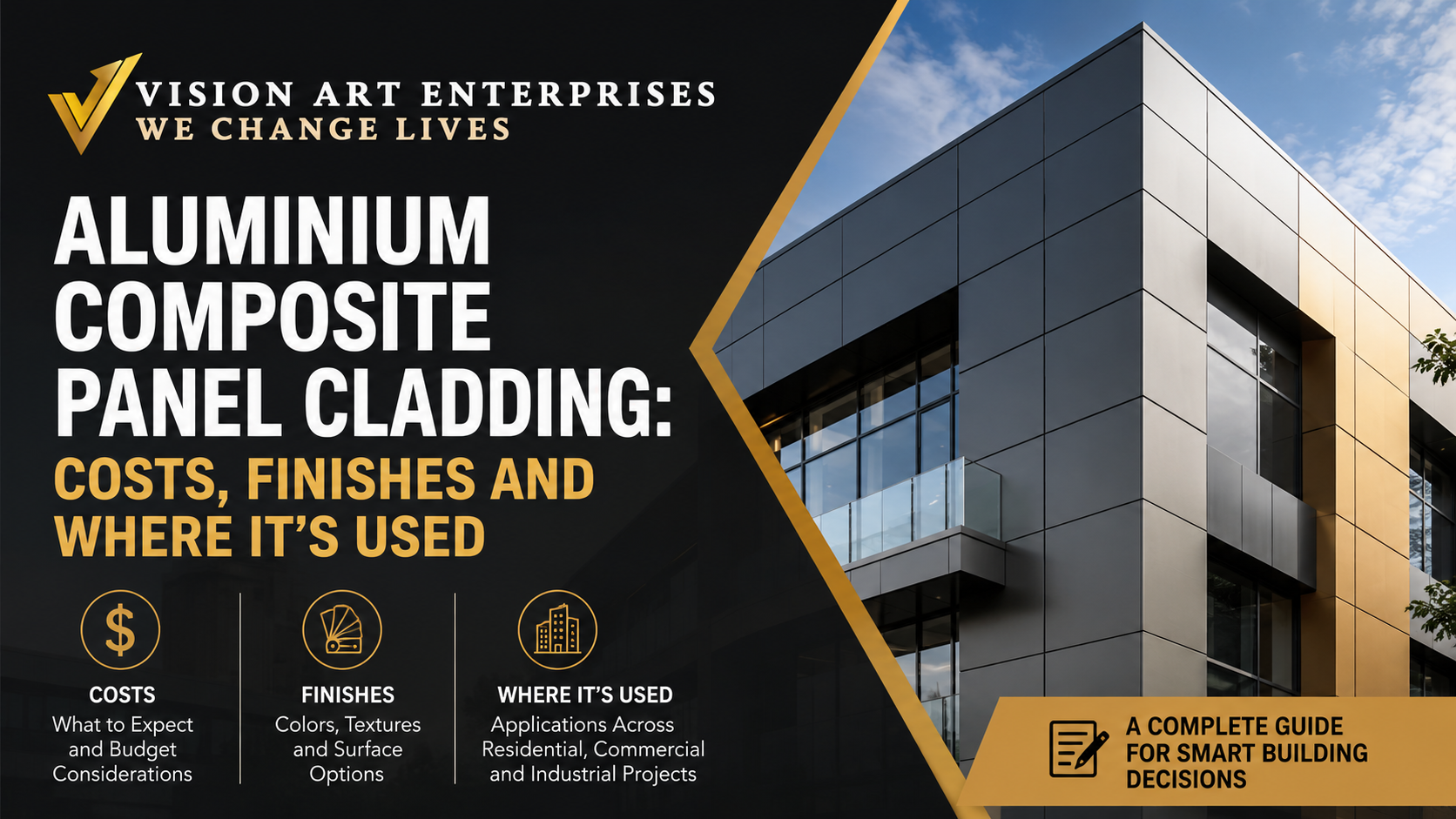
Aluminum Composite Panel Cladding: Costs, Finishes and Where It’s Used
What is aluminum composite panel cladding?
Aluminum composite panel cladding is an exterior or interior surface system built from flat composite sheets fixed to a building facade. Each panel pairs two thin aluminum skins around a core, either polyethylene (a flexible plastic) or a mineral-filled fire-resistant compound. Vision Art Aluminium, a Montclair, New Jersey contractor serving NJ and NY, fabricates and installs these panels under the product name Aluboard.
Aluminum composite panel, shortened to ACP, describes the material itself, while cladding describes how that material is mounted as a building skin. The two aluminum faces typically measure around 0.5 mm each. The panel reaches roughly 3 to 4 mm total thickness once the core is bonded between them. This sandwich keeps the surface rigid and flat while staying light enough for facade work.
ACP cladding serves three main jobs: building facades, signage, and interior wall finishes. Vision Art Aluminium positions Aluboard for cladding, signage, and facade applications across residential and commercial projects. The core type sets the safety profile: mineral-filled cores resist fire better than standard polyethylene cores, a distinction that drives material selection on tall or occupied buildings.
Where is aluminum composite panel cladding used?
Aluminum composite panel cladding appears most often on commercial facades, retail signage, and interior feature walls. The flat, seam-controlled surface suits both new construction and re-cladding of older buildings. Vision Art Aluminium applies Aluboard panels in the NJ and NY market, where mixed residential and commercial work calls for a finish that holds a consistent line across large elevations.
ACP cladding spans several distinct settings. Each use leans on a different property of the panel, from flatness for signage to weather sealing for facades.
- Building facades: rainscreen and curtain-wall infill panels on offices, mixed-use blocks, and storefronts.
- Signage and fascia: routed and folded panels for shopfront branding and channel-letter backing.
- Interior walls: lobby cladding, column wraps, and feature walls where a seamless metal look is wanted.
- Soffits and canopies: underside surfaces at entrances and walkways that need a clean, flat finish.
- Re-cladding: overlays on tired masonry or concrete facades during renovation.
Signage uses the panel differently from facades. A sign needs a perfectly flat, printable, or routable face, while a facade needs weather sealing and a fixing system behind it. The same Aluboard sheet can serve both, but the support framing, joint detailing, and core choice change with the application.
How does aluminum composite panel cladding get installed?
Aluminum composite panel cladding installs onto a support framework fixed to the building structure, not flat against the wall. Installers cut and route the panels, fold the edges into trays, then hang those trays on an aluminum subframe. Vision Art Aluminium runs design, drawings and permits, manufacturing, and installation as one in-house sequence, so the cladding detailing matches the approved drawings.
The routing step defines the system. A fabricator cuts a V-groove into the back of the panel, removing the core along the fold line so the aluminum skin can bend cleanly to a right angle. This creates a tray with returned edges that stiffen the panel and hide the cut core. The trays then clip or screw onto the subframe with a controlled gap at each joint.
Joint detailing decides how the facade handles water and movement. Open-joint rainscreen systems let air move behind the panels, while sealed joints use a backer rod and weatherproof sealant. The gap between panels, often 10 to 20 mm, absorbs thermal movement as the aluminum expands and contracts with temperature. Correct fixing spacing keeps panels flat and prevents the visible oil-canning ripple that flat metal can show under light.
What finishes are available for ACP cladding?
ACP cladding finishes cover a wide colour and texture range applied to the outer aluminum skin. Vision Art Aluminium offers Aluboard in a broad palette of colours and finishes, from flat solids to metallic and patterned surfaces. The finish is a factory-applied coating, usually a paint system baked onto the aluminum, so it arrives ready to install rather than painted on site.
The coating type sets durability and appearance. The table below groups the common finish families and what each typically suits.
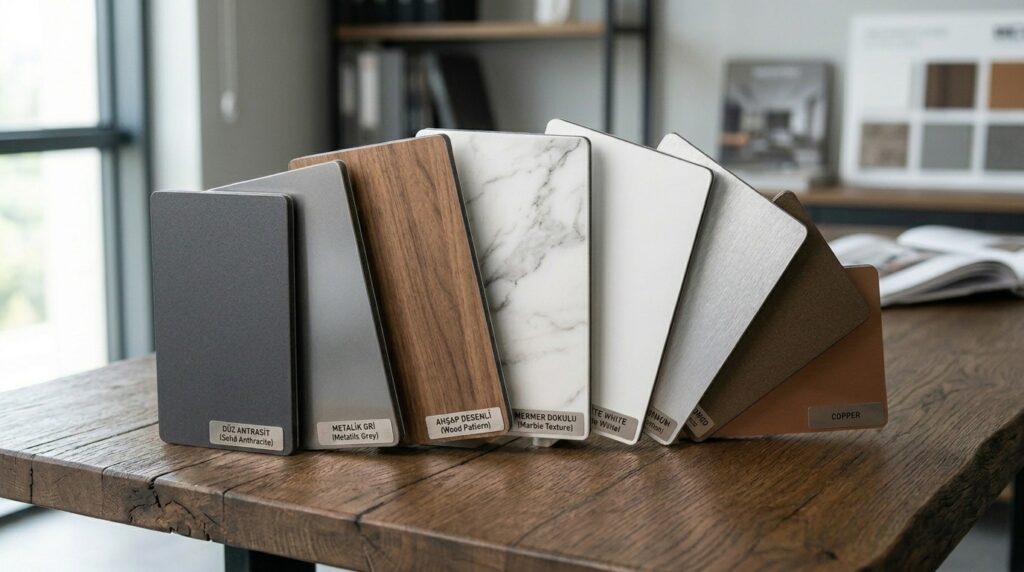
| Finish family | Surface look | Typical use |
| Solid colour (PVDF) | Flat, even matte or satin | Long-life facades, exterior signage |
| Metallic | Shimmer with viewing angle | Feature facades, accent panels |
| Wood-grain pattern | Printed timber look | Soffits, warm-look entrances |
| Stone and concrete pattern | Mineral texture print | Renovation, mixed-material elevations |
| Brushed or mirror metal | Reflective aluminum | Interior walls, retail signage |
PVDF (polyvinylidene fluoride) is the high-durability paint family used on most exterior ACP cladding. It holds colour against ultraviolet light far longer than a standard polyester coat, which matters on south-facing NJ and NY elevations that take heavy sun. Interior panels can use cheaper coatings because they avoid weathering, so the same panel range splits into exterior-grade and interior-grade finish options.
What factors affect the cost of ACP cladding?
The cost of ACP cladding depends on core type, finish grade, panel thickness, and the complexity of the install, not on the bare panel price alone. A facade quote bundles material, fabrication, the subframe, and labour into one figure. Vision Art Aluminium prepares project-specific pricing through consultation and drawings, since two facades of the same area can differ widely in cost.
Several variables move the number up or down. Buyers comparing quotes should check which of these each price includes.
- Core type: mineral-filled fire-resistant cores cost more than standard polyethylene cores.
- Finish grade: PVDF, metallic, and pattern prints sit above plain polyester coatings.
- Panel thickness: thicker panels use more aluminum and resist denting better.
- Subframe and fixings: the hidden aluminum framework can rival the panel cost.
- Fabrication complexity: curved panels, tight reveals, and many corners add routing labour.
- Access and height: scaffolding or lift hire on tall facades raises installed cost.
The hidden framework is the cost driver buyers miss most often. The subframe, brackets, and fixings that hold the panels off the wall can match or exceed the panel material cost on a rainscreen build. A quote listing only a per-square-metre panel rate, with no line for framing or labour, is incomplete and not comparable to a full installed price.
How does panel core type change performance?
The core type sets the fire behaviour, weight, and rigidity of an ACP panel. A polyethylene core is light and easy to route but burns more readily, while a mineral-filled core adds fire resistance by replacing most of the plastic with non-combustible mineral filler. Vision Art Aluminium fabricates Aluboard with both core families, and the fire-resistant grade is the relevant choice on many facade and commercial jobs.
Fire performance is the headline difference. Standard polyethylene cores have driven cladding fire-safety reviews across the building industry, which is why mineral-filled cores became the default specification for taller and occupied buildings. The mineral filler lowers the heat the panel can release if it ignites, a property measured through standardised fire-reaction tests rather than supplier marketing.
Core type also affects handling. A mineral-filled panel is heavier and slightly harder to fold than a polyethylene one, so fabrication and fixing details adjust accordingly. The aluminum skins stay the same in both cases: the swap happens entirely inside the panel, invisible once installed, which makes core verification a documentation check rather than a visual one.
ACP cladding: the practical verdict
Aluminum composite panel cladding is a light, flat metal facade system whose real cost and safety live in details the panel price hides. The core choice, polyethylene or mineral-filled, sets the fire profile, and the mineral-filled grade is the safer specification for facades and occupied buildings. Vision Art Aluminium fabricates this system as aluminum composite panel cladding under the Aluboard name for NJ and NY projects.
Finish grade separates a facade that holds colour from one that fades: PVDF coatings carry exterior elevations, while cheaper coatings belong indoors. Cost comparisons only work when the subframe, fixings, and labour appear as line items, since the hidden framework can match the panel spend. The same sheet serves facades, signage, and interior walls, but the framing and joint detailing change with each use.
This content is for general information only and does not replace a project-specific quote or building-code review. Verify current finishes, core options, and pricing with the supplier and confirm fire and structural requirements with a qualified professional before specifying cladding.
Frequently Asked Questions
What is the difference between ACP and ACP cladding?
ACP is the material: two aluminum skins bonded around a polyethylene or mineral-filled core. ACP cladding is that material mounted as a building skin on a facade, sign, or interior wall. The panel is the product, while cladding is the application, including the subframe, fixings, and joint detailing that hold the panels in place.
Where is ACP cladding most commonly used?
ACP cladding is most common on commercial building facades, retail signage, and interior feature walls. It also serves soffits, canopies, and re-cladding of older masonry. Vision Art Aluminium applies Aluboard panels across residential and commercial projects in New Jersey and New York, where the flat, consistent finish suits both new builds and facade renovations.
What finishes can ACP cladding panels have?
ACP cladding panels come in a wide range of factory-applied finishes. Common families include solid PVDF colours, metallics, wood-grain prints, stone and concrete patterns, and brushed or mirror metal surfaces. Exterior panels use durable PVDF coatings that resist sun fading, while interior panels can use cheaper coatings since they avoid weathering and ultraviolet exposure.
What affects the cost of ACP cladding?
ACP cladding cost depends on core type, finish grade, panel thickness, subframe, fabrication complexity, and access height. Mineral-filled cores and PVDF finishes cost more than basic options. The hidden aluminum framework and labour can match the panel material cost, so a full installed quote with line items gives a far more accurate figure than a bare panel rate.
Is mineral-filled ACP core safer than polyethylene?
A mineral-filled core resists fire better than a standard polyethylene core because mineral filler replaces most of the combustible plastic. This lowers the heat the panel can release if it ignites. Mineral-filled cores became the default specification for taller and occupied buildings. Confirm the required fire rating with a qualified professional and check supplier documentation before specifying.