


Aluminium Windows Parts
Aluminum windows may look simple from the outside, but a high-performance window is actually a complete system made up of carefully engineered components. The frame, glass, hinges, handles, locks, seals, drainage channels, thermal breaks, and other aluminum window parts all work together to determine how well the window performs.
Understanding these components is especially important when choosing new windows, planning a renovation, replacing damaged hardware, or comparing one aluminum window system with another.
At Vision Art Aluminium, we believe the performance of a window depends on much more than its appearance. The quality of the frame, glazing, hardware, seals, fabrication, and installation all contribute to long-term durability, energy efficiency, security, and smooth operation.
This guide explains the major parts of an aluminum window system and what homeowners, architects, builders, and property owners should look for.
What Are the Main Parts of an Aluminum Window?
Although configurations vary between fixed, sliding, tilt-and-turn, casement, folding, and other window systems, most architectural aluminum windows contain several core components:
- Aluminum frame and sash profiles
- Thermal breaks
- Insulated glass units
- Hinges and operating hardware
- Handles and locking systems
- Gaskets and weather seals
- Rollers or tracks on sliding systems
- Fasteners and connection components
- Drainage and weep systems
- Glazing beads
- Screens and optional accessories
The quality of each component matters.
A premium aluminum frame combined with weak hardware or poorly installed seals can still result in a window that does not perform properly. The best systems are designed so that the individual components function together as one complete assembly.
Types of Aluminum Window Frames
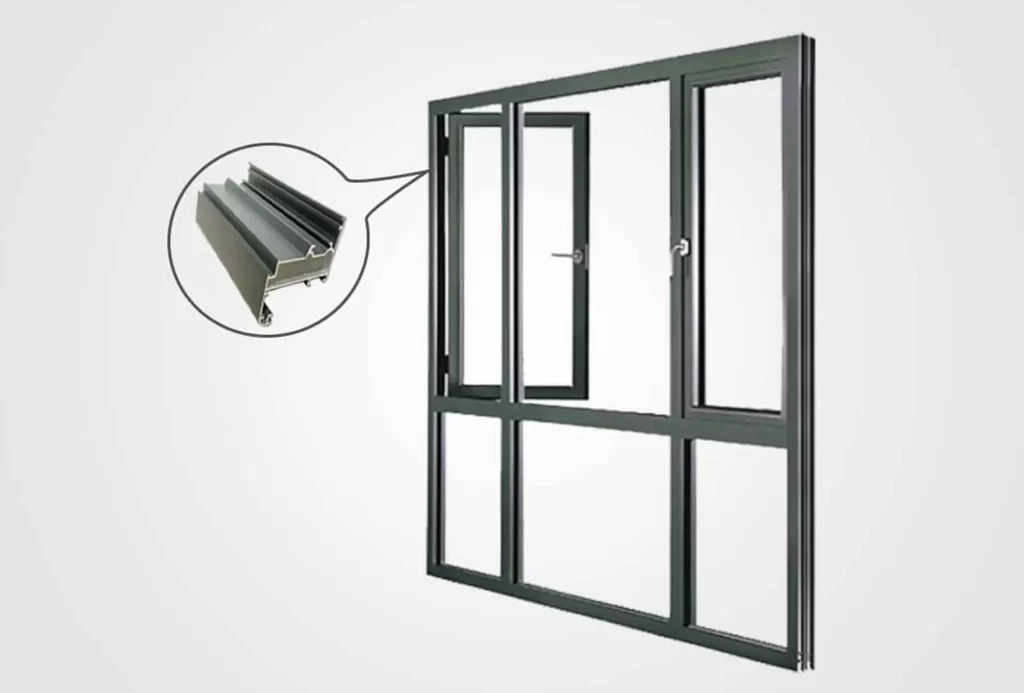
The aluminum frame is the structural foundation of the window.
Modern architectural aluminum systems are available in several configurations depending on the building design, opening size, desired appearance, climate, and performance requirements.
Standard Aluminum Window Frames
Traditional aluminum frames are valued for their strength, durability, and relatively low maintenance requirements.
Because aluminum has excellent structural properties, it can support larger areas of glass while maintaining comparatively slim profiles.
This is one of the reasons aluminum continues to be popular for contemporary homes, luxury residential projects, storefronts, commercial buildings, and large architectural openings.
Thermally Broken Aluminum Frames
For modern residential construction, thermally broken aluminum windows are an important advancement.
A thermal break separates portions of the interior and exterior aluminum frame using a material with lower thermal conductivity. This helps reduce the direct transfer of exterior temperatures through the aluminum profile.
The result can be improved thermal performance, better indoor comfort, and reduced condensation potential when the complete window system is properly designed and installed.
For four-season spaces and climate-controlled residential areas, thermal performance should be considered alongside the appearance of the frame.
Slim-Frame Aluminum Windows
Slim-frame aluminum windows are designed to maximize the amount of visible glass while minimizing the appearance of framing.
This architectural style has become especially popular in modern homes where homeowners want:
- Larger views
- More natural light
- Cleaner architectural lines
- Narrower sightlines
- Strong indoor-outdoor visual connections
The goal is not simply to make a frame thin. The system must still provide the structural strength, drainage, glazing support, and hardware performance required for the size of the opening.
Aluminum Window Glass and Glazing Components
The glass is one of the most important parts of any window system.
Modern aluminum windows may incorporate insulated glass units (IGUs) consisting of two or more panes separated by a sealed insulating space.
Depending on the project and system specifications, glazing options can include:
- Double-pane insulated glass
- Low-E coated glass
- Tempered safety glass
- Laminated glass
- Argon-filled insulated glass
- Tinted or privacy glass
- Specialty architectural glazing
Glass selection should be based on the location of the window, building code requirements, energy-performance goals, safety requirements, privacy, size, and architectural design.
Why Low-E Glass Matters
Low-emissivity, or Low-E glass, incorporates a specialized coating designed to influence the transfer of radiant heat through the glazing.
When combined with an insulated glass system and a properly designed aluminum frame, Low-E glazing can contribute to better overall window performance and interior comfort.
The glass and frame should therefore be evaluated as one system rather than as separate products.
Aluminum Window Hardware
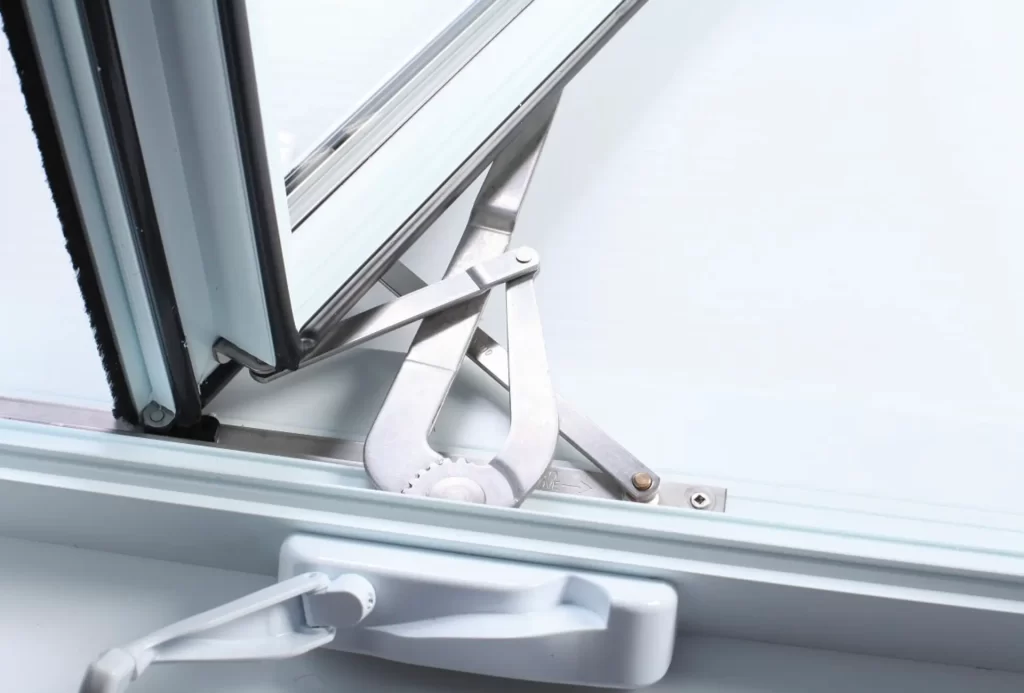
Hardware is what allows an operable window to open, close, lock, slide, tilt, or pivot correctly.
High-quality aluminum window hardware may include:
- Handles
- Hinges
- Locks
- Multi-point locking mechanisms
- Rollers
- Tracks
- Corner drives
- Connecting rods
- Friction stays
- Latches
- Fasteners
Hardware quality becomes increasingly important as window panels become larger and heavier.
A large architectural window requires components capable of supporting its size and weight while maintaining smooth operation over repeated use.
Aluminum Window Handles and Locks
Handles may appear to be a small detail, but they are an important part of both operation and security.
Depending on the window type, the handle may activate a single locking point or an integrated multi-point locking system.
Multi-point systems engage the sash at several locations around the frame rather than relying on one lock.
This can improve compression against the window seals and may also increase resistance to forced opening when the entire system is properly specified.
When evaluating aluminum window locks and handles, consider:
- Hardware quality
- Compatibility with the window system
- Corrosion resistance
- Ease of operation
- Replacement-part availability
- Security requirements
- Manufacturer recommendations
Hardware should always be selected specifically for the window system rather than chosen only because two parts appear similar.
Hinges and Operating Components
Hinges carry significant loads, particularly on large operable aluminum windows.
Different window styles require different hinge and hardware configurations.
For example, a tilt-and-turn window uses specialized hardware that allows the same sash to operate in two different ways: tilting inward for ventilation or swinging inward for larger access.
Casement windows, hopper windows, awning windows, and other configurations use different operating hardware.
Proper adjustment is important because incorrectly aligned hardware can place unnecessary stress on the sash, frame, seals, and locking components.
Aluminum Sliding Window Tracks and Rollers
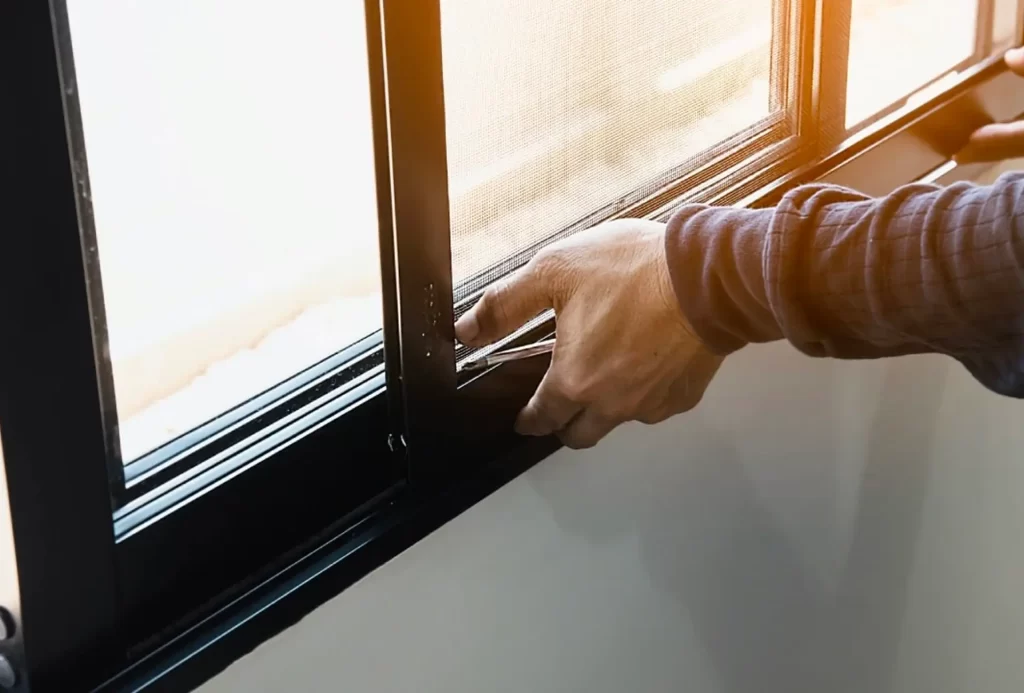
Sliding aluminum windows rely heavily on properly designed tracks and rollers.
The quality of the roller assembly can affect:
- Ease of movement
- Panel alignment
- Long-term operation
- Closing pressure
- Noise
- Wear on the track
Dirt and debris should also be kept out of sliding tracks whenever possible.
A premium sliding system can still become difficult to operate if the track is damaged, obstructed, or poorly maintained.
Window Gaskets and Weather Seals
Some of the least visible aluminum window parts are also among the most important.
Gaskets and weather seals help control air and water movement around the sash and glazing.
These components can include:
- EPDM-style gaskets
- Compression seals
- Glazing gaskets
- Brush seals
- Perimeter weatherstripping
As seals age, become damaged, or lose compression, homeowners may notice drafts, increased exterior noise, water penetration, or reduced thermal comfort.
However, replacing a gasket should not automatically be assumed to solve every leakage problem.
Water intrusion can also result from drainage issues, improper flashing, installation conditions, exterior building-envelope problems, or damaged frame components.
A proper inspection should identify the actual source before parts are replaced.
Drainage and Weep Systems
Modern aluminum windows are designed to manage incidental water that may enter portions of the frame.
Drainage cavities and weep openings allow that water to exit the system.
These small components are easy to overlook, but blocking them can interfere with the way the window manages water.
Homeowners should avoid filling drainage openings with caulk simply because they appear to be gaps.
Some openings are intentionally incorporated into the window design.
When there is uncertainty, the system should be evaluated by someone familiar with architectural aluminum window construction.
Aluminum Window Thermal Breaks
One of the most important components in modern high-performance aluminum windows is the thermal break.
Aluminum is naturally conductive. Without thermal separation, exterior temperatures can travel more easily through the metal frame.
Thermally broken systems interrupt that pathway.
For homeowners comparing aluminum windows, asking whether a frame is thermally broken can be more meaningful than simply comparing the appearance of two windows.
Frame design, glazing, seals, fabrication, installation, and overall system performance should all be considered together.
Choosing the Right Aluminum Window Replacement Parts
Finding the correct aluminum window replacement parts is not always as simple as matching the appearance of an old handle, hinge, or lock.
Architectural window systems are often engineered around specific profiles and hardware families.
Before replacing a component, identify as much information as possible about the existing window, including:
- Window manufacturer or system
- Approximate installation date
- Window type
- Frame profile
- Hardware markings
- Dimensions
- Opening direction
- Locking configuration
- Glass thickness
- Photographs of the existing component
Even small dimensional differences can affect compatibility.
For complicated systems, large panels, or structural components, professional evaluation is often preferable to trial-and-error replacement.
Aluminum Window Parts and Energy Efficiency
Energy performance is created by the complete window assembly.
Important components can include:
Thermally Broken Frames
Thermal breaks help reduce direct temperature transfer through aluminum framing.
Insulated Glass
Double-pane or other insulated glazing systems help improve thermal separation between interior and exterior environments.
Low-E Coatings
Low-E coatings can help manage radiant heat transfer through the glass.
Quality Weather Seals
Properly installed gaskets and weatherstripping reduce unwanted air movement around operable portions of the window.
Professional Installation
Even a high-performance window can underperform when the opening preparation, flashing, sealing, anchoring, or installation is incorrect.
That is why product specifications and installation quality should be considered together.
Aluminum Window Hardware and Security
Window security depends on more than the strength of the aluminum frame.
Locking hardware, hinges, glazing, fasteners, and the way the window is attached to the building all contribute to the complete system.
Depending on the window type, security-related components may include:
- Multi-point locking systems
- Heavy-duty hinges
- Reinforced hardware
- Key-operated handles
- Laminated or safety glazing
- Secure frame anchoring
Ground-level windows and other accessible openings may require additional consideration.
The appropriate solution depends on the building, window configuration, local requirements, and desired security level.
Maintenance of Aluminum Window Components
One advantage of architectural aluminum systems is relatively straightforward maintenance.
However, low maintenance does not mean no maintenance.
Periodic care may include:
- Cleaning aluminum frame surfaces
- Keeping tracks free of debris
- Cleaning drainage openings
- Checking weather seals
- Inspecting hardware
- Lubricating appropriate moving components
- Checking fasteners
- Watching for unusual movement or resistance
- Inspecting insulated glass for signs of seal failure
If an operable window suddenly becomes difficult to open or close, forcing it may damage the hardware.
The better approach is to identify the cause of the resistance and correct the alignment or component issue.
When Should Aluminum Window Parts Be Repaired or Replaced?
A complete window does not necessarily need replacement because one component has failed.
Depending on the system and availability of compatible parts, certain hardware components may be serviceable or replaceable.
Common warning signs include:
- Difficult opening or closing
- Loose handles
- Window sash misalignment
- Damaged hinges
- Broken locks
- Worn rollers
- Deteriorated seals
- Visible frame damage
- Condensation between insulated glass panes
- Unusual drafts
- Water penetration
The correct repair depends on the cause.
For example, condensation between panes of an insulated glass unit may indicate an IGU seal failure, while condensation on the room-side surface of the glass can have completely different causes.
Professional diagnosis can prevent unnecessary replacement work.
Choosing a Complete Aluminum Window System
When comparing windows, focusing only on one component can be misleading.
A quality architectural aluminum window should combine:
Strong aluminum framing + appropriate thermal design + quality glazing + reliable hardware + effective seals + engineered drainage + professional installation.
That complete-system approach becomes particularly important for oversized architectural windows and modern residential openings.
At Vision Art Aluminium, our focus is on complete architectural aluminum and glass systems designed around the specific dimensions, configuration, performance requirements, and architectural character of each project.
From panoramic fixed windows and tilt-and-turn systems to large sliding and custom architectural glazing, every component must work together.
Aluminum Windows for New Jersey and New York Homes
Homes throughout New Jersey and the New York metropolitan area experience significant seasonal temperature changes, rain, wind, humidity, and winter conditions.
For that reason, homeowners considering large aluminum windows should look beyond appearance alone.
Frame construction, insulated glazing, thermal breaks, water management, seals, hardware, and installation details all contribute to how the window performs once it becomes part of the building envelope.
For contemporary residential architecture, aluminum offers a particularly strong combination of:
- Slim sightlines
- Structural strength
- Large glass capability
- Custom configurations
- Long-term durability
- Modern aesthetics
When the system is properly selected and installed, these advantages make aluminum an excellent option for projects where the goal is simple:
More Glass, Less Frame.
Enhancing Security with Aluminium Window Hardware
When it comes to securing your home or office, the right aluminium window parts can make all the difference. From sturdy locks and handles to durable hinges and security screens, investing in high-quality hardware can provide peace of mind and protect your property from potential intruders. With a wide range of options available, you can easily find the perfect hardware to enhance the security of your aluminium windows.
One of the key components of enhancing security with aluminium window hardware is choosing robust locks and handles. Look for products that are specifically designed to withstand forced entry attempts and tampering. Multi-point locking systems can provide an extra layer of security, making it more difficult for intruders to gain access to your property. Additionally, consider installing key-operated locks for added protection, especially for ground-level or easily accessible windows.
Another important aspect of securing your aluminium windows is selecting durable hinges and fasteners. Opt for heavy-duty hinges that are resistant to tampering and provide smooth operation for opening and closing windows. Additionally, consider using security fasteners to prevent unauthorized removal of window panes, adding an extra level of protection to your property.
For added security and peace of mind, consider installing security screens or grilles on your aluminium windows. These protective barriers can act as a deterrent to potential intruders and provide an additional layer of defense against forced entry. Choose high-quality, corrosion-resistant screens that are designed to withstand harsh weather conditions while maintaining their structural integrity.
Investing in high-quality aluminium window hardware is a proactive step towards enhancing the security of your property. By choosing robust locks, durable hinges, and security screens, you can create a secure environment for your home or office. With the right hardware in place, you can enjoy the benefits of improved security without compromising on the aesthetic appeal of your aluminium windows.